Tuesday, December 28, 2010
"Do You Like Nicolas Cage?"
Question 94
Do you like Nicolas Cage?
At 10:35 AM 1998.08.31
My husband is starting to go bald a bit, so I suggested that he follow the example of the bald but cool Nicolas Cage. However, my husband really hates that he's balding, so he won't listen to me. According to him, "The dude IS bald!!" So all of our arguments end on an unpleasant note.
But I digress. What I mean to ask is, is there anybody out there that thinks Nicolas Cage is cool? I decided to try asking around.
If you're not busy, please tell me what you think. Also, does your wife like Nicolas Cage? I'd be so happy if you took the time to answer. (29 years old, Gemini, Blood Type A)
___
Hello. It seems my wife does not like Nicolas Cage. When I asked what about him, it seems that she doesn't like:
1) the way he talks
2) the shape of his nose
3) the look in his eyes (when he's looking down).
She's a rather prejudiced person. But when I asked her what she thinks about baldness, she said, "That sort of thing doesn't really matter." Please tell that to your husband.
I personally neither like nor dislike Mr. Cage. He was good as the one-handed baker in Moonstruck, but I guess it must be sweltering, since he only wears tank-tops and is always sweaty.
[From the book 「そうだ、村上さんに聞いてみよう」と世間の人々が村上春樹にとりあえずぶっつける282の大疑問に果たして村上さんはちゃんと答えられるのか?, 2000, The Asahi Newspaper Company.]


Do YOU like Nicolas Cage?
First of all, my apologies for the long lack of posts. It started with the end of a very intense and busy semester, and then my computer went kaput! I hate it when I go so long without a post, but there wasn't much I could do until now.
Anyway, I've been looking for a fun thing to start off my return, and I was flipping through some of my books and I found the following little selection. It comes from a neat book called "Ah Yes, Let's Ask Mr. Murakami!" which is a collection of questions and answers posed on Haruki Murakami's website in the late nineties. It even has illustrations by longtime collaborator Anzai Mizumaru. Some of the questions that Murakami was asked are pretty random (and consequently hilarious) and Murakami answers them in a most Murakami way (my favorite question, and how I discovered this book, can be found here at How to Japonese). And then I found this:
-----
Question 94
Do you like Nicolas Cage?
At 10:35 AM 1998.08.31
My husband is starting to go bald a bit, so I suggested that he follow the example of the bald but cool Nicolas Cage. However, my husband really hates that he's balding, so he won't listen to me. According to him, "The dude IS bald!!" So all of our arguments end on an unpleasant note.
But I digress. What I mean to ask is, is there anybody out there that thinks Nicolas Cage is cool? I decided to try asking around.
If you're not busy, please tell me what you think. Also, does your wife like Nicolas Cage? I'd be so happy if you took the time to answer. (29 years old, Gemini, Blood Type A)
Hello. It seems my wife does not like Nicolas Cage. When I asked what about him, it seems that she doesn't like:
1) the way he talks
2) the shape of his nose
3) the look in his eyes (when he's looking down).
She's a rather prejudiced person. But when I asked her what she thinks about baldness, she said, "That sort of thing doesn't really matter." Please tell that to your husband.
I personally neither like nor dislike Mr. Cage. He was good as the one-handed baker in Moonstruck, but I guess it must be sweltering, since he only wears tank-tops and is always sweaty.
--------
YES.
Bonus bonus bonus! The question gets a comic to go along with it! Start with the guy on the right in each panel (click on the image to make it big enough to be legible. Also, pardon the poor image editing skills. I sort of rushed through it to get it up):

[For those curious, Lou Oshiba is an actor/comedian. He looks like this:

Well, it's true. He's no Cage.]
Anyway, I've been looking for a fun thing to start off my return, and I was flipping through some of my books and I found the following little selection. It comes from a neat book called "Ah Yes, Let's Ask Mr. Murakami!" which is a collection of questions and answers posed on Haruki Murakami's website in the late nineties. It even has illustrations by longtime collaborator Anzai Mizumaru. Some of the questions that Murakami was asked are pretty random (and consequently hilarious) and Murakami answers them in a most Murakami way (my favorite question, and how I discovered this book, can be found here at How to Japonese). And then I found this:
-----
Question 94
Do you like Nicolas Cage?
At 10:35 AM 1998.08.31
My husband is starting to go bald a bit, so I suggested that he follow the example of the bald but cool Nicolas Cage. However, my husband really hates that he's balding, so he won't listen to me. According to him, "The dude IS bald!!" So all of our arguments end on an unpleasant note.
But I digress. What I mean to ask is, is there anybody out there that thinks Nicolas Cage is cool? I decided to try asking around.
If you're not busy, please tell me what you think. Also, does your wife like Nicolas Cage? I'd be so happy if you took the time to answer. (29 years old, Gemini, Blood Type A)
Hello. It seems my wife does not like Nicolas Cage. When I asked what about him, it seems that she doesn't like:
1) the way he talks
2) the shape of his nose
3) the look in his eyes (when he's looking down).
She's a rather prejudiced person. But when I asked her what she thinks about baldness, she said, "That sort of thing doesn't really matter." Please tell that to your husband.
I personally neither like nor dislike Mr. Cage. He was good as the one-handed baker in Moonstruck, but I guess it must be sweltering, since he only wears tank-tops and is always sweaty.
--------
YES.
Bonus bonus bonus! The question gets a comic to go along with it! Start with the guy on the right in each panel (click on the image to make it big enough to be legible. Also, pardon the poor image editing skills. I sort of rushed through it to get it up):

[For those curious, Lou Oshiba is an actor/comedian. He looks like this:
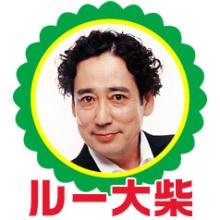
Well, it's true. He's no Cage.]
Wednesday, November 3, 2010
Interesting Link Round-up
Many months ago I wrote a post on the JLPP, and how they're an NPO that promotes Japanese literature in translation through myriad means (you can see what I wrote for yourself here).
The other day, I saw at the Literary Saloon that a new like-minded project called "Read Japan" has been established. The article at the Literary Saloon is quite interesting, and I suggest you read it.
But it turns out it was just a good day for Japanese literature news the other day at the Literary Saloon, so I link you to a book review that also talks a bit about the JLPP (and their problems...) and a Q&A with Haruki Murakami translator Jay Rubin.
Basically, this is a post that is telling you to start following the Literary Saloon if you haven't already, especially if you have an interest in international literature even beyond that of Japan.
The other day, I saw at the Literary Saloon that a new like-minded project called "Read Japan" has been established. The article at the Literary Saloon is quite interesting, and I suggest you read it.
But it turns out it was just a good day for Japanese literature news the other day at the Literary Saloon, so I link you to a book review that also talks a bit about the JLPP (and their problems...) and a Q&A with Haruki Murakami translator Jay Rubin.
Basically, this is a post that is telling you to start following the Literary Saloon if you haven't already, especially if you have an interest in international literature even beyond that of Japan.
Saturday, October 30, 2010
An Excerpt from "The Illusions of Love and Marriage"
Although this isn't exactly what I had in mind originally, I'd like to share with you a piece of work by Genichiro Takahashi, author of of one of my favorite novels, Sayonara, Gangsters.
I bring him up a lot and it's kind of funny when I think about it. I've only read a small fraction of his work, in English - only a novel, and in the original Japanese, maybe a combined total of seventy-five to a hundred pages from about a dozen short stories, beginnings of novels, and literary essays. And yet I'm obsessed. I believe in him as a writer almost entirely on faith. Yes, I loved his one novel, but does that prove his entire body of work to be of literary worth? I mean, yes, I do think so, but if you were to ask me why I believed so much in what I only know so little of, I couldn't give you a good answer. I can point out what I like about his work only so much. Maybe I should have a little more confidence in my taste/sense of "good" literature, but I can't let go of this idea that Takahashi is or should be the next big thing, but nobody knows it outside of Japan yet (and even there I don't think he has the largest following).
The following bit is from a short story of what I'm translating as "The Illusions of Love and Marriage", from his short story collection 君が代は千代に八千代に. I'm satisfied with just presenting this beginning bit because although the story itself is interesting, it's too long to translate here (at least for now). And what I want to focus on translating is the poem.
---
He met her at a party. She was a poet. She was reading poetry in the middle of the party. A real beauty. Narrow hips, a big butt. And big eyes. In other words, she was just his type. She wore a white t-shirt over jeans, and with a spellbound expression she read her poetry.
"Einstein rode the Galaxy Express
Einsten, with the Fuji Evening News and Shonen Jump in his lap
And by the window a plastic bottle filled with oolong tea
His travel arrangements are complete
The conductor came
And Einstein took out his ticket and said
'Standard class, Shinagawa to Kamakura'
The conductor took off his cap
'Does light appear to stop to people running at the speed of light?
Is the medium that transmits his light ether?
Is the object's matter inherent in that object?
What is the ultimate matter?
What will happen when matter and anti-matter collide?
The price of the standard class ticket is 750 yen, thank you for riding with us'
After a while the conductor came back
'Sir, we've already passed Kamakura'
Einstein was surprised
'Huh? Where are we now?'
'Well we've passed Kamakura, and Muromachi as well, and in 15 minutes is Heian'
'Oh darn, I've mistaken this for the Yokosuka line'
The Galaxy Express will go
Anywhere, you know
E=MC²"
----
Poetry is super hard to translate. In the original Japanese, it's pretty loosey-goosey in terms of form, but since many of the phrases end with the simple desu ka or verb past tense -ta, there is definitely some sense of rhyme in many phrases, but it's just so easy to construct in the Japanese, and totally weird in the English. Maybe with some time I could come up with a substitution or solution, but I just wanted to share this crazy little poem. The Galaxy Express is quite a fixture in the Japanese pop culture consciousness (think of all the anime alone). And I would also like to point out that Kamakura, while also a famous city outside of Tokyo, is also the name of a time period in Japanese history, as are the Muromachi and the Heian eras.
I bring him up a lot and it's kind of funny when I think about it. I've only read a small fraction of his work, in English - only a novel, and in the original Japanese, maybe a combined total of seventy-five to a hundred pages from about a dozen short stories, beginnings of novels, and literary essays. And yet I'm obsessed. I believe in him as a writer almost entirely on faith. Yes, I loved his one novel, but does that prove his entire body of work to be of literary worth? I mean, yes, I do think so, but if you were to ask me why I believed so much in what I only know so little of, I couldn't give you a good answer. I can point out what I like about his work only so much. Maybe I should have a little more confidence in my taste/sense of "good" literature, but I can't let go of this idea that Takahashi is or should be the next big thing, but nobody knows it outside of Japan yet (and even there I don't think he has the largest following).
The following bit is from a short story of what I'm translating as "The Illusions of Love and Marriage", from his short story collection 君が代は千代に八千代に. I'm satisfied with just presenting this beginning bit because although the story itself is interesting, it's too long to translate here (at least for now). And what I want to focus on translating is the poem.
---
He met her at a party. She was a poet. She was reading poetry in the middle of the party. A real beauty. Narrow hips, a big butt. And big eyes. In other words, she was just his type. She wore a white t-shirt over jeans, and with a spellbound expression she read her poetry.
"Einstein rode the Galaxy Express
Einsten, with the Fuji Evening News and Shonen Jump in his lap
And by the window a plastic bottle filled with oolong tea
His travel arrangements are complete
The conductor came
And Einstein took out his ticket and said
'Standard class, Shinagawa to Kamakura'
The conductor took off his cap
'Does light appear to stop to people running at the speed of light?
Is the medium that transmits his light ether?
Is the object's matter inherent in that object?
What is the ultimate matter?
What will happen when matter and anti-matter collide?
The price of the standard class ticket is 750 yen, thank you for riding with us'
After a while the conductor came back
'Sir, we've already passed Kamakura'
Einstein was surprised
'Huh? Where are we now?'
'Well we've passed Kamakura, and Muromachi as well, and in 15 minutes is Heian'
'Oh darn, I've mistaken this for the Yokosuka line'
The Galaxy Express will go
Anywhere, you know
E=MC²"
----
Poetry is super hard to translate. In the original Japanese, it's pretty loosey-goosey in terms of form, but since many of the phrases end with the simple desu ka or verb past tense -ta, there is definitely some sense of rhyme in many phrases, but it's just so easy to construct in the Japanese, and totally weird in the English. Maybe with some time I could come up with a substitution or solution, but I just wanted to share this crazy little poem. The Galaxy Express is quite a fixture in the Japanese pop culture consciousness (think of all the anime alone). And I would also like to point out that Kamakura, while also a famous city outside of Tokyo, is also the name of a time period in Japanese history, as are the Muromachi and the Heian eras.
Saturday, October 23, 2010
Review: Ryu Murakami's Popular Hits of the Showa Era (and bonus!)
I redirect you once again to the wonderful Three Percent blog for my latest review on Ryu Murakami's forthcoming in English Popular Hits of the Showa Era.
Every book I read by Ryu has to live up to Coin Locker Babies, which is one of my favorite books of all time, which means Popular Hits has a lot to live up to. I liked the book enough as I read it (most of it not under ideal conditions either - waiting around in the ER), but now that some time has past I realize it's grown on me quite a bit. It's just so absurd. Even though all the characters are pretty much inherently unlikable, what happens is just so whacked out it's hard to not read it with a smile (of course be prepared for grimaces too, I think).
One of the fun things about the book that didn't make it into my review is how all the chapter titles are actual popular songs from the Showa Era, aka, 1940s through 70s, which are now considered enka, I guess. Although these songs were originally all sorts of kinds of pop, rock, and jazz, performances of them now are actually kind of enka-ized - compare this original performance to this more modern one as performed by the same group - guitars become strings and horns. Admittedly, some of them were basically enka to begin with.
As a bonus to my handful of readers who I assume exist somewhere out there, here's a complete list of the songs used as chapter titles:
Chapter 1: Season of Love - Pinky and Killers: Koi no Kisetsu
Chapter 2: Stardust Trails - Akiko Kikuchi - Hoshi no Nagare ni
Chapter 3: Chanchiki Okesa - Minami Haruo - Chanchiki Okesa
Chapter 4: Meet me in Yurakucho - Frank Nagai - Yuurakuchou de Aimashou
Chapter 5: A Hill Overlooking the Harbor - Hirano Aiko - Minato ga Mieru Oka
Chapter 6: Rusty Knife - Yujiro Ishihara - Sabita Knife
Chapter 7: After the Acacia Rain - Sachiko Nishida - Acacia no Ame ga Yamu Toki
Chapter 8: Love Me to the Bone - Takaya Jou - Hone made Aishite
Chapter 9: Dreams Anytime - Sayuri Yoshinaga & Yukio Hoshi - Itsudemo Yume wo
Chapter 10: Until We Meet Again - Kiyohiko Ozaki - Mata Au Hi Made
Feel free to use this guide as your reading soundtrack when you pick up your own copy January 2011.
Every book I read by Ryu has to live up to Coin Locker Babies, which is one of my favorite books of all time, which means Popular Hits has a lot to live up to. I liked the book enough as I read it (most of it not under ideal conditions either - waiting around in the ER), but now that some time has past I realize it's grown on me quite a bit. It's just so absurd. Even though all the characters are pretty much inherently unlikable, what happens is just so whacked out it's hard to not read it with a smile (of course be prepared for grimaces too, I think).
One of the fun things about the book that didn't make it into my review is how all the chapter titles are actual popular songs from the Showa Era, aka, 1940s through 70s, which are now considered enka, I guess. Although these songs were originally all sorts of kinds of pop, rock, and jazz, performances of them now are actually kind of enka-ized - compare this original performance to this more modern one as performed by the same group - guitars become strings and horns. Admittedly, some of them were basically enka to begin with.
As a bonus to my handful of readers who I assume exist somewhere out there, here's a complete list of the songs used as chapter titles:
Chapter 1: Season of Love - Pinky and Killers: Koi no Kisetsu
Chapter 2: Stardust Trails - Akiko Kikuchi - Hoshi no Nagare ni
Chapter 3: Chanchiki Okesa - Minami Haruo - Chanchiki Okesa
Chapter 4: Meet me in Yurakucho - Frank Nagai - Yuurakuchou de Aimashou
Chapter 5: A Hill Overlooking the Harbor - Hirano Aiko - Minato ga Mieru Oka
Chapter 6: Rusty Knife - Yujiro Ishihara - Sabita Knife
Chapter 7: After the Acacia Rain - Sachiko Nishida - Acacia no Ame ga Yamu Toki
Chapter 8: Love Me to the Bone - Takaya Jou - Hone made Aishite
Chapter 9: Dreams Anytime - Sayuri Yoshinaga & Yukio Hoshi - Itsudemo Yume wo
Chapter 10: Until We Meet Again - Kiyohiko Ozaki - Mata Au Hi Made
Feel free to use this guide as your reading soundtrack when you pick up your own copy January 2011.
Monday, October 18, 2010
Kaori Ekuni - "The Night, My Wife, and the Detergent"
“The Night, My Wife, and the Detergent"
by Kaori Ekuni, from the collection Somber Slumbers (Nurui Nemuri)
--
I want to get separated, my wife said. We gotta talk.
It was already 10 PM. I was tired. My wife and I are in the fifth year of our marriage, no kids.
You can pretend you don't see it, she said. But even if you pretend, this isn't going to go away.
Without responding, I continued to watch TV, but she turned the damn thing off. What I was pretending not to see, what wasn't going to disappear, I hadn't the faintest. Same as always.
I saw, as my wife stood blocking my way and glaring down at me, that her pedicure was chipping off.
“Oh, nail polish remover!”
I said. You don't have nail polish remover, so you can't take your pedicure off. That's why you're all upset, right?
My voice was half full of hope and half full of relief. My wife shook her head.
“So then it's those cotton balls. Even if I told you to use tissues instead, you're saying you definitely could not use them, so it's 'cause you don't have any of those cotton balls.”
She sighed - no, she said. That's not what I'm saying at all. I have nail polish remover and cotton balls. I haven't taken my pedicure off because I'm too busy. I just don't have the time to take care of my nails.
Time. I give up.
I love my wife, and I wish I had her strength. But I don't know what to do when she asks for things you can't get at convenience stores.
“Hey, listen to me. I really think we should live separately. I'm sure we could become really good friends.”
I was getting real sick of this. Can't she just leave it alone for tonight?
“About how many trash bags do we have left?”
As a husband, I decided to give my best to her. But the thing you need to know about my wife is that she answers questions. Even when she's angry, even when she's crying, if you ask her a question, she always answers.
“How about detergent? Milk? Diet Pepsi?”
I listed off the things my wife needed in her daily life.
“Well, we have a lot of trash bags. As far as detergent goes, we only have the bottle we're using now, but we have milk and diet Pepsi too. But that has nothing to do with what I'm trying to say to you right now. Please, listen seriously.”
I wasn't listening. I already had my shoes on and was at the door. Stop, or, listen, or whatever my wife was saying at my back, I went outside and headed to the convenience store. The windows in all the houses along the way were lit.
The detergent my wife likes is in a pink bottle. There are several brands with pink bottles, but it's the one with the pink cap as well that's the lucky guy. I bought five of them. I bought diet Pepsi and milk too. And trash bags and nail polish remover. And cotton balls. And while I was at it, an onigiri.
The bag was real heavy. The white plastic bag rustled and crinkled in such a way that I thought it was going to tear apart on the way home.
My wife looked miserable standing at the front door.
“Why would you buy so much?
The amount is crucial.
She sighs again as I pull out the contents of the bag one at a time. You really don't listen when people talk to you, huh. Didn't I tell you we already had diet Pepsi? And milk. And trash bags.
Then, she bursts out laughing.
“Why are you like this, honey? You don't listen to anything do you?"
She's holding the nail polish remover in her hands.
I win.
------------------
Kaori Ekuni is another famous contemporary author. She's won, among others, the Murasaki Shikibu Prize 1992 and the Naoki Prize in 2004. Not only a literary fiction writer, she is famous for her young adult fiction, poetry, and translations (including poetry by e. e. cummings. and my favorite children's book, The Runaway Bunny. Aw...) Her works have been made into films and she's celebrated for her depictions of modern relationships.
I've been looking through nice short pieces to add to this site, and this Ekuni collection was one of the many that I came across at Book-Off, and now one of the fraction of books that survived the transatlantic voyage to my house (I don't know what happened, but somehow when the package got to my door, it was badly damaged and missing over 30 books. Including some of the Genichiro Takahashi novels I spent weeks trying to find... very upsetting). Anyhow, I was just rifling through the book and this one stood out for it's length. Now that school is upon me I can't devote the time I'd like to long form translations except the ones I'm doing to graduate, so my apologies that the works I put up here are selected for their overall shortness, and not for their literary value. Still, despite its brevity, the story condenses nicely the problems of many Japanese (and others) failed relationships.
If you liked this short story, then you should check out Ekuni's only published work in English, Twinkle Twinkle, which was put out a few years ago by Vertical.
by Kaori Ekuni, from the collection Somber Slumbers (Nurui Nemuri)
--
I want to get separated, my wife said. We gotta talk.
It was already 10 PM. I was tired. My wife and I are in the fifth year of our marriage, no kids.
You can pretend you don't see it, she said. But even if you pretend, this isn't going to go away.
Without responding, I continued to watch TV, but she turned the damn thing off. What I was pretending not to see, what wasn't going to disappear, I hadn't the faintest. Same as always.
I saw, as my wife stood blocking my way and glaring down at me, that her pedicure was chipping off.
“Oh, nail polish remover!”
I said. You don't have nail polish remover, so you can't take your pedicure off. That's why you're all upset, right?
My voice was half full of hope and half full of relief. My wife shook her head.
“So then it's those cotton balls. Even if I told you to use tissues instead, you're saying you definitely could not use them, so it's 'cause you don't have any of those cotton balls.”
She sighed - no, she said. That's not what I'm saying at all. I have nail polish remover and cotton balls. I haven't taken my pedicure off because I'm too busy. I just don't have the time to take care of my nails.
Time. I give up.
I love my wife, and I wish I had her strength. But I don't know what to do when she asks for things you can't get at convenience stores.
“Hey, listen to me. I really think we should live separately. I'm sure we could become really good friends.”
I was getting real sick of this. Can't she just leave it alone for tonight?
“About how many trash bags do we have left?”
As a husband, I decided to give my best to her. But the thing you need to know about my wife is that she answers questions. Even when she's angry, even when she's crying, if you ask her a question, she always answers.
“How about detergent? Milk? Diet Pepsi?”
I listed off the things my wife needed in her daily life.
“Well, we have a lot of trash bags. As far as detergent goes, we only have the bottle we're using now, but we have milk and diet Pepsi too. But that has nothing to do with what I'm trying to say to you right now. Please, listen seriously.”
I wasn't listening. I already had my shoes on and was at the door. Stop, or, listen, or whatever my wife was saying at my back, I went outside and headed to the convenience store. The windows in all the houses along the way were lit.
The detergent my wife likes is in a pink bottle. There are several brands with pink bottles, but it's the one with the pink cap as well that's the lucky guy. I bought five of them. I bought diet Pepsi and milk too. And trash bags and nail polish remover. And cotton balls. And while I was at it, an onigiri.
The bag was real heavy. The white plastic bag rustled and crinkled in such a way that I thought it was going to tear apart on the way home.
My wife looked miserable standing at the front door.
“Why would you buy so much?
The amount is crucial.
She sighs again as I pull out the contents of the bag one at a time. You really don't listen when people talk to you, huh. Didn't I tell you we already had diet Pepsi? And milk. And trash bags.
Then, she bursts out laughing.
“Why are you like this, honey? You don't listen to anything do you?"
She's holding the nail polish remover in her hands.
I win.
------------------
Kaori Ekuni is another famous contemporary author. She's won, among others, the Murasaki Shikibu Prize 1992 and the Naoki Prize in 2004. Not only a literary fiction writer, she is famous for her young adult fiction, poetry, and translations (including poetry by e. e. cummings. and my favorite children's book, The Runaway Bunny. Aw...) Her works have been made into films and she's celebrated for her depictions of modern relationships.
I've been looking through nice short pieces to add to this site, and this Ekuni collection was one of the many that I came across at Book-Off, and now one of the fraction of books that survived the transatlantic voyage to my house (I don't know what happened, but somehow when the package got to my door, it was badly damaged and missing over 30 books. Including some of the Genichiro Takahashi novels I spent weeks trying to find... very upsetting). Anyhow, I was just rifling through the book and this one stood out for it's length. Now that school is upon me I can't devote the time I'd like to long form translations except the ones I'm doing to graduate, so my apologies that the works I put up here are selected for their overall shortness, and not for their literary value. Still, despite its brevity, the story condenses nicely the problems of many Japanese (and others) failed relationships.
If you liked this short story, then you should check out Ekuni's only published work in English, Twinkle Twinkle, which was put out a few years ago by Vertical.
Saturday, October 9, 2010
The Accuracy of Death by Isaka Kotaro

He died five days later, stabbed in the stomach during a killing spree, but at that time he wasn't expecting to die, of course, so his voice was full and lively.
So when asked, "Then why do you work at a barbershop?", he replied, mingled with a strained laugh, "'Cause it's my job."
This coincides neatly with my thoughts and, if I were to speak somewhat grandiosely, my philosophy.
I have no particular interest in the deaths of humans. If a young president is going to be shot from above, in a parade of private cars going ten miles an hour, if somewhere a boy is going to freeze to death with his beloved dog in front of a Rubens painting, it is of no concern to me.
Speaking of which, the barber in question even revealed to me: "Dying is scary."
To counter this, I asked him, "Do you remember the time before you were born? Before you were born, was it scary? Did it hurt?"
"Nope."
"Death is pretty much like that. It's just a return to the state before you were born. Not scary, not painful."
The deaths of humans have neither interest nor value to me. Or, conversely, everyone's death ends up having the same value. So for me, it has nothing to do with who will die when. Even so, I will go out this very day in order to confirm these deaths.
Why? Because it's my job. Just like the barber said.
ーーーーーー
This is the opening to Koutaro Isaka's episodic novel The Accuracy of Death, 死神の制度 (shinigami no seido). Koutaro Isaka (伊坂幸太郎)is one of the big contemporary authors right now. Go to any bookstore in Japan and he's got tons of paperbacks on display.
I heard about this book from the Japanese Book News magazine, put out by the Japan Foundation. It's a great way to read about notable books and book news, but it only comes out quarterly. Still, a useful way to wade through contemporary fiction and non-fiction releases.
I'll be honest, I haven't gotten much further than this bit that I've translated (a bit further, but not enough to really say if the book as a whole is any good), but its so sad to see my blog so empty. So I was looking through my computer bits and bobbles and saw a rough translation of this little bit and decided to clean it up and post it. Intriguing, yes? I think this is the kind of book that would do well in the States. This gothic-lite stuff is where the money's at. (Better if it were zombies or vampires, but...)
Like I said, Isaka is pretty hot right now, and famous enough (or maybe this is a chicken and egg situation) that he's had a lot of movies and TV dramas based around his stuff, including "The Accuracy of Death". In fact, here's the trailer (looks like it's actually called "Sweet Rain: The Accuracy of Death":
Friday, October 8, 2010
The Night, My Wife, and the Detergent
"The Night, My Wife, and the Detergent" by Kaori Ekuni
I want to get separated, my wife said. We gotta talk.
It was already 10 PM. I was tired. My wife and I are in the fifth year of our marriage, no kids.
You can pretend you don't see it, she said. But even if you pretend, this isn't going to go away.
Without responding, I continued to watch TV, but she turned the damn thing off. What I was pretending not to see, what wasn't going to disappear, I hadn't the faintest. Same as always.
I saw, as my wife stood blocking my way and glaring down at me, that her pedicure was chipping off.
“Oh, nail polish remover!”
I said. You don't have nail polish remover, so you can't take your pedicure off. That's why you're all upset, right?
My voice was half full of hope and half full of relief. My wife shook her head.
“So then it's those cotton balls. Even if I told you to use tissues instead, you're saying you definitely could not use them, so it's 'cause you don't have any of those cotton balls.”
She sighed - no, she said. That's not what I'm saying at all. I have nail polish remover and cotton balls. I haven't taken my pedicure off because I'm too busy. I just don't have the time to take care of my nails.
Time. I give up.
I love my wife, and I wish I had her strength. But I don't know what to do when she asks for things you can't get at convenience stores.
“Hey, listen to me. I really think we should live separately. I'm sure we could become really good friends.”
I was getting real sick of this. Can't she just leave it alone for tonight?
“About how many trash bags do we have left?”
As a husband, I decided to give my best to her. But the thing you need to know about my wife is that she answers questions. Even when she's angry, even when she's crying, if you ask her a question, she always answers.
“How about detergent? Milk? Diet Pepsi?”
I listed off the things my wife needed in her daily life.
“Well, we have a lot of trash bags. As far as detergent goes, we only have the bottle we're using now, but we have milk and diet Pepsi too. But that has nothing to do with what I'm trying to say to you right now. Please, listen seriously.”
I wasn't listening. I already had my shoes on and was at the door. Stop, or, listen, or whatever my wife was saying at my back, I went outside and headed to the convenience store. The windows in all the houses along the way were lit.
The detergent my wife likes is in a pink bottle. There are several brands with pink bottles, but it's the one with the pink cap as well that's the lucky guy. I bought five of them. I bought diet Pepsi and milk too. And trash bags and nail polish remover. And cotton balls. And while I was at it, an onigiri.
The bag was real heavy. The white plastic bag rustled and crinkled in such a way that I thought it was going to tear apart on the way home.
My wife looked miserable standing at the front door.
“Why would you buy so much?
The amount is crucial.
She sighs again as I pull out the contents of the bag one at a time. You really don't listen when people talk to you, huh. Didn't I tell you we already had diet Pepsi? And milk. And trash bags.
Then, she bursts out laughing.
“Why are you like this, honey? You don't listen to anything do you?"
She's holding the nail polish remover in her hands.
I win.
[From the collection ぬるい眠り, 2007, Shinchousha.]
I want to get separated, my wife said. We gotta talk.
It was already 10 PM. I was tired. My wife and I are in the fifth year of our marriage, no kids.
You can pretend you don't see it, she said. But even if you pretend, this isn't going to go away.
Without responding, I continued to watch TV, but she turned the damn thing off. What I was pretending not to see, what wasn't going to disappear, I hadn't the faintest. Same as always.
I saw, as my wife stood blocking my way and glaring down at me, that her pedicure was chipping off.
“Oh, nail polish remover!”
I said. You don't have nail polish remover, so you can't take your pedicure off. That's why you're all upset, right?
My voice was half full of hope and half full of relief. My wife shook her head.
“So then it's those cotton balls. Even if I told you to use tissues instead, you're saying you definitely could not use them, so it's 'cause you don't have any of those cotton balls.”
She sighed - no, she said. That's not what I'm saying at all. I have nail polish remover and cotton balls. I haven't taken my pedicure off because I'm too busy. I just don't have the time to take care of my nails.
Time. I give up.
I love my wife, and I wish I had her strength. But I don't know what to do when she asks for things you can't get at convenience stores.
“Hey, listen to me. I really think we should live separately. I'm sure we could become really good friends.”
I was getting real sick of this. Can't she just leave it alone for tonight?
“About how many trash bags do we have left?”
As a husband, I decided to give my best to her. But the thing you need to know about my wife is that she answers questions. Even when she's angry, even when she's crying, if you ask her a question, she always answers.
“How about detergent? Milk? Diet Pepsi?”
I listed off the things my wife needed in her daily life.
“Well, we have a lot of trash bags. As far as detergent goes, we only have the bottle we're using now, but we have milk and diet Pepsi too. But that has nothing to do with what I'm trying to say to you right now. Please, listen seriously.”
I wasn't listening. I already had my shoes on and was at the door. Stop, or, listen, or whatever my wife was saying at my back, I went outside and headed to the convenience store. The windows in all the houses along the way were lit.
The detergent my wife likes is in a pink bottle. There are several brands with pink bottles, but it's the one with the pink cap as well that's the lucky guy. I bought five of them. I bought diet Pepsi and milk too. And trash bags and nail polish remover. And cotton balls. And while I was at it, an onigiri.
The bag was real heavy. The white plastic bag rustled and crinkled in such a way that I thought it was going to tear apart on the way home.
My wife looked miserable standing at the front door.
“Why would you buy so much?
The amount is crucial.
She sighs again as I pull out the contents of the bag one at a time. You really don't listen when people talk to you, huh. Didn't I tell you we already had diet Pepsi? And milk. And trash bags.
Then, she bursts out laughing.
“Why are you like this, honey? You don't listen to anything do you?"
She's holding the nail polish remover in her hands.
I win.
[From the collection ぬるい眠り, 2007, Shinchousha.]
Tuesday, August 17, 2010
"Suburbanization (The Doughnut Effect)" & "Donuts, Once Again"
"Suburbanization (The Doughnut Effect)" by Haruki Murakami
I'd been dating my fiance for three years, but it was when she suburbanized that our relationship went sour — how the hell can anyone get along with a lover who leaves the city for the suburbs? — and I was getting wasted in bars almost every night, washed out and losing weight like Humphrey Bogart in The Treasure of the Sierra Madre.
"Brother, I'm begging you, you've got to get over her. As it stands now, your body is broken," my little sister urged me. "I know how you're feeling, but those who suburbanize can't be un-suburbanized. You've got to end it! Don't you think so?"
Of course she was right. It was like my sister said, once you've gone suburban, you're suburban for eternity.
I called my fiance to tell her goodbye. "It's heartbreaking to be separated from you, but in the end, it's only fate that this is happening, right? I'll never forget you, not for one second in my whole life..........and so on."
"You still don't get it, do you?" my suburbanized lover said. "At the center of human existence is naught. Nothing, zero. Why aren't you trying to focus on this vacuum? Why do your eyes only go to the parts around it?"
Why? That's what I wanted to ask her. Why suburbanites can only have such a narrow-minded worldview.
But at any rate, that's how I broke up with my fiance. That was two years ago now. Then, last spring, without any warning, my sister suburbanized. Immediately after she left Sophia University and started working at Japan Airlines, in a hotel lobby in Sapporo after a business trip, she suddenly just up and suburbanized. My mom locked herself in her home and spent day after day in tears and sorrow.
Every now and then I try to call my sister and ask, "How are ya'?"
"You still don't get it, do you?" my suburbanized sister says. "At the center of human existence...."
_______
"Donuts, Once Again" by Haruki Murakami
It was because of an event called the Sophia University Seminar for the Study of Doughnuts - boy, college students these days sure come up with all sorts of things - that I got a call asking whether I'd like to participate in a symposium to discuss the current state of doughnuts. Sounds good, I replied. I too have a personal opinion regarding doughnuts. Knowledge, opinion, a sense of appreciation - no matter how you slice it, it will be a long time before I lose to these strange college kids.
The Sophia University Seminar for the Study of Doughnuts, Fall Event was held in a rented hall at the Hotel New Otani. There was a band and a doughnut matching game, and after a dinner mixed with snacks, the symposium was held in a neighboring room. Besides myself, famous cultural anthropologists and food critics, among others, were in attendance.
"Doughnuts are a part of contemporary literature, and if we decide we can have the power, that is, the indispensable factor to commit directly a certain kind of coming together individually to identify the areas of our subconsciousness... " I recited. My compensation was 50,000 yen.
I thrust the 50,000 yen into my pocket, headed to the bar, and drank vodka tonics with a girl from the French Literature department who I met at the doughnut matching game.
"In the end, for better or worse, your novels are kinda doughnut-y. I bet Flaubert didn't even think of something like a doughnut even once."
That's right, Flaubert probably did not think about doughnuts. But it's the 20th century now, and pretty soon it's going to be the 21st. You don't just bring up Flaubert in this day and age.
"The doughnut, c'est moi," I said, mimicking Flaubert.
"You're an interesting person, aren't you," she said, giggling. I'm not trying to brag here but, making girls from the French Lit department laugh is kind of my specialty.
[From the flash fiction collection 夜のくもざる, 1998, Shinchosha.]
I'd been dating my fiance for three years, but it was when she suburbanized that our relationship went sour — how the hell can anyone get along with a lover who leaves the city for the suburbs? — and I was getting wasted in bars almost every night, washed out and losing weight like Humphrey Bogart in The Treasure of the Sierra Madre.
"Brother, I'm begging you, you've got to get over her. As it stands now, your body is broken," my little sister urged me. "I know how you're feeling, but those who suburbanize can't be un-suburbanized. You've got to end it! Don't you think so?"
Of course she was right. It was like my sister said, once you've gone suburban, you're suburban for eternity.
I called my fiance to tell her goodbye. "It's heartbreaking to be separated from you, but in the end, it's only fate that this is happening, right? I'll never forget you, not for one second in my whole life..........and so on."
"You still don't get it, do you?" my suburbanized lover said. "At the center of human existence is naught. Nothing, zero. Why aren't you trying to focus on this vacuum? Why do your eyes only go to the parts around it?"
Why? That's what I wanted to ask her. Why suburbanites can only have such a narrow-minded worldview.
But at any rate, that's how I broke up with my fiance. That was two years ago now. Then, last spring, without any warning, my sister suburbanized. Immediately after she left Sophia University and started working at Japan Airlines, in a hotel lobby in Sapporo after a business trip, she suddenly just up and suburbanized. My mom locked herself in her home and spent day after day in tears and sorrow.
Every now and then I try to call my sister and ask, "How are ya'?"
"You still don't get it, do you?" my suburbanized sister says. "At the center of human existence...."
_______
"Donuts, Once Again" by Haruki Murakami
It was because of an event called the Sophia University Seminar for the Study of Doughnuts - boy, college students these days sure come up with all sorts of things - that I got a call asking whether I'd like to participate in a symposium to discuss the current state of doughnuts. Sounds good, I replied. I too have a personal opinion regarding doughnuts. Knowledge, opinion, a sense of appreciation - no matter how you slice it, it will be a long time before I lose to these strange college kids.
The Sophia University Seminar for the Study of Doughnuts, Fall Event was held in a rented hall at the Hotel New Otani. There was a band and a doughnut matching game, and after a dinner mixed with snacks, the symposium was held in a neighboring room. Besides myself, famous cultural anthropologists and food critics, among others, were in attendance.
"Doughnuts are a part of contemporary literature, and if we decide we can have the power, that is, the indispensable factor to commit directly a certain kind of coming together individually to identify the areas of our subconsciousness... " I recited. My compensation was 50,000 yen.
I thrust the 50,000 yen into my pocket, headed to the bar, and drank vodka tonics with a girl from the French Literature department who I met at the doughnut matching game.
"In the end, for better or worse, your novels are kinda doughnut-y. I bet Flaubert didn't even think of something like a doughnut even once."
That's right, Flaubert probably did not think about doughnuts. But it's the 20th century now, and pretty soon it's going to be the 21st. You don't just bring up Flaubert in this day and age.
"The doughnut, c'est moi," I said, mimicking Flaubert.
"You're an interesting person, aren't you," she said, giggling. I'm not trying to brag here but, making girls from the French Lit department laugh is kind of my specialty.
[From the flash fiction collection 夜のくもざる, 1998, Shinchosha.]
Monday, August 16, 2010
Donuts Make Me Go Nuts
Because A) I have a feeling no one cares about my thoughts on The Great Gatsby and therefore I don't have the energy to write anything about it, and B) I've been dying to put a translation up here for a long time but the one I'm working on is kind of a beast, I present to you some new (and old) Haruki Murakami translations.
In Yoru No Kumozaru, Murakami's nifty little flash fiction collection, Murakami has two stories based (sort of) around donuts. The first story about donuts (sort of) is one that I translated and put up many moons ago, back in the good ol' days of thenow thoroughly defunct Kumozaru Project. I went on vacation with my family this past weekend, and what better way to relax than a nice, quick little translation work for fun. Besides the relationship between the word "donut," I like the little call back to Sophia University. And without further introduction...:
"Suburbanization (The Doughnut Effect)"
I'd been dating my fiance for three years, but it was when she suburbanized that our relationship went sour ---- how the hell can anyone get along with a lover who leaves the city for the suburbs? ---- and I was getting wasted in bars almost every night, washed out and losing weight like Humphrey Bogart in The Treasure of the Sierra Madre.
"Brother, I'm begging you, you've got to get over her. As it stands now, your body is broken," my little sister urged me. "I know how you're feeling, but those who suburbanize can't be un-suburbanized. You've got to end it! Don't you think so?"
Of course she was right. It was like my sister said, once you've gone suburban, you're suburban for eternity.
I called my fiance to tell her goodbye. "It's heartbreaking to be separated from you, but in the end, it's only fate that this is happening, right? I'll never forget you, not for one second in my whole life..........and so on."
"You still don't get it, do you?" my suburbanized lover said. "At the center of human existence is naught. Nothing, zero. Why aren't you trying to focus on this vacuum? Why do your eyes only go to the parts around it?"
Why? That's what I wanted to ask her. Why suburbanites can only have such a narrow-minded worldview.
But at any rate, that's how I broke up with my fiance. That was two years ago now. Then, last spring, without any warning, my sister suburbanized. Immediately after she left Sophia University and started working at Japan Airlines, in a hotel lobby in Sapporo after a business trip, she suddenly just up and suburbanized. My mom locked herself in her home and spent day after day in tears and sorrow.
Every now and then I try to call my sister and ask, "How are ya'?"
"You still don't get it, do you?" my suburbanized sister says. "At the center of human existence...."
_______
Donuts, Once Again
It was because of an event called the Sophia University Seminar for the Study of Doughnuts - boy, college students these days sure come up with all sorts of things - that I got a call asking whether I'd like to participate in a symposium to discuss the current state of doughnuts. Sounds good, I replied. I too have a personal opinion regarding doughnuts. Knowledge, opinion, a sense of appreciation - no matter how you slice it, it will be a long time before I lose to these strange college kids.
The Sophia University Seminar for the Study of Doughnuts, Fall Event was held in a rented hall at the Hotel New Otani. There was a band and a doughnut matching game, and after a dinner mixed with snacks, the symposium was held in a neighboring room. Besides myself, famous cultural anthropologists and food critics, among others, were in attendance.
"Doughnuts are a part of contemporary literature, and if we decide we can have the power, that is, the indispensable factor to commit directly a certain kind of coming together individually to identify the areas of our subconsciousness... " I recited. My compensation was 50,000 yen.
I thrust the 50,000 yen into my pocket, headed to the bar, and drank vodka tonics with a girl from the French Literature department who I met at the doughnut matching game.
"In the end, for better or worse, your novels are kinda doughnut-y. I bet Flaubert didn't even think of something like a doughnut even once."
That's right, Flaubert probably did not think about doughnuts. But it's the 20th century now, and pretty soon it's going to be the 21st. You don't just bring up Flaubert in this day and age.
"The doughnut, c'est moi," I said, mimicking Flaubert.
"You're an interesting person, aren't you," she said, giggling. I'm not trying to brag here but, making girls from the French Lit department laugh is kind of my specialty.
In Yoru No Kumozaru, Murakami's nifty little flash fiction collection, Murakami has two stories based (sort of) around donuts. The first story about donuts (sort of) is one that I translated and put up many moons ago, back in the good ol' days of the
"Suburbanization (The Doughnut Effect)"
I'd been dating my fiance for three years, but it was when she suburbanized that our relationship went sour ---- how the hell can anyone get along with a lover who leaves the city for the suburbs? ---- and I was getting wasted in bars almost every night, washed out and losing weight like Humphrey Bogart in The Treasure of the Sierra Madre.
"Brother, I'm begging you, you've got to get over her. As it stands now, your body is broken," my little sister urged me. "I know how you're feeling, but those who suburbanize can't be un-suburbanized. You've got to end it! Don't you think so?"
Of course she was right. It was like my sister said, once you've gone suburban, you're suburban for eternity.
I called my fiance to tell her goodbye. "It's heartbreaking to be separated from you, but in the end, it's only fate that this is happening, right? I'll never forget you, not for one second in my whole life..........and so on."
"You still don't get it, do you?" my suburbanized lover said. "At the center of human existence is naught. Nothing, zero. Why aren't you trying to focus on this vacuum? Why do your eyes only go to the parts around it?"
Why? That's what I wanted to ask her. Why suburbanites can only have such a narrow-minded worldview.
But at any rate, that's how I broke up with my fiance. That was two years ago now. Then, last spring, without any warning, my sister suburbanized. Immediately after she left Sophia University and started working at Japan Airlines, in a hotel lobby in Sapporo after a business trip, she suddenly just up and suburbanized. My mom locked herself in her home and spent day after day in tears and sorrow.
Every now and then I try to call my sister and ask, "How are ya'?"
"You still don't get it, do you?" my suburbanized sister says. "At the center of human existence...."
_______
Donuts, Once Again
It was because of an event called the Sophia University Seminar for the Study of Doughnuts - boy, college students these days sure come up with all sorts of things - that I got a call asking whether I'd like to participate in a symposium to discuss the current state of doughnuts. Sounds good, I replied. I too have a personal opinion regarding doughnuts. Knowledge, opinion, a sense of appreciation - no matter how you slice it, it will be a long time before I lose to these strange college kids.
The Sophia University Seminar for the Study of Doughnuts, Fall Event was held in a rented hall at the Hotel New Otani. There was a band and a doughnut matching game, and after a dinner mixed with snacks, the symposium was held in a neighboring room. Besides myself, famous cultural anthropologists and food critics, among others, were in attendance.
"Doughnuts are a part of contemporary literature, and if we decide we can have the power, that is, the indispensable factor to commit directly a certain kind of coming together individually to identify the areas of our subconsciousness... " I recited. My compensation was 50,000 yen.
I thrust the 50,000 yen into my pocket, headed to the bar, and drank vodka tonics with a girl from the French Literature department who I met at the doughnut matching game.
"In the end, for better or worse, your novels are kinda doughnut-y. I bet Flaubert didn't even think of something like a doughnut even once."
That's right, Flaubert probably did not think about doughnuts. But it's the 20th century now, and pretty soon it's going to be the 21st. You don't just bring up Flaubert in this day and age.
"The doughnut, c'est moi," I said, mimicking Flaubert.
"You're an interesting person, aren't you," she said, giggling. I'm not trying to brag here but, making girls from the French Lit department laugh is kind of my specialty.
Subscribe to:
Posts (Atom)