Greetings again. I've come back from the void that was the summer with some (hopefully) more regular posting.
So the big news in the Japanese literature world, of course, is Haruki Murakami's forthcoming English translation of 1Q84, coming out October 25th. And if you're impatient, there's all sorts of stuff out there to get a little amuse bouche before the 900-page smorgasbord arrives.
A few months ago The Millions had the first paragraph, but that was usurped just a few days ago by Murakami's Facebook page, which now has the entire first chapter for you to read (the only caveat being you have to first "Like" Haruki Murakami's page to gain access). There's also a nice standalone excerpt in the latest New Yorker called "Town of Cats."
If you're interested in reviews, you can see The Literary Saloon's extremely favorable review of the first two books (scroll down), Publisher's Weekly's starred review, The Japan Time's reviews for parts 1 and 2 and then 3, and even fellow bloggers How to Japonese's less than favorable reaction and subsequent review at Neojaponisme and Nihon Distraction's (the lucky sun of a gun who got an advanced review copy) take on book 1.
I haven't actually read any of these, because for some reason I've started feeling very spoiler-averse to the point where I don't really want to know any more about the plot than the little I already do. The only thing I know is pretty much everyone (with the lone, possibly lonely, exception of Daniel from How To Japonese) loves it.
There's also a book trailer, but it's pretty lame.
The English translation has been long-coming. The Germans for example have had a translation out for like a year now, and the French are beating us by a month or so. If you didn't know, the English translation is being done by two people: Jay Rubin and Philip Gabriel. Jay Rubin started on books 1 and 2 before it was clear that there was going to be a book 3 coming out, where they hired Gabriel to speed up the process and to facilitate a one gigantic volume release. (I speculated about the implications about this a long time ago at Three Percent. Almost two years ago actually: notice how they initially planned on publishing the translations in two separate volumes).
This is all a relatively long and pointless segue leading to something I found regarding Murakami and his thoughts on his English translations. In「そうだ、村上さんに聞いてみよう」("Hey Yeah, Let's Ask Murakami!"), the collection of Q&As Murakami hosted on his website where you could ask such pressing questions as "Do you like Nicolas Cage?", one reader asks about Murakami's feelings towards his English translations. Keep in mind that this is from 1997. Translation follows:
---
Pressing Question #46
Thoughts on Your English Translated Works?
At 12:46 AM 1997.08.09
I live in New York. Since I've been in Japan I've read almost all of your works. After I came here I tried reading them in English. Have you ever read your novels in English translation and thought anything like, "Hmm, that's not quite right"? There's a lot of problems with my English comprehension skills, so I feel pretty lucky I can read your novels in Japanese. (TV Director, 33 years old).
Hello. For me, translation is all-around approximation. And filling that ditch of approximation is a matter of love of devotion. If you have love and devotion, you can overcome just about everything. What I mean by this is that I trust my translators, and I think that's the most important thing. At least to a certain degree, of course.
As a rule, I don't reread what I've written, so even when I flip through the pages of the English translation, I completely forget what even the original was, so I skim through it going, "Hahaha, isn't that interesting?" I think that's better for my health.
From 「そうだ、村上さんに聞いてみよう」と世間の人々が村上春樹にとりあえずぶっつける282の大疑問に果たして村上さんはちゃんと答えられるのか?, Asahi, 2000, p. 43.
Showing posts with label murakami. Show all posts
Showing posts with label murakami. Show all posts
Friday, September 9, 2011


Thursday, June 2, 2011
Murakami Takes on Kafka
One more small Murakami translation, and then I'll look at some other things to translate, OK guys? (Actually, I imagine the majority of you only want Murakami translations, am I right?)
This is from the collection 夢で会いましょう (yume de aimashou), Let's Meet in a Dream that Murakami did with Shigesato Itoi, essayist and creator of the SNES game Earthbound (or the Mother series if you're a real fanboy). It's a collection of short fictions and pseudo-essays and other miscellany, collected in "alphabetical" (what do you call it when we're talking about the hiragana syllabary? Hiragan-ical?) order. We've looked briefly at this collection in the post "Murakami the Poet", where Murakami flexed his poetic chops with the Yakult Swallows Poetry Anthology - which you can see some more examples of in this blog post from Yomuka.
For this post I wanted to do a small translation from Shigesato and not Murakami, but I ran into this little story and I just couldn't resist. I assume the K stands for Kafka here, who even gets a quick mention, as the premise is basically just a sillier version of the Metamorphosis. But there's no denying K is a letter of some fascination with Murakami, since it appears often in his work - most notably in Sputnik Sweetheart with K the narrator.
----
"K"
K… the 11th letter of the alphabet.
(Example: One morning, K woke up to find he had transformed into a doormat.)
One morning, K woke up to find he had transformed into a doormat.
"Well that's just great," K thought to himself. "Of all things, a doormat!"
The first person to find K the doormat was a friend who worked for the local government. "Hey, quit fooling around," he said. "You practicing for some sort of New Year's party entertainment or something?"
"Nope, this seriously happened," K said.
"Huh, well I guess you're okay like that… incidentally, did you do your transformation registration?
"Transformation registration?"
"The rates for your income tax are going to change now. For doormat transformations, it‘s just short of a 10 percent deduction."
"No way," K said.
"Really. It's too bad—if you were an iron it would've only been about 3 percent."
The next person to find K was a friend who was a literary critic.
”It would seem, at first glance, that you are a doormat," he said.
"100% a doormat," K said.
"Can you prove it?"
"Wipe your feet on me."
The friend wiped his feet. And then he knew that K was truly a doormat. "And again—why a doormat?"
"It's not my fault."
"It's not my fault?" he repeated. "That sort of remark is less Kafka and rather more Camus, don't you think?"
The next person to come see K was his girlfriend who worked in publishing. She tripped on K the doormat and hit her head on the mailbox.
"Oops, sorry. I was up all night chasing Harahashi around, and then out of nowhere he tells me to replace the table of contents, which was just… Hey, by the way, why did you turn into a doormat?"
"Escapism," K said.
"Poor thing," she said. "Is there anything I can do for you? Like I kiss you and you turn back into a human?"
"That kind of thinking ended in the 19th century," K said. "But I'd be very grateful if you could place me at the entrance of a girl's dormitory or something."
"No problem. That's all well and good, but the way you are now, you don't need your cassette player anymore right? Sooo—could I have it?"
"Sure thing."
"And you don't need your Boz Scaggs and Paul Davis records either right?
"Nope."
"I also really like that groovy Hawaiian shirt of yours."
"It's all yours."
"And can I borrow your car?"
"Just be sure to change the oil every now and then. And check the clutch for me. It's making a weird noise."
"You got it."
So K lived happily ever after at the entrance to a girl's dormitory, without any local government officials, literary critics, or publishers to bother him. So if you really think about it, being a doormat wouldn't be so bad, would it?
This is from the collection 夢で会いましょう (yume de aimashou), Let's Meet in a Dream that Murakami did with Shigesato Itoi, essayist and creator of the SNES game Earthbound (or the Mother series if you're a real fanboy). It's a collection of short fictions and pseudo-essays and other miscellany, collected in "alphabetical" (what do you call it when we're talking about the hiragana syllabary? Hiragan-ical?) order. We've looked briefly at this collection in the post "Murakami the Poet", where Murakami flexed his poetic chops with the Yakult Swallows Poetry Anthology - which you can see some more examples of in this blog post from Yomuka.
For this post I wanted to do a small translation from Shigesato and not Murakami, but I ran into this little story and I just couldn't resist. I assume the K stands for Kafka here, who even gets a quick mention, as the premise is basically just a sillier version of the Metamorphosis. But there's no denying K is a letter of some fascination with Murakami, since it appears often in his work - most notably in Sputnik Sweetheart with K the narrator.
----
"K"
K… the 11th letter of the alphabet.
(Example: One morning, K woke up to find he had transformed into a doormat.)
One morning, K woke up to find he had transformed into a doormat.
"Well that's just great," K thought to himself. "Of all things, a doormat!"
The first person to find K the doormat was a friend who worked for the local government. "Hey, quit fooling around," he said. "You practicing for some sort of New Year's party entertainment or something?"
"Nope, this seriously happened," K said.
"Huh, well I guess you're okay like that… incidentally, did you do your transformation registration?
"Transformation registration?"
"The rates for your income tax are going to change now. For doormat transformations, it‘s just short of a 10 percent deduction."
"No way," K said.
"Really. It's too bad—if you were an iron it would've only been about 3 percent."
The next person to find K was a friend who was a literary critic.
”It would seem, at first glance, that you are a doormat," he said.
"100% a doormat," K said.
"Can you prove it?"
"Wipe your feet on me."
The friend wiped his feet. And then he knew that K was truly a doormat. "And again—why a doormat?"
"It's not my fault."
"It's not my fault?" he repeated. "That sort of remark is less Kafka and rather more Camus, don't you think?"
The next person to come see K was his girlfriend who worked in publishing. She tripped on K the doormat and hit her head on the mailbox.
"Oops, sorry. I was up all night chasing Harahashi around, and then out of nowhere he tells me to replace the table of contents, which was just… Hey, by the way, why did you turn into a doormat?"
"Escapism," K said.
"Poor thing," she said. "Is there anything I can do for you? Like I kiss you and you turn back into a human?"
"That kind of thinking ended in the 19th century," K said. "But I'd be very grateful if you could place me at the entrance of a girl's dormitory or something."
"No problem. That's all well and good, but the way you are now, you don't need your cassette player anymore right? Sooo—could I have it?"
"Sure thing."
"And you don't need your Boz Scaggs and Paul Davis records either right?
"Nope."
"I also really like that groovy Hawaiian shirt of yours."
"It's all yours."
"And can I borrow your car?"
"Just be sure to change the oil every now and then. And check the clutch for me. It's making a weird noise."
"You got it."
So K lived happily ever after at the entrance to a girl's dormitory, without any local government officials, literary critics, or publishers to bother him. So if you really think about it, being a doormat wouldn't be so bad, would it?
Saturday, May 28, 2011
Murakami the Cat Lover
First of all, my apologies for taking such a long absence from this blog. As you may have seen from my Twitter feed on the right of this page, I recently graduated from college. (Woohoo!) So in the last few weeks, I have been somewhat overwhelmed with life-related things, first with finals, then with graduation stuff, then with moving back home stuff, then with job hunting, etc. Just busy busy busy.
But now I'm back, and hopefully I'll be updating as regularly as I can, though I am still trying to get my life in order.
Anyway, I've been wanting to do another small translation for this blog for a long time, but I've had my hands full with a big translation project for school, and it was hard to justify working on a different translation when I was pretty much behind schedule the whole time. (D'oh.) But, I got it done, and now there is no more school work at all for the near future. As for today's post:
A few weeks ago I saw this blog post linked on Twitter, about authors and their various feline companions. There's a lot of good stuff here (I especially love that Jean-Paul Sartre named his cat Nothing), but if you scroll down, you'll find Haruki Murakami and his cat Kafka somewhere in the middle.
This reminded me of an essay/editorial Murakami wrote for the Asahi Newspaper that was later collected in Murakami Asahidou no Gyakushuu about the death of one of his cats. Interestingly, these articles were written in the mid '80s, and as you'll see in the essay, he talks about a fifteen-year period of living with cats, and none of them were named Kafka (at least according to this very short essay). Murakami looks pretty young in the photo, so I wonder where that photo (and the source of the cat name) comes from.
No matter, really. Enjoy.
----
On the Death of My Cat
My cat died the other day. It was an Abyssinian I got from Ryu Murakami and her name was Kirin. Because she was Ryu Murakami's cat, the name "Kirin" comes from the mythical Chinese unicorn- no relation to the beer.
She was four years old, which in human years would have put her in her late twenties, maybe 30, so it was an early death. She was prone to getting kidney stones in her urinary tract, had had surgery already, her meal regimen comprised solely of diet cat food (which is something that exists in this wide world), but in the end, it was complications in her urinary tract that took her life. We had her cremated, put her tiny bones in an urn, and placed her in our household shrine. The house I live in now is an old Japanese style house, so it's very convenient to have a household shrine at times like these. It seems to me that it would be hard to find a place to put your cat's bones in a brand new two bedroom apartment. It just doesn't seem right to put it on top of the refrigerator, you know?
Besides Kirin I also have an eleven year old female Siamese cat named Muse. The name comes from a character from the famous shoujou manga Glass Castle. Before that I had two male cats named Butch and Sundance, the classic duo from Butch Cassidy and the Sundance Kid. When you have a lot of cats it gets annoying coming up with name after name after name, so I do some extremely easy naming. I've had a mackerel cat named Mackerel, and a calico cat named Calico. When I had a Scottish fold I named him "Scotty". I'm sure you can derive from this pattern that I've also had a black cat named "Black" before too.
If we organize the fates of the various cats that have come and gone in the fifteen years I've lived in this house, we get:
A) Dead cats: 1) Kirin 2) Butch 3) Sundance 4) Mackerel 5) Scotty
B) Cats I've given away: 1) Calico 2) Peter
C) Cats who suddenly disappeared: 1) Black 2) Tobimaru
D) Cats I still have left: 1) Muse
Thinking about it, there's only been a two month period in these last fifteen years when there wasn't a single cat in my house.
This is kind of an obvious statement, but cats have lots of different personalities, and their behavioral patterns, as well as the way they think, differ from cat to cat. The Siamese I have now is that kind of unusual cat that can't give birth unless I hold her hand. When the labor pains start up, this cat immediately jumps up from my lap onto the floor and sets herself down heavily, grunting like an old lady, onto a floor cushion. I take both of her hands tightly, and out comes one kitten after another. It's pretty fun, watching this cat give birth.
For whatever reason, Kirin loved the rustling noise that plastic wrap makes when she rolled around in it, and if someone crumpled up an empty cigarette box, she'd burst out of nowhere to pull it out of the garbage and play with it by herself for fifteen minutes or so. As to what circumstances led to this one cat's habits, vices, and tastes to be formed is a total mystery to me. This cat - this strange, energetic, solidly built, vigorous appetite-having cat - is the complete opposite of Ryu Murakami. She was a real free spirit, and was popular with anyone who came over my house. When her urinary tract got worse she became less energetic, but even until the day before her death, it didn't seem like she was going to die like she did. I brought her to the nearby vet, who let out all the blocked-up urine and gave her medicine to dissolve the kidney stones, but as the night came to an end, she crouched down onto the kitchen floor, her eyes opened wide, and grew cold. Cats are creatures that always die rather easily. Her face was too pretty in death–you might've thought that if you placed her out in the sun, she would thaw out and come back to life.
In the afternoon pet specialists from a burial service company came in a minivan to pick her up. They were dressed just like the people in the movie The Funeral, and they even said their condolences like they were supposed to, but, you can just think of their remarks as a suitably simplified version of the condolences you would say for humans. Then it became a matter of money. The course from cremation to urn, along with the urn itself, came to 23000 yen. In the trunk of the van we could also see the figure of a German shepherd in a plastic storage bin. Maybe Kirin's going to be cremated along with that German shepherd.
After Kirin was carried off in that minivan, my house quickly started to feel empty, and neither me, nor my wife, nor Muse could settle down. Family – even if that includes cats too – is a living thing that has a certain balance, and when one corner of it falls apart, it doesn't take long before everything subtly breaks down. Unable to go about my work at home, I thought I'd go hang out in Yokohama, so I walked to the train station in a soft, drizzling rain. But even that somehow didn't seem worth the trouble, and halfway there I turned back and went home.
**Right now I'm taking care of Muse and a cat named Croquette. There's probably already a lot of cats named Michael and Kotetsu.
But now I'm back, and hopefully I'll be updating as regularly as I can, though I am still trying to get my life in order.
Anyway, I've been wanting to do another small translation for this blog for a long time, but I've had my hands full with a big translation project for school, and it was hard to justify working on a different translation when I was pretty much behind schedule the whole time. (D'oh.) But, I got it done, and now there is no more school work at all for the near future. As for today's post:
A few weeks ago I saw this blog post linked on Twitter, about authors and their various feline companions. There's a lot of good stuff here (I especially love that Jean-Paul Sartre named his cat Nothing), but if you scroll down, you'll find Haruki Murakami and his cat Kafka somewhere in the middle.
This reminded me of an essay/editorial Murakami wrote for the Asahi Newspaper that was later collected in Murakami Asahidou no Gyakushuu about the death of one of his cats. Interestingly, these articles were written in the mid '80s, and as you'll see in the essay, he talks about a fifteen-year period of living with cats, and none of them were named Kafka (at least according to this very short essay). Murakami looks pretty young in the photo, so I wonder where that photo (and the source of the cat name) comes from.
No matter, really. Enjoy.
----
On the Death of My Cat
My cat died the other day. It was an Abyssinian I got from Ryu Murakami and her name was Kirin. Because she was Ryu Murakami's cat, the name "Kirin" comes from the mythical Chinese unicorn- no relation to the beer.
She was four years old, which in human years would have put her in her late twenties, maybe 30, so it was an early death. She was prone to getting kidney stones in her urinary tract, had had surgery already, her meal regimen comprised solely of diet cat food (which is something that exists in this wide world), but in the end, it was complications in her urinary tract that took her life. We had her cremated, put her tiny bones in an urn, and placed her in our household shrine. The house I live in now is an old Japanese style house, so it's very convenient to have a household shrine at times like these. It seems to me that it would be hard to find a place to put your cat's bones in a brand new two bedroom apartment. It just doesn't seem right to put it on top of the refrigerator, you know?
Besides Kirin I also have an eleven year old female Siamese cat named Muse. The name comes from a character from the famous shoujou manga Glass Castle. Before that I had two male cats named Butch and Sundance, the classic duo from Butch Cassidy and the Sundance Kid. When you have a lot of cats it gets annoying coming up with name after name after name, so I do some extremely easy naming. I've had a mackerel cat named Mackerel, and a calico cat named Calico. When I had a Scottish fold I named him "Scotty". I'm sure you can derive from this pattern that I've also had a black cat named "Black" before too.
If we organize the fates of the various cats that have come and gone in the fifteen years I've lived in this house, we get:
A) Dead cats: 1) Kirin 2) Butch 3) Sundance 4) Mackerel 5) Scotty
B) Cats I've given away: 1) Calico 2) Peter
C) Cats who suddenly disappeared: 1) Black 2) Tobimaru
D) Cats I still have left: 1) Muse
Thinking about it, there's only been a two month period in these last fifteen years when there wasn't a single cat in my house.
This is kind of an obvious statement, but cats have lots of different personalities, and their behavioral patterns, as well as the way they think, differ from cat to cat. The Siamese I have now is that kind of unusual cat that can't give birth unless I hold her hand. When the labor pains start up, this cat immediately jumps up from my lap onto the floor and sets herself down heavily, grunting like an old lady, onto a floor cushion. I take both of her hands tightly, and out comes one kitten after another. It's pretty fun, watching this cat give birth.
For whatever reason, Kirin loved the rustling noise that plastic wrap makes when she rolled around in it, and if someone crumpled up an empty cigarette box, she'd burst out of nowhere to pull it out of the garbage and play with it by herself for fifteen minutes or so. As to what circumstances led to this one cat's habits, vices, and tastes to be formed is a total mystery to me. This cat - this strange, energetic, solidly built, vigorous appetite-having cat - is the complete opposite of Ryu Murakami. She was a real free spirit, and was popular with anyone who came over my house. When her urinary tract got worse she became less energetic, but even until the day before her death, it didn't seem like she was going to die like she did. I brought her to the nearby vet, who let out all the blocked-up urine and gave her medicine to dissolve the kidney stones, but as the night came to an end, she crouched down onto the kitchen floor, her eyes opened wide, and grew cold. Cats are creatures that always die rather easily. Her face was too pretty in death–you might've thought that if you placed her out in the sun, she would thaw out and come back to life.
In the afternoon pet specialists from a burial service company came in a minivan to pick her up. They were dressed just like the people in the movie The Funeral, and they even said their condolences like they were supposed to, but, you can just think of their remarks as a suitably simplified version of the condolences you would say for humans. Then it became a matter of money. The course from cremation to urn, along with the urn itself, came to 23000 yen. In the trunk of the van we could also see the figure of a German shepherd in a plastic storage bin. Maybe Kirin's going to be cremated along with that German shepherd.
After Kirin was carried off in that minivan, my house quickly started to feel empty, and neither me, nor my wife, nor Muse could settle down. Family – even if that includes cats too – is a living thing that has a certain balance, and when one corner of it falls apart, it doesn't take long before everything subtly breaks down. Unable to go about my work at home, I thought I'd go hang out in Yokohama, so I walked to the train station in a soft, drizzling rain. But even that somehow didn't seem worth the trouble, and halfway there I turned back and went home.
**Right now I'm taking care of Muse and a cat named Croquette. There's probably already a lot of cats named Michael and Kotetsu.
Monday, March 28, 2011
New Review: Rieko Matsuura's "The Apprenticeship of Big Toe P"
Good evening once again my friends. I come to you once more to redirect you to another review I wrote, since I'm just everywhere on the internet these days; this time it's the cult '90s bestseller The Apprenticeship of Big Toe P by Rieko Matsuura, and translated by Michael Emmerich, which I wrote for the newly revamped Chin Music Press blog.
Matsuura is an interesting figure in the Japanese literature community. I have the Japanese edition of her latest novel Kenshin, another "transformation" type book, only this time someone turns into a dog. I haven't read it yet, or even looked at it really, but it did win the Yomiuri Prize, which is a pretty big deal. She is also (according to her Japanese Wikipedia page) an avid (female) pro-wrestler fan.
As for other bitlits, I don't know if anyone looks at my Twitter feed (I'm totally on Twitter, you guys! Follow me!), but you may or may not have noticed that the cover for the US edition of Haruki Murakami's 1Q84 has been revealed and it's pretty awesome. Chip Kidd (who designs a lot of awesome book covers) talks about the design of it here.
Matsuura is an interesting figure in the Japanese literature community. I have the Japanese edition of her latest novel Kenshin, another "transformation" type book, only this time someone turns into a dog. I haven't read it yet, or even looked at it really, but it did win the Yomiuri Prize, which is a pretty big deal. She is also (according to her Japanese Wikipedia page) an avid (female) pro-wrestler fan.
As for other bitlits, I don't know if anyone looks at my Twitter feed (I'm totally on Twitter, you guys! Follow me!), but you may or may not have noticed that the cover for the US edition of Haruki Murakami's 1Q84 has been revealed and it's pretty awesome. Chip Kidd (who designs a lot of awesome book covers) talks about the design of it here.
Tuesday, January 18, 2011
A Translation Comparison of Haruki Murakami's "100% Perfect Girl"
In preparing for the soon arriving untitled project I mentioned in the last post, I went to the library today looking for some books and I found a somewhat old anthology of Japanese short stories called New Japanese Voices: The Best Contemporary Fiction of Japan. I was drawn to the collection of writers assembled for this book, including (Wednesday Afternoon Picnic favorite) Genichiro Takahashi, Masahiko Shimada, Amy Yamada (here under the spelling Eimi Yamada), Banana Yoshimoto, and everyone's favorite Haruki Murakami.
What struck me about the Murakami was that the story in the collection was called "On Meeting My 100 Percent Woman One Fine April Morning," subtly different from the title I'm used to, "On Seeing the 100% Perfect Girl One Beautiful April Morning."My interest piqued, I took it out along with an assortment of other books you may hear about in the near future.
The reason why the title is slightly different is that it was translated for this collection by a different set of translators than any of the "official" translators, i.e. Jay Rubin, who translated the version of this story for The Elephant Vanishes, Philip Gabriel or Alfred Birnbaum. And boy does it show.
Overall, I guess the problem is that the non-Rubin version is extremely literal. Checking against the original as collected in カンガルー日和 (A Perfect Day for Kangaroos), nothing seems wrong in any obvious way. But it's extremely wordy and structured in a way that when reading it just doesn't sound quite natural. And that's probably the deal-breaker. This early in his career, Murakami was a "cool" writer, a voice for the young, and consequently his style was decidedly not "literary" or flowery in the traditional sense, (my professor has called his style "flat" in many of his published work, to my dismay) but one that was extremely modern and accessible. And that has to come across in English too.
Today in a class on translation, we talked about how editors have the final say in the publishing world, and how ultimately editors will edit in a way that will get the book read by as many people as possible because in the end what is important to the company is if the book sells. And obviously different publishers and different editors have very different agendas and see the text in very different ways - a university press might go for something more scholarly than accessible and sell-able like a big publisher like Random House.
Therefore, I wish I could see Jay Rubin's original draft of "100%." Maybe at the end of the day it was his editor that gussied up the text. In terms of faithfulness, there are some slightly liberties: the most obvious are the additions of a handful of sentences that aren't even in the original text - although it is possible, however, that they may have existed at some point. Murakami is infamous for re-writes of his own work in later editions. But in this case, I think Jay Rubin/his editor at Knopf had it right. In my opinion, it is the better translation. I hope that this evaluation is as unbiased as possible - I did read the Jay Rubin first and many times over since, so obviously I'm "used to" that version. But let's take a look now at both.
For now, the first sentence:
Jay Rubin:
One beautiful April morning, on a narrow side street in Tokyo's fashionable Harajuku neighborhood, I walk past the 100% perfect girl.
New Japanese Voices version:
One fine April morning, I passed my 100 percent woman on a Harajuku back street.
Obviously, the "Tokyo's fashionable neighborhood" part isn't in the original - every person in Japan knows Harajuku, although the same assumption can't be made for Americans, especially in the early 1990s (I'm talking about those innocent days before Gwen Stefani's appropriation of Harajuku fashion in the early 2000s' cultural zeitgeist). But one inclusion that IS necessary is the simple word "perfect" in Rubin's translation. No, it's not in the original. But it is clearly implied in the context of the story and sounds 100% weird without it. Continuing:
Rubin: Tell you the truth, she's not that good-looking. She doesn't stand out in any way. Her clothes are nothing special. The back of her hair is still bent out of shape from sleep. She isn't young, either - must be near thirty, not even close to a "girl," properly speaking. But still, I know from fifty yards away: She's the 100% perfect girl for me. The moment I see her, there's a rumbling in my chest, and my mouth is as dry as a desert.
NJV: She wasn't an especially pretty woman. It wasn't that she was wearing fine clothes, either. In the back, her hair still showed how she'd slept on it; and her age must already have been close to thirty. Nonetheless, even from fifty meters away, I knew it: she is the 100 percent woman for me. From the moment her figure caught my eyes, my chest shook wildly; my mouth was parched dry as a desert.
Rubin's "She doesn't stand out in any way" is an obvious addition - in my copy of the Japanese, anything resembling that sentence is not there, but it fits in perfectly (non-descript-ness has always been a favorite image for Murakami). The same goes for "She isn't young, either" and "not even close to a "girl," properly speaking" - 100% not in the original. It's an interesting choice to be sure. Like I said, the NJV version is much closer to the original text, except for one change, for reasons I absolutely can't fathom: the NJV is in the past tense, when the original (and the Rubin) are in the present. Let's continue:
Rubin: Maybe you have your own particular favorite type of girl - one with slim ankles, say, or big eyes, or graceful fingers, or that you're drawn for no good reason to girls who take their time with every meal. I have my own preferences, of course. Sometimes in a restaurant I'll catch myself staring at the girl at the table next to mine because I like the shape of her nose.
But no one can insist that his 100% perfect girl correspond to some preconceived type. Much as I like noses, I can't call the shape of hers - or even if she had one. All I can remember for sure is that she was no great beauty. It's weird.
NJV: Maybe you have a type of woman you like. For example, you think, women with slender ankles are good; or, all in all, it's a women with big eyes; or it's definitely women with pretty fingers, or I don't understand it, but I'm attracted to women who take a lot of time to eat a meal - something like that. Of course, I have that kind of preference. I've even been distracted, eating at a restaurant, by the shape of a woman's nose at the next table.
But no one can "typify" the 100 percent woman at all.
I absolutely cannot even remember what her nose looked like - not even whether she had a nose or not, only that she wasn't especially beautiful. How bizarre!
Again, the NJV matches the original pretty accurately, but this is where that translation really breaks down for me. The most egregious aspect of the NJV is that "typify" nonsense - in the Japanese it's a katakana word: タイプファイする. From personal experience, it is certainly extremely tempting to use the exact same word as in the original when it's presented in the text as a foreign loan word like this instead of a Japanese word. But this just doesn't make any sense. And that weird paragraph break after that sentence is NOT in the original, making it kind of an odd choice. Part of me likes the way the NJV keeps the sense that people are thinking to themselves "Oh, I like THIS about women" in the original, but it does come out a bit wordy, and the Rubin ultimately flows better. Maybe it was painful for even Rubin to have to cut that out. And "It's weird" matches the tone of the narrator in my opinion much better than the extremely emphatic (and overly dramatic) "How bizarre!" - the original, "なんだか不思議なものだ", would be something like "Rather mysterious" if we were to be super translation-ese about it.
I could continue, but this post is getting rather long as it is. Other weird things include the NJV version taking out that the narrator wants to see a Woody Allen movie in particular, for reasons I don't understand (maybe he has a patent on his own name and we have to pay him money every time he's even mentioned).
But look, before anyone starts judging, translation is hard, and it's not a science. If the translators for the NJV version and the book itself had any influence in getting more Murakami translated into English, then good for them. Something is better than nothing. And even though I'm worried about the qualities of the translation, I'm very much looking forward to reading the Shimada and Takahashi stories, simply because there is so little of them in English.
Anyway, The NJV version of the translation can actually be found online in a few places, including here, so check it out for yourself. If you feel I'm totally misguided in praising the changes Rubin/Knopf made in the name of commerciality and selling out, that the translator's integrity has been somehow compromised and that the New Japanese Voices version is the REAL Murakami voice, feel free to leave a comment. I'd love to hear what other people have to say on this matter.
One last comparison to prove that I'm right though:
Rubin: Now, of course, I know exactly what I should have said to her. It would have been a long speech, though, for too long for me to have delivered it properly. The ideas I come up with are never very practical.
Oh, well. It would have started "Once upon a time" and ended "A sad story, don't you think?"
NJV: Of course, now I know exactly how I should have spoken up to her then. but, no matter what, it's such a long confession I know I wouldn't have been able to say it well. I'm always thinking of things like this that aren't realistic.
Anyway, that confession starts, "once upon a time," and ends, "isn't that a sad story?"
What struck me about the Murakami was that the story in the collection was called "On Meeting My 100 Percent Woman One Fine April Morning," subtly different from the title I'm used to, "On Seeing the 100% Perfect Girl One Beautiful April Morning."My interest piqued, I took it out along with an assortment of other books you may hear about in the near future.
The reason why the title is slightly different is that it was translated for this collection by a different set of translators than any of the "official" translators, i.e. Jay Rubin, who translated the version of this story for The Elephant Vanishes, Philip Gabriel or Alfred Birnbaum. And boy does it show.
Overall, I guess the problem is that the non-Rubin version is extremely literal. Checking against the original as collected in カンガルー日和 (A Perfect Day for Kangaroos), nothing seems wrong in any obvious way. But it's extremely wordy and structured in a way that when reading it just doesn't sound quite natural. And that's probably the deal-breaker. This early in his career, Murakami was a "cool" writer, a voice for the young, and consequently his style was decidedly not "literary" or flowery in the traditional sense, (my professor has called his style "flat" in many of his published work, to my dismay) but one that was extremely modern and accessible. And that has to come across in English too.
Today in a class on translation, we talked about how editors have the final say in the publishing world, and how ultimately editors will edit in a way that will get the book read by as many people as possible because in the end what is important to the company is if the book sells. And obviously different publishers and different editors have very different agendas and see the text in very different ways - a university press might go for something more scholarly than accessible and sell-able like a big publisher like Random House.
Therefore, I wish I could see Jay Rubin's original draft of "100%." Maybe at the end of the day it was his editor that gussied up the text. In terms of faithfulness, there are some slightly liberties: the most obvious are the additions of a handful of sentences that aren't even in the original text - although it is possible, however, that they may have existed at some point. Murakami is infamous for re-writes of his own work in later editions. But in this case, I think Jay Rubin/his editor at Knopf had it right. In my opinion, it is the better translation. I hope that this evaluation is as unbiased as possible - I did read the Jay Rubin first and many times over since, so obviously I'm "used to" that version. But let's take a look now at both.
For now, the first sentence:
Jay Rubin:
One beautiful April morning, on a narrow side street in Tokyo's fashionable Harajuku neighborhood, I walk past the 100% perfect girl.
New Japanese Voices version:
One fine April morning, I passed my 100 percent woman on a Harajuku back street.
Obviously, the "Tokyo's fashionable neighborhood" part isn't in the original - every person in Japan knows Harajuku, although the same assumption can't be made for Americans, especially in the early 1990s (I'm talking about those innocent days before Gwen Stefani's appropriation of Harajuku fashion in the early 2000s' cultural zeitgeist). But one inclusion that IS necessary is the simple word "perfect" in Rubin's translation. No, it's not in the original. But it is clearly implied in the context of the story and sounds 100% weird without it. Continuing:
Rubin: Tell you the truth, she's not that good-looking. She doesn't stand out in any way. Her clothes are nothing special. The back of her hair is still bent out of shape from sleep. She isn't young, either - must be near thirty, not even close to a "girl," properly speaking. But still, I know from fifty yards away: She's the 100% perfect girl for me. The moment I see her, there's a rumbling in my chest, and my mouth is as dry as a desert.
NJV: She wasn't an especially pretty woman. It wasn't that she was wearing fine clothes, either. In the back, her hair still showed how she'd slept on it; and her age must already have been close to thirty. Nonetheless, even from fifty meters away, I knew it: she is the 100 percent woman for me. From the moment her figure caught my eyes, my chest shook wildly; my mouth was parched dry as a desert.
Rubin's "She doesn't stand out in any way" is an obvious addition - in my copy of the Japanese, anything resembling that sentence is not there, but it fits in perfectly (non-descript-ness has always been a favorite image for Murakami). The same goes for "She isn't young, either" and "not even close to a "girl," properly speaking" - 100% not in the original. It's an interesting choice to be sure. Like I said, the NJV version is much closer to the original text, except for one change, for reasons I absolutely can't fathom: the NJV is in the past tense, when the original (and the Rubin) are in the present. Let's continue:
Rubin: Maybe you have your own particular favorite type of girl - one with slim ankles, say, or big eyes, or graceful fingers, or that you're drawn for no good reason to girls who take their time with every meal. I have my own preferences, of course. Sometimes in a restaurant I'll catch myself staring at the girl at the table next to mine because I like the shape of her nose.
But no one can insist that his 100% perfect girl correspond to some preconceived type. Much as I like noses, I can't call the shape of hers - or even if she had one. All I can remember for sure is that she was no great beauty. It's weird.
NJV: Maybe you have a type of woman you like. For example, you think, women with slender ankles are good; or, all in all, it's a women with big eyes; or it's definitely women with pretty fingers, or I don't understand it, but I'm attracted to women who take a lot of time to eat a meal - something like that. Of course, I have that kind of preference. I've even been distracted, eating at a restaurant, by the shape of a woman's nose at the next table.
But no one can "typify" the 100 percent woman at all.
I absolutely cannot even remember what her nose looked like - not even whether she had a nose or not, only that she wasn't especially beautiful. How bizarre!
Again, the NJV matches the original pretty accurately, but this is where that translation really breaks down for me. The most egregious aspect of the NJV is that "typify" nonsense - in the Japanese it's a katakana word: タイプファイする. From personal experience, it is certainly extremely tempting to use the exact same word as in the original when it's presented in the text as a foreign loan word like this instead of a Japanese word. But this just doesn't make any sense. And that weird paragraph break after that sentence is NOT in the original, making it kind of an odd choice. Part of me likes the way the NJV keeps the sense that people are thinking to themselves "Oh, I like THIS about women" in the original, but it does come out a bit wordy, and the Rubin ultimately flows better. Maybe it was painful for even Rubin to have to cut that out. And "It's weird" matches the tone of the narrator in my opinion much better than the extremely emphatic (and overly dramatic) "How bizarre!" - the original, "なんだか不思議なものだ", would be something like "Rather mysterious" if we were to be super translation-ese about it.
I could continue, but this post is getting rather long as it is. Other weird things include the NJV version taking out that the narrator wants to see a Woody Allen movie in particular, for reasons I don't understand (maybe he has a patent on his own name and we have to pay him money every time he's even mentioned).
But look, before anyone starts judging, translation is hard, and it's not a science. If the translators for the NJV version and the book itself had any influence in getting more Murakami translated into English, then good for them. Something is better than nothing. And even though I'm worried about the qualities of the translation, I'm very much looking forward to reading the Shimada and Takahashi stories, simply because there is so little of them in English.
Anyway, The NJV version of the translation can actually be found online in a few places, including here, so check it out for yourself. If you feel I'm totally misguided in praising the changes Rubin/Knopf made in the name of commerciality and selling out, that the translator's integrity has been somehow compromised and that the New Japanese Voices version is the REAL Murakami voice, feel free to leave a comment. I'd love to hear what other people have to say on this matter.
One last comparison to prove that I'm right though:
Rubin: Now, of course, I know exactly what I should have said to her. It would have been a long speech, though, for too long for me to have delivered it properly. The ideas I come up with are never very practical.
Oh, well. It would have started "Once upon a time" and ended "A sad story, don't you think?"
NJV: Of course, now I know exactly how I should have spoken up to her then. but, no matter what, it's such a long confession I know I wouldn't have been able to say it well. I'm always thinking of things like this that aren't realistic.
Anyway, that confession starts, "once upon a time," and ends, "isn't that a sad story?"
Tuesday, December 28, 2010
Do YOU like Nicolas Cage?
First of all, my apologies for the long lack of posts. It started with the end of a very intense and busy semester, and then my computer went kaput! I hate it when I go so long without a post, but there wasn't much I could do until now.
Anyway, I've been looking for a fun thing to start off my return, and I was flipping through some of my books and I found the following little selection. It comes from a neat book called "Ah Yes, Let's Ask Mr. Murakami!" which is a collection of questions and answers posed on Haruki Murakami's website in the late nineties. It even has illustrations by longtime collaborator Anzai Mizumaru. Some of the questions that Murakami was asked are pretty random (and consequently hilarious) and Murakami answers them in a most Murakami way (my favorite question, and how I discovered this book, can be found here at How to Japonese). And then I found this:
-----
Question 94
Do you like Nicolas Cage?
At 10:35 AM 1998.08.31
My husband is starting to go bald a bit, so I suggested that he follow the example of the bald but cool Nicolas Cage. However, my husband really hates that he's balding, so he won't listen to me. According to him, "The dude IS bald!!" So all of our arguments end on an unpleasant note.
But I digress. What I mean to ask is, is there anybody out there that thinks Nicolas Cage is cool? I decided to try asking around.
If you're not busy, please tell me what you think. Also, does your wife like Nicolas Cage? I'd be so happy if you took the time to answer. (29 years old, Gemini, Blood Type A)
Hello. It seems my wife does not like Nicolas Cage. When I asked what about him, it seems that she doesn't like:
1) the way he talks
2) the shape of his nose
3) the look in his eyes (when he's looking down).
She's a rather prejudiced person. But when I asked her what she thinks about baldness, she said, "That sort of thing doesn't really matter." Please tell that to your husband.
I personally neither like nor dislike Mr. Cage. He was good as the one-handed baker in Moonstruck, but I guess it must be sweltering, since he only wears tank-tops and is always sweaty.
--------
YES.
Bonus bonus bonus! The question gets a comic to go along with it! Start with the guy on the right in each panel (click on the image to make it big enough to be legible. Also, pardon the poor image editing skills. I sort of rushed through it to get it up):

[For those curious, Lou Oshiba is an actor/comedian. He looks like this:

Well, it's true. He's no Cage.]
Anyway, I've been looking for a fun thing to start off my return, and I was flipping through some of my books and I found the following little selection. It comes from a neat book called "Ah Yes, Let's Ask Mr. Murakami!" which is a collection of questions and answers posed on Haruki Murakami's website in the late nineties. It even has illustrations by longtime collaborator Anzai Mizumaru. Some of the questions that Murakami was asked are pretty random (and consequently hilarious) and Murakami answers them in a most Murakami way (my favorite question, and how I discovered this book, can be found here at How to Japonese). And then I found this:
-----
Question 94
Do you like Nicolas Cage?
At 10:35 AM 1998.08.31
My husband is starting to go bald a bit, so I suggested that he follow the example of the bald but cool Nicolas Cage. However, my husband really hates that he's balding, so he won't listen to me. According to him, "The dude IS bald!!" So all of our arguments end on an unpleasant note.
But I digress. What I mean to ask is, is there anybody out there that thinks Nicolas Cage is cool? I decided to try asking around.
If you're not busy, please tell me what you think. Also, does your wife like Nicolas Cage? I'd be so happy if you took the time to answer. (29 years old, Gemini, Blood Type A)
Hello. It seems my wife does not like Nicolas Cage. When I asked what about him, it seems that she doesn't like:
1) the way he talks
2) the shape of his nose
3) the look in his eyes (when he's looking down).
She's a rather prejudiced person. But when I asked her what she thinks about baldness, she said, "That sort of thing doesn't really matter." Please tell that to your husband.
I personally neither like nor dislike Mr. Cage. He was good as the one-handed baker in Moonstruck, but I guess it must be sweltering, since he only wears tank-tops and is always sweaty.
--------
YES.
Bonus bonus bonus! The question gets a comic to go along with it! Start with the guy on the right in each panel (click on the image to make it big enough to be legible. Also, pardon the poor image editing skills. I sort of rushed through it to get it up):

[For those curious, Lou Oshiba is an actor/comedian. He looks like this:
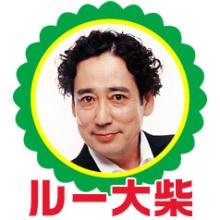
Well, it's true. He's no Cage.]
Wednesday, November 3, 2010
Interesting Link Round-up
Many months ago I wrote a post on the JLPP, and how they're an NPO that promotes Japanese literature in translation through myriad means (you can see what I wrote for yourself here).
The other day, I saw at the Literary Saloon that a new like-minded project called "Read Japan" has been established. The article at the Literary Saloon is quite interesting, and I suggest you read it.
But it turns out it was just a good day for Japanese literature news the other day at the Literary Saloon, so I link you to a book review that also talks a bit about the JLPP (and their problems...) and a Q&A with Haruki Murakami translator Jay Rubin.
Basically, this is a post that is telling you to start following the Literary Saloon if you haven't already, especially if you have an interest in international literature even beyond that of Japan.
The other day, I saw at the Literary Saloon that a new like-minded project called "Read Japan" has been established. The article at the Literary Saloon is quite interesting, and I suggest you read it.
But it turns out it was just a good day for Japanese literature news the other day at the Literary Saloon, so I link you to a book review that also talks a bit about the JLPP (and their problems...) and a Q&A with Haruki Murakami translator Jay Rubin.
Basically, this is a post that is telling you to start following the Literary Saloon if you haven't already, especially if you have an interest in international literature even beyond that of Japan.
Monday, August 16, 2010
Donuts Make Me Go Nuts
Because A) I have a feeling no one cares about my thoughts on The Great Gatsby and therefore I don't have the energy to write anything about it, and B) I've been dying to put a translation up here for a long time but the one I'm working on is kind of a beast, I present to you some new (and old) Haruki Murakami translations.
In Yoru No Kumozaru, Murakami's nifty little flash fiction collection, Murakami has two stories based (sort of) around donuts. The first story about donuts (sort of) is one that I translated and put up many moons ago, back in the good ol' days of thenow thoroughly defunct Kumozaru Project. I went on vacation with my family this past weekend, and what better way to relax than a nice, quick little translation work for fun. Besides the relationship between the word "donut," I like the little call back to Sophia University. And without further introduction...:
"Suburbanization (The Doughnut Effect)"
I'd been dating my fiance for three years, but it was when she suburbanized that our relationship went sour ---- how the hell can anyone get along with a lover who leaves the city for the suburbs? ---- and I was getting wasted in bars almost every night, washed out and losing weight like Humphrey Bogart in The Treasure of the Sierra Madre.
"Brother, I'm begging you, you've got to get over her. As it stands now, your body is broken," my little sister urged me. "I know how you're feeling, but those who suburbanize can't be un-suburbanized. You've got to end it! Don't you think so?"
Of course she was right. It was like my sister said, once you've gone suburban, you're suburban for eternity.
I called my fiance to tell her goodbye. "It's heartbreaking to be separated from you, but in the end, it's only fate that this is happening, right? I'll never forget you, not for one second in my whole life..........and so on."
"You still don't get it, do you?" my suburbanized lover said. "At the center of human existence is naught. Nothing, zero. Why aren't you trying to focus on this vacuum? Why do your eyes only go to the parts around it?"
Why? That's what I wanted to ask her. Why suburbanites can only have such a narrow-minded worldview.
But at any rate, that's how I broke up with my fiance. That was two years ago now. Then, last spring, without any warning, my sister suburbanized. Immediately after she left Sophia University and started working at Japan Airlines, in a hotel lobby in Sapporo after a business trip, she suddenly just up and suburbanized. My mom locked herself in her home and spent day after day in tears and sorrow.
Every now and then I try to call my sister and ask, "How are ya'?"
"You still don't get it, do you?" my suburbanized sister says. "At the center of human existence...."
_______
Donuts, Once Again
It was because of an event called the Sophia University Seminar for the Study of Doughnuts - boy, college students these days sure come up with all sorts of things - that I got a call asking whether I'd like to participate in a symposium to discuss the current state of doughnuts. Sounds good, I replied. I too have a personal opinion regarding doughnuts. Knowledge, opinion, a sense of appreciation - no matter how you slice it, it will be a long time before I lose to these strange college kids.
The Sophia University Seminar for the Study of Doughnuts, Fall Event was held in a rented hall at the Hotel New Otani. There was a band and a doughnut matching game, and after a dinner mixed with snacks, the symposium was held in a neighboring room. Besides myself, famous cultural anthropologists and food critics, among others, were in attendance.
"Doughnuts are a part of contemporary literature, and if we decide we can have the power, that is, the indispensable factor to commit directly a certain kind of coming together individually to identify the areas of our subconsciousness... " I recited. My compensation was 50,000 yen.
I thrust the 50,000 yen into my pocket, headed to the bar, and drank vodka tonics with a girl from the French Literature department who I met at the doughnut matching game.
"In the end, for better or worse, your novels are kinda doughnut-y. I bet Flaubert didn't even think of something like a doughnut even once."
That's right, Flaubert probably did not think about doughnuts. But it's the 20th century now, and pretty soon it's going to be the 21st. You don't just bring up Flaubert in this day and age.
"The doughnut, c'est moi," I said, mimicking Flaubert.
"You're an interesting person, aren't you," she said, giggling. I'm not trying to brag here but, making girls from the French Lit department laugh is kind of my specialty.
In Yoru No Kumozaru, Murakami's nifty little flash fiction collection, Murakami has two stories based (sort of) around donuts. The first story about donuts (sort of) is one that I translated and put up many moons ago, back in the good ol' days of the
"Suburbanization (The Doughnut Effect)"
I'd been dating my fiance for three years, but it was when she suburbanized that our relationship went sour ---- how the hell can anyone get along with a lover who leaves the city for the suburbs? ---- and I was getting wasted in bars almost every night, washed out and losing weight like Humphrey Bogart in The Treasure of the Sierra Madre.
"Brother, I'm begging you, you've got to get over her. As it stands now, your body is broken," my little sister urged me. "I know how you're feeling, but those who suburbanize can't be un-suburbanized. You've got to end it! Don't you think so?"
Of course she was right. It was like my sister said, once you've gone suburban, you're suburban for eternity.
I called my fiance to tell her goodbye. "It's heartbreaking to be separated from you, but in the end, it's only fate that this is happening, right? I'll never forget you, not for one second in my whole life..........and so on."
"You still don't get it, do you?" my suburbanized lover said. "At the center of human existence is naught. Nothing, zero. Why aren't you trying to focus on this vacuum? Why do your eyes only go to the parts around it?"
Why? That's what I wanted to ask her. Why suburbanites can only have such a narrow-minded worldview.
But at any rate, that's how I broke up with my fiance. That was two years ago now. Then, last spring, without any warning, my sister suburbanized. Immediately after she left Sophia University and started working at Japan Airlines, in a hotel lobby in Sapporo after a business trip, she suddenly just up and suburbanized. My mom locked herself in her home and spent day after day in tears and sorrow.
Every now and then I try to call my sister and ask, "How are ya'?"
"You still don't get it, do you?" my suburbanized sister says. "At the center of human existence...."
_______
Donuts, Once Again
It was because of an event called the Sophia University Seminar for the Study of Doughnuts - boy, college students these days sure come up with all sorts of things - that I got a call asking whether I'd like to participate in a symposium to discuss the current state of doughnuts. Sounds good, I replied. I too have a personal opinion regarding doughnuts. Knowledge, opinion, a sense of appreciation - no matter how you slice it, it will be a long time before I lose to these strange college kids.
The Sophia University Seminar for the Study of Doughnuts, Fall Event was held in a rented hall at the Hotel New Otani. There was a band and a doughnut matching game, and after a dinner mixed with snacks, the symposium was held in a neighboring room. Besides myself, famous cultural anthropologists and food critics, among others, were in attendance.
"Doughnuts are a part of contemporary literature, and if we decide we can have the power, that is, the indispensable factor to commit directly a certain kind of coming together individually to identify the areas of our subconsciousness... " I recited. My compensation was 50,000 yen.
I thrust the 50,000 yen into my pocket, headed to the bar, and drank vodka tonics with a girl from the French Literature department who I met at the doughnut matching game.
"In the end, for better or worse, your novels are kinda doughnut-y. I bet Flaubert didn't even think of something like a doughnut even once."
That's right, Flaubert probably did not think about doughnuts. But it's the 20th century now, and pretty soon it's going to be the 21st. You don't just bring up Flaubert in this day and age.
"The doughnut, c'est moi," I said, mimicking Flaubert.
"You're an interesting person, aren't you," she said, giggling. I'm not trying to brag here but, making girls from the French Lit department laugh is kind of my specialty.
Saturday, May 1, 2010
Mistakes!! plus the text.
[For those of you confused, this post is a response to the post "A 32 Year-Old Day Tripper", which I posted a few hours right before this one. You might want to read that post first.]
Instead of fixing the last post, I'll just say what I need to say here. It's all part of the process (that's what I try to tell myself instead of being upset by my foolishness).
Well, I have to admit, I think I made some mistakes. If you Google "32 Year Old Day Tripper", there are two other translations available online. I of course read through both.
Two things struck me. One is the whole bucket of water thing. Still enough variety there for me to not throw away my own translation entirely.
However I do feel I made one big error. Right before my final long excerpt, the narrator says this:
There are times when it seems to me that it might not be so bad to be eighteen again. However, when I try to think of what the first thing I'd do if I was eighteen again, I can't come up with a single idea.
Or maybe I'll end up dating charming thirty-two year old women. That wouldn't be so bad.
I hate how little context is needed for a Japanese sentence to work. It's so vague. The only outright mistake I made in my translation in the next line (“Will there ever be a time when you think you'll want to be eighteen again?” I asked.) is that past tense, "asked', when in the original it's "ask", present/future.
BUT THIS CHANGES EVERYTHING!!!!
Basically, it implies the girl, only marked as 彼女, "her" is being asked this in the present and/or future. And by continuity of the conversation, it implies that the narrator is asking this 32 year old woman in his imagination, and not the eighteen year old girl he was talking to. Thus, I would probably be better suited to write: "Do you ever think you'll want to be eighteen again?" I'll ask her.
And of course, the line "Even if you're old, you know why." is just flat out wrong. It seems to be "You'll understand when you're older." Which makes sense, since in this scenario the narrator is eighteen and the woman is thirty two.
Bah. My future as a translator is compromised. I am clearly not to be trusted. This is upsetting to me. However, reading alternate translations is fun. There are things I like about theirs and things I like more in mine. The following is my revised, complete story. I might as well put it out there.
Instead of fixing the last post, I'll just say what I need to say here. It's all part of the process (that's what I try to tell myself instead of being upset by my foolishness).
Well, I have to admit, I think I made some mistakes. If you Google "32 Year Old Day Tripper", there are two other translations available online. I of course read through both.
Two things struck me. One is the whole bucket of water thing. Still enough variety there for me to not throw away my own translation entirely.
However I do feel I made one big error. Right before my final long excerpt, the narrator says this:
There are times when it seems to me that it might not be so bad to be eighteen again. However, when I try to think of what the first thing I'd do if I was eighteen again, I can't come up with a single idea.
Or maybe I'll end up dating charming thirty-two year old women. That wouldn't be so bad.
I hate how little context is needed for a Japanese sentence to work. It's so vague. The only outright mistake I made in my translation in the next line (“Will there ever be a time when you think you'll want to be eighteen again?” I asked.) is that past tense, "asked', when in the original it's "ask", present/future.
BUT THIS CHANGES EVERYTHING!!!!
Basically, it implies the girl, only marked as 彼女, "her" is being asked this in the present and/or future. And by continuity of the conversation, it implies that the narrator is asking this 32 year old woman in his imagination, and not the eighteen year old girl he was talking to. Thus, I would probably be better suited to write: "Do you ever think you'll want to be eighteen again?" I'll ask her.
And of course, the line "Even if you're old, you know why." is just flat out wrong. It seems to be "You'll understand when you're older." Which makes sense, since in this scenario the narrator is eighteen and the woman is thirty two.
Bah. My future as a translator is compromised. I am clearly not to be trusted. This is upsetting to me. However, reading alternate translations is fun. There are things I like about theirs and things I like more in mine. The following is my revised, complete story. I might as well put it out there.
A 32-Year Old Day Tripper
Before the resolution I made to tackle Genichiro Takahashi as my next translation project, I had been 85% (made up number) done with a translation of a Murakami short-story from かンガルー日和, a simple but not easily translatable title, I think. 日和 simply means weather, usually implying "good" weather. It's the attachment to the noun that makes it a bit tricky. So I think Rubin/Birnbaum[?]'s "A Perfect Day for Kangaroo-ing" is a sweet and effective title. Whoops, getting off track already. Anyway, the story is called "32歳のデイトリッパ". It's quite short, one of the reasons I picked it, and I was also curious about the very obvious Beatles' reference in the title.
Since I always feel the icy specter of a certain creative rights management company looming over my shoulder whenever I post things Murakami-related (probably unnecessary) I won't post the story in it's entirety here. But I do want to talk about it some. So I will.
Like I said earlier, the story is short and sweet, with not a whole lot of meat on the bones. But it does start with a curious premise, as most Murakami stories do:
I'm thirty-two and she's eighteen, and... every time I say that to myself, it just always sounds so boring.
I'm not yet thirty-three, and she's still eighteen... that'll do.
The two of us are simply friends; nothing more, nothing less. I have a wife, and she has no less than six boyfriends. On weekdays she goes out with these six boyfriends, and one Sunday a month she goes out with me. The other Sundays she watches TV at home. She's as cute as a walrus when she's watching TV.
I quadruple checked the word "walrus", せいうち, since that is an awfully strange animal association. Is this girl kind of fat? Masculine (obviously I know there are both female and male walruses but the word itself seems to be undeniable "male" to me)? Or does Murakami just have a soft spot for this particular sea creature? Mysteries upon mysteries.
The narrator spends some time thinking about how strange it is to be hanging out with a girl so much younger than him. Then he starts judging people:
The general consensus of our peers is that “Young girls are boring, man!” Nevertheless, these very same guys date young girls too, all the time. So do you think they eventually discover young girls that aren't boring? Nah, it doesn't mean that at all. It's actually the boringness of the girls that attracts them. They're just playing a complicated game, a game they honestly enjoy. A game where they wash their faces with buckets full of the young girls' boredom water, while they don't let their lady friends have a single drop.
At least, that's how it seems to me.
In truth, nine girls out of ten are boring things. However, girls don't realize that. Girls are young, beautiful, and full of curiosity. The boringness of their own selves is completely unrelated to the things that young girls are thinking about.
Yeesh.
The last sentence of the first and third paragraph in that excerpt drove me nuts! In the first case I just had to divide up the sentence into those parts. I'm still not entirely convinced of the accuracy of the translation (actually, I'm pretty sure of it, but it was a pretty messed up sentence), and even now it doesn't sound great, but so it goes. (This ain't being published, and I just want to get this out there and start my new project. If I was in an alternate universe were I was being paid to publish Murakami, I'd still be working on it, だよ.) "Yeesh", of course, is what I decided to use for Murakami's quintessential "やれやれ”. Maybe it's too personal a choice. How would y'all handle it? Oops, derailing again.
So, anyway, the rest of the story is mostly a conversation between the narrator and his date about whether they'd like to be eighteen again. They have a fun little banter, ultimately deciding that neither particular would want to, though for no particular reasons why either.
Again, a simple little story, that based on the above contents, makes it not particularly memorable to me. A sweet little diversion, but not surprising that it's not in any English langauge short story collections yet. However, I really like the very end. And that is what salvages the story for me. It needs a little context, so I'll start at the end of their conversation:
“So will there ever be a time when you think you'll want to be eighteen again?” I asked.
“Hmm, let me see.” She grinned and pretended to think about it. “Nope. Doubt it.”
“Really?”
“Yup.”
“I don't get it,” I said. “Everyone says that being young is a wonderful thing.”
“Yeah, it is wonderful.”
“Then why don't you want to?”
“Even if you're old, you know why.”
Of course at thirty-two, if I skip even a week of running, my stomach flab starts getting conspicuous. I can't be eighteen again. That's obvious.
After I finish my morning run, I always drink a can of vegetable juice, lie on my side and put on“Day Tripper” by the Beatles.
“Dayyyy-ay-ay tripper!”
When listening to that song, I start feeling like I'm sitting on a train. Telephone poles, train stations, tunnels, bridges, cows, horses, smoke stacks, garbage, steadily they all pass by, one after the other. Scenery that never changed, no matter where I was. Though in the old days, it seemed like the scenery was incredibly beautiful.
Only the person sitting next to me would change. This time, the one sitting next to me is the eighteen year old girl. I'm in the window seat, she in the aisle seat.
“Would you like to change seats?” I'll say.
“Thanks,” she says. “You're too kind.”
It's not a matter of kindness, I say with a bitter laugh. It's just that I'm much more used to boredom than you.
A 32 year old
Day tripper
Sick of counting the telephone poles.
1981/8/20
A lot of interesting things in this last section. The first and most obvious is the inclusion of another poem. Looks like early Murakami had a thing for it in his early days of writing. There's no other way to see it. It was tricky because in the paperback edition, it's basically by itself on the page, due to the layout. But there's a very clear line break (it doesn't start where the first line normally starts on the margin), and for only a handful of words it is divided up in a very specific way. Of course, due to Japanese word order it comes out a bit difference. Literally, it should be more like:
Sick of counting telephones poles
A 32 year old
day tripper.
In a way it's nicer for the composition to end with the word "Day Tripper" since it's in the title. But the most poetic image is obviously the "sick of counting telephone poles" part. So I'm willing to make the trade. The stilted clause order is too classical Japanese for me, too Basho.
The next bit that's interesting to me is that it ends with the date. August 20, 1981. Five years before the book was published, well after A Slow Boat to China, his first collection of short stories, was released. It almost makes me wonder if it's somewhat based on a true story that he came back. Or maybe he wrote it at the time but didn't include it in that first collection for some reason? Who knows.
Finally, something about the line "It's just that I'm much more used to boredom than you" just stirs something in me. I think it's a powerful line with a lot of weight, even though there's not all that much to it. It ties the story together to me. Then again, maybe it's just me.
And one final aside. I don't see how the original Beatles song fits into this story thematically at all. It must be just the tune that he likes. The lyrics don't fit at all. But considering the amount of English Murakami may have known back then, maybe all he could understand was, "Day Tripper. One way ticket, yah." So maybe he just associated it with travel. Traveling far away with the intention to never go back.
EDIT: Check out why I'm wrong(!!) and the entire translation of the story here
Since I always feel the icy specter of a certain creative rights management company looming over my shoulder whenever I post things Murakami-related (probably unnecessary) I won't post the story in it's entirety here. But I do want to talk about it some. So I will.
Like I said earlier, the story is short and sweet, with not a whole lot of meat on the bones. But it does start with a curious premise, as most Murakami stories do:
I'm thirty-two and she's eighteen, and... every time I say that to myself, it just always sounds so boring.
I'm not yet thirty-three, and she's still eighteen... that'll do.
The two of us are simply friends; nothing more, nothing less. I have a wife, and she has no less than six boyfriends. On weekdays she goes out with these six boyfriends, and one Sunday a month she goes out with me. The other Sundays she watches TV at home. She's as cute as a walrus when she's watching TV.
I quadruple checked the word "walrus", せいうち, since that is an awfully strange animal association. Is this girl kind of fat? Masculine (obviously I know there are both female and male walruses but the word itself seems to be undeniable "male" to me)? Or does Murakami just have a soft spot for this particular sea creature? Mysteries upon mysteries.
The narrator spends some time thinking about how strange it is to be hanging out with a girl so much younger than him. Then he starts judging people:
The general consensus of our peers is that “Young girls are boring, man!” Nevertheless, these very same guys date young girls too, all the time. So do you think they eventually discover young girls that aren't boring? Nah, it doesn't mean that at all. It's actually the boringness of the girls that attracts them. They're just playing a complicated game, a game they honestly enjoy. A game where they wash their faces with buckets full of the young girls' boredom water, while they don't let their lady friends have a single drop.
At least, that's how it seems to me.
In truth, nine girls out of ten are boring things. However, girls don't realize that. Girls are young, beautiful, and full of curiosity. The boringness of their own selves is completely unrelated to the things that young girls are thinking about.
Yeesh.
The last sentence of the first and third paragraph in that excerpt drove me nuts! In the first case I just had to divide up the sentence into those parts. I'm still not entirely convinced of the accuracy of the translation (actually, I'm pretty sure of it, but it was a pretty messed up sentence), and even now it doesn't sound great, but so it goes. (This ain't being published, and I just want to get this out there and start my new project. If I was in an alternate universe were I was being paid to publish Murakami, I'd still be working on it, だよ.) "Yeesh", of course, is what I decided to use for Murakami's quintessential "やれやれ”. Maybe it's too personal a choice. How would y'all handle it? Oops, derailing again.
So, anyway, the rest of the story is mostly a conversation between the narrator and his date about whether they'd like to be eighteen again. They have a fun little banter, ultimately deciding that neither particular would want to, though for no particular reasons why either.
Again, a simple little story, that based on the above contents, makes it not particularly memorable to me. A sweet little diversion, but not surprising that it's not in any English langauge short story collections yet. However, I really like the very end. And that is what salvages the story for me. It needs a little context, so I'll start at the end of their conversation:
“So will there ever be a time when you think you'll want to be eighteen again?” I asked.
“Hmm, let me see.” She grinned and pretended to think about it. “Nope. Doubt it.”
“Really?”
“Yup.”
“I don't get it,” I said. “Everyone says that being young is a wonderful thing.”
“Yeah, it is wonderful.”
“Then why don't you want to?”
“Even if you're old, you know why.”
Of course at thirty-two, if I skip even a week of running, my stomach flab starts getting conspicuous. I can't be eighteen again. That's obvious.
After I finish my morning run, I always drink a can of vegetable juice, lie on my side and put on“Day Tripper” by the Beatles.
“Dayyyy-ay-ay tripper!”
When listening to that song, I start feeling like I'm sitting on a train. Telephone poles, train stations, tunnels, bridges, cows, horses, smoke stacks, garbage, steadily they all pass by, one after the other. Scenery that never changed, no matter where I was. Though in the old days, it seemed like the scenery was incredibly beautiful.
Only the person sitting next to me would change. This time, the one sitting next to me is the eighteen year old girl. I'm in the window seat, she in the aisle seat.
“Would you like to change seats?” I'll say.
“Thanks,” she says. “You're too kind.”
It's not a matter of kindness, I say with a bitter laugh. It's just that I'm much more used to boredom than you.
A 32 year old
Day tripper
Sick of counting the telephone poles.
1981/8/20
A lot of interesting things in this last section. The first and most obvious is the inclusion of another poem. Looks like early Murakami had a thing for it in his early days of writing. There's no other way to see it. It was tricky because in the paperback edition, it's basically by itself on the page, due to the layout. But there's a very clear line break (it doesn't start where the first line normally starts on the margin), and for only a handful of words it is divided up in a very specific way. Of course, due to Japanese word order it comes out a bit difference. Literally, it should be more like:
Sick of counting telephones poles
A 32 year old
day tripper.
In a way it's nicer for the composition to end with the word "Day Tripper" since it's in the title. But the most poetic image is obviously the "sick of counting telephone poles" part. So I'm willing to make the trade. The stilted clause order is too classical Japanese for me, too Basho.
The next bit that's interesting to me is that it ends with the date. August 20, 1981. Five years before the book was published, well after A Slow Boat to China, his first collection of short stories, was released. It almost makes me wonder if it's somewhat based on a true story that he came back. Or maybe he wrote it at the time but didn't include it in that first collection for some reason? Who knows.
Finally, something about the line "It's just that I'm much more used to boredom than you" just stirs something in me. I think it's a powerful line with a lot of weight, even though there's not all that much to it. It ties the story together to me. Then again, maybe it's just me.
And one final aside. I don't see how the original Beatles song fits into this story thematically at all. It must be just the tune that he likes. The lyrics don't fit at all. But considering the amount of English Murakami may have known back then, maybe all he could understand was, "Day Tripper. One way ticket, yah." So maybe he just associated it with travel. Traveling far away with the intention to never go back.
EDIT: Check out why I'm wrong(!!) and the entire translation of the story here
Tuesday, April 6, 2010
Murakami the Poet
Another one of the myriad Haruki Murakami books I have purchased recently is 夢で合いましょう, or, Let's Meet in a Dream, a collaborative collection of myriad belle lettres he wrote along with essayist/noted video game creator Shigesato Itoi. (You can even check out some sample translations at Yomuka!)
The most interesting thing about 夢で合いましょう, however, is the inclusion of some pieces of writing by Mr. Murakami that...well, they're poems.
They belong to what Murakami dubs the "Yakult Swallows Poetry Anthology" (the Yakult Swallows being a Japanese baseball team). Their titles imply a sense of varying topics. But they are mostly basball related. For example:
オイル・サーディン
おい審判
お前の目はどこについてるんだ、
俺は、昨日いわしの缶詰を食ったけど、
お前よりはずっとマシだったぞ。
Oil Sardine
Hey referee!
What were your eyes following,
I ate a can of sardines yesterday, but
even I was more preferable than you!
Like I said, poetry isn't really my bag, but even I know that translating poetry is an especially difficult thing to do. And the above poetry (my own) is just bad. Translation in poetry is less about the words and more about the meaning... the sound and the ideas. Poetry is about the feelings than the actual text. And language is so entwined in culture and history, going word for word is going to produce, to put it bluntly, shit poetry. Even when trying to keep it as close to the original as possible, there are phrases that just don't translate literally. So I say, if it's poetry, go crazy. Think outside the box. Poetry is one of the ultimate expressions of creativity. Being constrained by language goes against everything that poetry stands for.
I'm no poet, but this is what I would do.
Sardines
Hey ref!
What game are you even watching?
For chrissakes, I ate a can of sardines yesterday,
and even I could do better than you!
I am not one to judge to the quality of Murakami's poetry (I imagine anyone with a passing interest in verse would tell Murakami to stick to fiction), but at least they're pretty amusing.
The most interesting thing about 夢で合いましょう, however, is the inclusion of some pieces of writing by Mr. Murakami that...well, they're poems.
They belong to what Murakami dubs the "Yakult Swallows Poetry Anthology" (the Yakult Swallows being a Japanese baseball team). Their titles imply a sense of varying topics. But they are mostly basball related. For example:
オイル・サーディン
おい審判
お前の目はどこについてるんだ、
俺は、昨日いわしの缶詰を食ったけど、
お前よりはずっとマシだったぞ。
Oil Sardine
Hey referee!
What were your eyes following,
I ate a can of sardines yesterday, but
even I was more preferable than you!
Like I said, poetry isn't really my bag, but even I know that translating poetry is an especially difficult thing to do. And the above poetry (my own) is just bad. Translation in poetry is less about the words and more about the meaning... the sound and the ideas. Poetry is about the feelings than the actual text. And language is so entwined in culture and history, going word for word is going to produce, to put it bluntly, shit poetry. Even when trying to keep it as close to the original as possible, there are phrases that just don't translate literally. So I say, if it's poetry, go crazy. Think outside the box. Poetry is one of the ultimate expressions of creativity. Being constrained by language goes against everything that poetry stands for.
I'm no poet, but this is what I would do.
Sardines
Hey ref!
What game are you even watching?
For chrissakes, I ate a can of sardines yesterday,
and even I could do better than you!
I am not one to judge to the quality of Murakami's poetry (I imagine anyone with a passing interest in verse would tell Murakami to stick to fiction), but at least they're pretty amusing.
Monday, March 29, 2010
On Summer
I've just about finished my first week in Japan. Classes still don't start until next week, and I've had mostly just orientation stuff. I've moved into my new place, and I celebrated by going to a bunch of places this weekend, such as the Tokyo International Anime Fair and the Zoujouji Temple, both of which I'll hopefully be talking about soon.
I also went to my first Book Off, which is a used book store chain in Japan. They are awesome. Paperbacks aren't too expensive to begin with in Japan, but here most of the books are only a hundred yen (1 dollar). That's amazing. Can you imagine something like that in the states? On this sort of national level?
Of course, I stocked up on a bunch of Haruki Murakami that I know will never be translated. I only recently sort of realized the extent of Murakami's output in Japan. He's got essays upon essays, travel guides, picture books... it's unbelievable. I never realized how much more Murakami I'll be able to enjoy in my life once I know Japanese (I mean, sure, I can and do enjoy it now but it's a lot of work). Because there's no market for this kind of stuff in America. I'm sure 1Q84 will do just great compared to how most translated fiction sells in the states, but I don't think the majority of Americans pick up a collection of two page non-fiction miscellanies by their favorite novelists, domestic or international.
So for me, it's heaven, and I'd like to share with you a tiny little sliver of that heaven. I bought six Murakami books this weekend. One of them is called "村上朝日堂" (Murakami Asahidou). It's got illustrations by Anzai Mizumaru (like Yoru No Kumozaru), and is just a bunch of little essays about this and that. The following is a translation of one of them, called "On Summer":
On Summer
I love summer. In summer afternoons with the sun blazing down, wearing a pair of shorts and drinking a beer while listening to rock and roll, I think to myself how lucky I am.
The end of summer, after those three months or so, is truly precious. If it were possible, I would want it to go on for half a year.
Recently I read a sci-fi novel called "Planet of Exile" by Ursula K. Le Guin. It's a story about a planet really far away, where it takes sixty years to go through one year on earth. In other words, spring is 15 years long, summer is 15 years long, autumn is 15 years long, and winter is 15 years long. That's awesome.
Therefore, on this planet there's a saying that goes, "It's a blessing to be able to see spring twice." In other words, it's lucky to have such a long life.
However, with such a life, living through winter twice would be horrible, because the winters on this planet are dark and terribly severe.
If I were living on that planet, I think having summer be first would be nice. I'd spend my childhood running around under the hot sun, spend puberty and young adulthood gracefully in autumn, spend my prime and middle age in the harsh coldness, become an old man when the spring comes.
I can't say if I'd be able to live long enough to reach summer one more time. But I think it would be nice if I could die with the feeling, "Oh, I can hear the Beach Boys playing somewhere..."
There's an old Sinatra ballad called "September Song".
It goes something like: "It's a long time from May to December, but the days grow short when you reach September. When the autumn weather turns the leaves to flame, one hasn't got time for the waiting game. The days dwindle down to a precious few."
When l listen to it like that... I mean it's a really great song, but... It makes me depressed. I guess I just want to spend my days thinking that my time to die will be the summer.
For comparison, you can actually find another translation by a certain Christopher Allison here. Just to point out, I didn't find this link until after I was done with my own, so I was no way affected by his translation. The only thing I don't like about his is that he didn't look up the name of the Le Guin story, or the Sinatra song. I decided to use the actual lyrics of the Sinatra song, since Murakami obviously was doing a quickie translation into Japanese in the first place. I don't know, that just made more sense to me.
I also went to my first Book Off, which is a used book store chain in Japan. They are awesome. Paperbacks aren't too expensive to begin with in Japan, but here most of the books are only a hundred yen (1 dollar). That's amazing. Can you imagine something like that in the states? On this sort of national level?
Of course, I stocked up on a bunch of Haruki Murakami that I know will never be translated. I only recently sort of realized the extent of Murakami's output in Japan. He's got essays upon essays, travel guides, picture books... it's unbelievable. I never realized how much more Murakami I'll be able to enjoy in my life once I know Japanese (I mean, sure, I can and do enjoy it now but it's a lot of work). Because there's no market for this kind of stuff in America. I'm sure 1Q84 will do just great compared to how most translated fiction sells in the states, but I don't think the majority of Americans pick up a collection of two page non-fiction miscellanies by their favorite novelists, domestic or international.
So for me, it's heaven, and I'd like to share with you a tiny little sliver of that heaven. I bought six Murakami books this weekend. One of them is called "村上朝日堂" (Murakami Asahidou). It's got illustrations by Anzai Mizumaru (like Yoru No Kumozaru), and is just a bunch of little essays about this and that. The following is a translation of one of them, called "On Summer":
On Summer
I love summer. In summer afternoons with the sun blazing down, wearing a pair of shorts and drinking a beer while listening to rock and roll, I think to myself how lucky I am.
The end of summer, after those three months or so, is truly precious. If it were possible, I would want it to go on for half a year.
Recently I read a sci-fi novel called "Planet of Exile" by Ursula K. Le Guin. It's a story about a planet really far away, where it takes sixty years to go through one year on earth. In other words, spring is 15 years long, summer is 15 years long, autumn is 15 years long, and winter is 15 years long. That's awesome.
Therefore, on this planet there's a saying that goes, "It's a blessing to be able to see spring twice." In other words, it's lucky to have such a long life.
However, with such a life, living through winter twice would be horrible, because the winters on this planet are dark and terribly severe.
If I were living on that planet, I think having summer be first would be nice. I'd spend my childhood running around under the hot sun, spend puberty and young adulthood gracefully in autumn, spend my prime and middle age in the harsh coldness, become an old man when the spring comes.
I can't say if I'd be able to live long enough to reach summer one more time. But I think it would be nice if I could die with the feeling, "Oh, I can hear the Beach Boys playing somewhere..."
There's an old Sinatra ballad called "September Song".
It goes something like: "It's a long time from May to December, but the days grow short when you reach September. When the autumn weather turns the leaves to flame, one hasn't got time for the waiting game. The days dwindle down to a precious few."
When l listen to it like that... I mean it's a really great song, but... It makes me depressed. I guess I just want to spend my days thinking that my time to die will be the summer.
For comparison, you can actually find another translation by a certain Christopher Allison here. Just to point out, I didn't find this link until after I was done with my own, so I was no way affected by his translation. The only thing I don't like about his is that he didn't look up the name of the Le Guin story, or the Sinatra song. I decided to use the actual lyrics of the Sinatra song, since Murakami obviously was doing a quickie translation into Japanese in the first place. I don't know, that just made more sense to me.
Wednesday, March 10, 2010
The Other Murakami Movies
Just a quick little post today, but this was so cool that I had to share it.
There are a handful of movies based on the works of Murakami. As I mentioned yesterday, Norwegian Wood is the latest, but there's also movies based on "Tony Takitani" (awesome) and "All God's Children Can Dance" (not seen but heard is thoroughly mediocre), both of which were made in the last five years. There are two other Murakami movies, both made in the 1980s. One is called 森の向こう側 based on a short story called 土の中の彼女の小さな犬 (which I believe has not been published in English; I certainly don't recognize the title), and one based on his debut work Hear the Wind Sing (風の歌を聴け).
And you can watch the entirety of Hear the Wind Sing (in pieces) on Youtube. Here's part one. (Check out it's old-timey-ness.)
Enjoy.
There are a handful of movies based on the works of Murakami. As I mentioned yesterday, Norwegian Wood is the latest, but there's also movies based on "Tony Takitani" (awesome) and "All God's Children Can Dance" (not seen but heard is thoroughly mediocre), both of which were made in the last five years. There are two other Murakami movies, both made in the 1980s. One is called 森の向こう側 based on a short story called 土の中の彼女の小さな犬 (which I believe has not been published in English; I certainly don't recognize the title), and one based on his debut work Hear the Wind Sing (風の歌を聴け).
And you can watch the entirety of Hear the Wind Sing (in pieces) on Youtube. Here's part one. (Check out it's old-timey-ness.)
Enjoy.
Tuesday, March 9, 2010
Norwegian Wood: The Movie
About two years ago, it was announced that a movie version of Haruki Murakami's Norwegian Wood was in production. The only details then was that Tran Anh Hung would direct, and it would be released sometime in 2010. I haven't seen any of Tran Ang Hung's work, but apparently he's a very well-respected director. I've also heard around that Murakami is incredibly picky about movie versions of his stuff, so if Murakami approved it/him, it should hopefully be worth seeing.
The latest news is that Radiohead guitarist Jonny Greenwood will be scoring the film. At first I was like, Um what? but as it turns out he composes classical music too, including scoring the film There Will Be Blood. So that's pretty cool. Still, Ryuichi Sakamoto's score for Tony Takitani is my favorite soundtracks of all time and one of the most hauntingly beautiful pieces of music I've ever heard, so Greenwood's got his work cut out for him.
Other news you may have missed:
The latest news is that Radiohead guitarist Jonny Greenwood will be scoring the film. At first I was like, Um what? but as it turns out he composes classical music too, including scoring the film There Will Be Blood. So that's pretty cool. Still, Ryuichi Sakamoto's score for Tony Takitani is my favorite soundtracks of all time and one of the most hauntingly beautiful pieces of music I've ever heard, so Greenwood's got his work cut out for him.
Other news you may have missed:
- It's release date is a (relatively) more specific December 2010 for Japan. I hope it gets a limited release some time soon after in America as well...
- It stars Kenichi Matsuyama as the main character Toru Watanabe. Kenichi Matsuyama is a pretty famous actor these days; you may have seen him as L in the Death Note movies, the main guy in the Detroit Rock City movie, and in the drama version of the [awesome] manga Sexy Voice and Robo. Except for being pretty hilarious in Sexy Voice and Robo (which after only one episode I thought in general was pretty lackluster, and they lead the whole TV show with the best plot line in the manga, so I figured it was only going to go downhill from there), I don't have great feelings towards him. I hated the first Death Note movie (I liked the manga enough; but it was more how the movie was terribly written and acted and directed that made me hate it than it's "faithfulness" to the original) so much I didn't see the others. He's got a lot of other credits, but from the stuff that I've seen, he hasn't really done anything to make me take him seriously as an actor. Let's hope I'm wrong and Norwegian Wood changes that.
- Rinko Kukichi stars as Naoko. I don't know her, but apparently she was nominated for an Academy Award for the movie Babel, and her character didn't utter a single word. That's pretty neat.
- The character Midori is being played by fashion model Kiko Mizuhara, in her first acting role. (Not to judge a book by it's cover, which honestly is what I'm totally doing, but this makes me nervous.)
- The IMDB forums link to this site that has some stills from the movie. Looks pretty damn cool, honestly.
Friday, January 15, 2010
Pinball, 1973

Not counting 1Q84, which is due to be published in September 2011 according to most reports, did you know that Haruki Murakami still has two novels not published in America? Well now you do!
The two novels in question are called Kaze no uta o kike (風の歌を聴け)and 1973-nen no Pinbouru (1973年のピンボール), and in English, they're called Hear the Wind Sing and Pinball, 1973 respectively. They're the first two novels Murakami ever wrote, and along with A Wild Sheep Chase, the three novels make up the Trilogy of the Rat, as all three novels star the same protagonist who has a friend nicknamed "the Rat" (Of course, Dance Dance Dance is a sequel to A Wild Sheep Chase, making it really a tetralogy, but I guess the name was invented before Dance Dance Dance was published. Besides, who says the word tetralogy? Nobody, that's who! Can we bring this parenthetical aside to a close already??). Reportedly, they're unavailable in America because Murakami himself has admitted that he doesn't think they're very good anymore, and refuses to grant publishing rights.
However, there is an official English translation available for both novels, if you have the internet-savvy and/or money to hunt them down.A long time ago (I could check the publication dates but I don't feel like it), Kodansha published English versions of Murakami's most famous works within Japan into English as part of their "Kodansha English Library" collection or some such, basically with the idea that Japanese college students would read them to learn English. And in the back of the novel, there is in fact a page by page listing of uncommon vocabulary and phrases with English to Japanese translations. The best part about these versions is that they're translated by Alfred Birnbaum, who is the translator for the official English version of A Wild Sheep Chase and Dance Dance Dance. (And for those interested in translation comparison, Norwegian Wood is available (officially) from Vintage and translated by Jay Rubin, and in a Kodansha "English Library" version translated by Alfred Birnbaum. I haven't compared the two yet, but I bet it would be fascinating and intend to do so when I can get a hold of a copy.)
Hear the Wind Sing is pretty easy to find online, and will probably cost you about 15 bucks. If I wrote this post a few months ago, I would've said Pinball, 1973 is nearly impossible to get without a couple hundred bucks (or a couple thousand for some rare first editions). But as it turns out, it was just reprinted in Japan about three weeks ago(!!!), and most people on eBay are selling for about $20-25.
It's pretty awesome that its now reprinted, easy-to-get, and fairly inexpensive for non-Japanese reading Murakami-enthusiasts. I ordered and read Hear the Wind Sing a couple years ago and liked it, but I don't remember it very well anymore. Pinball, 1973, which I just read, was surprisingly enjoyable, though it is still far from Murakami's other works. Part of the problem is length; both novels are ridiculously short (I guess you could call them novellas in that sense), so they don't go anywhere. Pinball, 1973 is also where Murakami first tries out his alternating narrator technique. The problem is, the chapters about the Rat are really boring. It provides a missing link to what you find out happens to the Rat in A Wild Sheep Chase, but are otherwise thoroughly unnecessary. The plot is crazy-thin, really more of a series of unrelated events regarding the narrator's lonely and directionless life (a theme Murakami will end up perfecting in later novels). However, some sequences are really touching and others are really hilarious, so I think its still worth a read. I mean, the climax of the novel is the protagonist having a conversation with a Pinball machine.What more do you want??
I decided to write about Pinball, 1973 to celebrate that I finally actually read it. I've had a legally-dubious PDF version that I found online on my computer for years, and have started reading it no less than four times only to put it down at various points. Now that I have finally read it, I can now say that I have officially read every single Murakami novel published in English. This victory is short lived of course, now that 1Q84 has a street-date, and it's even less exciting, now that I know I could have easily read it with an actual book in my hands. Oh well. I'm ordering it now. At least it'll look good on my bookshelf.
Subscribe to:
Posts (Atom)