Well, there's no particular reason for me to write a Best of 2011 list, except for the fact that it's the end of the year and EVERYONE is doing it. Then again, there's no reason NOT for me to do it either.
Though honestly, I read a lot of great books this year. Actually, in general, I just read a lot. I have no records before this year, but I started using Goodreads in January of this year, and I love using it, so I've been very diligent about adding everything I read (to an embarrassing degree, too, since everyone can tell when I totally give up on a book too). As of writing this post, I read 43 books this year, and it'll probably be an even 45 by January 1st—though I know that those two won't end up on this list in the end so I don't mind waiting to write about my Best Of now.
So yes. I've narrowed it down to a top 5, but I also will highlight some honorable mentions as well after. I'll even do a little countdown, because I am a dork. The top 5 all actually came out in 2011, and the honorable mentions will primarily be other great books I read this year but didn't actually come out in 2011. And without further ado:
Will's Best Literature of 2011:
5. Funeral For a Dog
by Thomas Pletzinger
Translated by Ross Benjamin
I read this for a class in Literary Translation right before I graduated, but it's stuck with me for the rest of the year. It's a debut novel, and I think you can tell when you read it. It has a messy, shaggy dog type quality to the prose as well as the construction of the work itself, but it is such a strong voice, and it is amazingly effective.
Basically, it's about a journalist who's sent by his editor/girlfriend to interview a reclusive children's book author. There's a story in a story here too—the journalist discovers a manuscript while staying at the author's lakeside home that tells the story of a love triangle that spans across the globe, and the way these two plot elements dovetail is nothing short of beautiful and heartbreaking at the same time. There's even a little real-life Easter Egg that you can discover, but I'll let you find it for yourself. So yes, three words to describe this book: messy, heartbreaking, beautiful. Just like life, you say? Just like love, you say?
It also reads beautiful (i.e. the translation is amazing) possibly due in part the level of collaboration between the author (who does speak English) and the translator (they're like best friends now). Insider knowledge!
4. Stone Upon Stone
by Wiesław Myśliwski
Translated By Bill Johnston
If anyone from the aforementioned translation class reads this blog (I'm pretty sure they don't), they are sure to yell at me, because I was the only person in class who had anything slightly negative to say about this book when we were reading it.
But let the record show that I declare that I was slightly too hard on it, though I still believe some of my minor criticisms are valid. I was on hard on this book because I had to read this 500+ page monstrosity in about four days, which might have made me a little extra sensitive or cranky.
Though truly, it was not the worst four days I've ever spent (though very tiring). Stone Upon Stone follows a man, building his grave, as he reflects upon his life in rural Poland. But this dude was a boisterous Zorba type fellow—a heavy drinker, a fighter, a lover, a coward, a soldier, a pesky brat. It chronicles both his entire life—elliptically, and in pieces—but it also shows the way Poland modernized starting from around World War II until almost the present day (present when it was written, I believe, which was the mid-1980s).
Look, invisible classmates who aren't here, the main character is awesome. He is hilarious, and his life was very entertaining. However, sometimes I don't appreciate ten pages of solid text when some minor character who won't appear again talks in one large existential monologue about life or farming or whatever, when I still have three hundred pages to read in 48 hours on top of everything else I have to do.
But seriously, this is the kind of ambitious, all-encompassing, total novel that only comes like once a decade, if that. I know absolutely nothing of Polish or Eastern European literature, but I know that this is an "important" novel. It's the kind of greatness that every writer aspires to. And it is like 85% entertaining, which for it's page length is an impressive feat. Stone Upon Stone absolutely needs to be read by anyone who loves serious fiction.
3. There But For The
by Ali Smith
Thinking about this novel right novel, I'm still amazed by the linguistic acrobatics and witticisms. And how moved I was when I reached the end.
The basic plot (there's no such thing, and I keep saying this, and I know in the end I'm going to talk about how much more to it there is than that summary but I can't help myself) is that a quiet man Miles is invited to a dinner party, then locks himself in the guest room and doesn't come out. However, the novel is never told from Miles' POV, but from four other characters that barely know the man in question, like someone who went on a high school trip with him, or the precocious daughter of the family who invited Miles to the dinner. They all only know a little bit about him, and yet Miles becomes this strange but powerful symbol to them all, and they all rally behind him to make sure that he doesn't starve in the room, for instance.
But Ali Smith brings such life to her words, and each of the four characters is so different from each other and linguistically different. And on top of that, each chapter uses a word in the title as it's theme. You'd think it would be hard to write a story using the word "the" as the theme that ties it all together, but Ali Smith not only accomplishes this feat, she freaking excels at it. Mind = still blown.
2. How To Live Safely in a Science Fictional Universe
by Charles Yu
Ok, so I'm cheating a little bit. TECHNICALLY the hardcover of this book came out last year, but the paperback DID come out this year, and that's what I actually read (though I've been wanting to read it since before the paperback came out. I just got lucky I waited long enough that it did). But frankly, this book was so amazing I couldn't not let it on this list.
I'm not sure this book is as technically or stylistically as brilliant as some of the other books on this list, but this one was by far the most entertaining, in a page-turner kind of way. I think it's literary merits are still very high though. It just happens to weave themes like "fiction" vs "reality," the complicated relationships between family, determinism and fate, and the nature of love, with a gripping science-fictional hook.
Again, another novel that has a shaggy dog appeal. The beginning, in particular, has a slightly patchwork quality of little vignettes of what it's like to be a "time travel machine repair man," but when the ball gets rolling it really gets rolling. In that way it reminds me of early Murakami, particularly A Wild Sheep Chase and Hardboiled Wonderland and the End of the World. A Wild Sheep Chase evokes a mood before the plot gets started almost a hundred pages in, a quality this book definitely shares, and it also has HWatEotW's science-fictional/meta-physical plot bent. I fell for this book so hard, like I haven't in a long time. It's messiness keeps it from being a truly great novel, but it's entertainment and thought value brings it way up my list, and I cannot wait to read everything by Charles Yu I can get my hands on.
1. The Private Lives of Trees
by Alejandro Zambra
Translated by Megan McDowell
I had to justify choosing this as my best book of the year for a while.
Not because I don't believe it is truly, truly great. But it is a novella. It's only 90-ish pages. How can I compare this slight little thing with the ambition and scope of Stone Upon Stone or the linguistic games of There But For The or the philosophical/entertainment value of How to Live Safely in a Science Fictional Universe?
Well, I will admit that I love short novels and novellas. I love tight writing. I want every word to be important and perfectly used. And I think this is the closest thing I've ever read to that ideal. Not a single goddamn word is wasted in this thing. And it is so freaking beautiful and moving and resonant. I have never been so affected by the words on a page.
The Private Lives of Trees is about a guy who's telling a bedtime story to his daughter as they wait for her mother to come home. The question is, the guy realizes, is whether the mother ever will come home. And so he thinks. And writes. And tells a story.
In 90 odd pages, we see an entire relationship grow. In 90 pages we get a fully realized father-daughter relationship. We see an entire life in less pages than that. And Zambra has so much style. Brimming with language that just is so evocative. I've never read a writer quite like him.
You can read this in an afternoon. In one sitting. And if you're like me, you'll want to. You'll need to. This novella is amazing. I think everyone should read this.
I'm sure this novella has its critics. In fact, after reading Bonsai, I can see how similar the two works are. So who knows if Zambra has another story in him. But at least we have this one.
Phew. Just thinking about that book makes me want to read it right this second.
Anyway: some honorable mentions, in no particular order:
From 2011:
An Empty Room, by Mu Xin
The Illumination, by Kevin Brockmeier
Not from 2011:
Oblivion, by David Foster Wallace
Bonsai, by Alejandro Zambra
The Literary Conference, by Cesar Aira
Where Europe Ends, by Yoko Tawada
What great books did you all read?
Showing posts with label review. Show all posts
Showing posts with label review. Show all posts
Thursday, December 29, 2011


Saturday, November 12, 2011
Recently Read Round-up, October 2011
Hello again. Sorry it's been quiet around here. You do know about my new website right? It's pretty cool, if I do say so myself. I know I've learned an insane amount of authors and cool books in Japan right now. So check it out. junbungaku.wordpress.com
Pretty soon I'm going to have a Review section on the new site, but I'm only going to do Japanese fiction there. But what about other books I'm reading? I have to express myself somehow! So Recently Read Round-Up isn't going anywhere. And luckily, I read some awesome books in October.
I Am a Japanese Writer
by Dany Laferriere
Translated by David Homel

4 out of 5 stars
Metafiction + Noir + Race/Identity = I am a Japanese Writer. A very gripping yet thought-provoking novel that's part inquiry on the construction of race and part almost noir mystery. In it, the narrator, a black writer living in Montreal (I should note that Dany Laferriere is in fact a black writer who lives in Montreal) needs the next book for his publisher and sells it to them on the title alone: I am a Japanese Writer. He never actually writes it, but word gets out and soon it becomes an international sensation. At the same time, the narrator befriends a Japanese pop star and her entourage, one of whom, when visiting his apartment, decides to commit suicide. The cops think he's the culprit, and try to intimidate him. While all this is happening, members of the Japanese embassy are trying to get the narrator to learn about Japan so he writes an appropriately Japanese book.
The postmodern aspects of the novel make it engaging on a visceral level, not just a mental one. It's got a very dark tone at times, but it also has a great sense of humor. A lot to chew on (in the best way possible). I'd like to try reading more Laferriere in the future. Be sure to look out for a full review of the title on Three Percent. Should be online pretty soon.
Stories for Nighttime and Some for the Day
by Ben Loory.
 4 out of 5 stars
I had been meaning to read this since basically the day it came out. I remember very clearly seeing it on display under the new releases at my local bookstore. I read a couple of the stories and knew it was something I had to read. Unfortunately, I had no money, and I put it off until just a few weeks ago, when I got lucky and found a used copy in the same bookstore. It was a very happy day.
Anyway, I thought this was just great. Stories for Nighttime and Some for the Day sounds exactly like what it is: a very enjoyable collection of adult slash slightly post-modern "fables" and "fairy tales." What I liked about it was that it could be delightfully weird, then touching, and then nightmarish, depending on the story. My only complaint was that too many of the stories fell back on to a generic "Character X had a weird dream" or "Character X couldn't sleep because of Event Y" moment for my taste. Still, as a whole, I enjoyed this immensely.
The Perpetual Motion Machine
by Paul Scheerbart
Translated by Andrew Joron
 3.5 out of 5 stars
An interesting cross between novella, essay, memoir, and how-to manual, The Perpetual Motion Machine is ostensibly Scheerbart's attempts to create, against all scientific reasoning and evidence, a perpetual motion machine.
What's the most interesting is when he goes into speculative fiction mode, wondering about the implications of his great, "sure to be made" invention. Those moments are definitely the highlight of the book, as he imagines both the good and the bad, about how his "perpet" will change society. The parts where he describes the various changes to his invention (which inevitably fail)? Not so interesting. Still, overall it's a fascinating book about a relatively unknown, but pretty cool sounding dude. This is another book that I'm reviewing for Three Percent, so hopefully that one will also be online soon. I'll let you know of course when it does.
There But For The
by Ali Smith

4.5 out of 5 stars
I really loved Stories For Nighttime and Some for the Day, but I really really loved There But For The. But I do think There But For The wins out because it is one total story, and a really well constructed one at that (no offense to short stories, but there were enough of them that I weren't impressed with to take my enthusiasm to the next level).
Told from four different perspectives, There But For The is about a dinner party, and how one person decides to lock himself in the hosts' spare bedroom. The problem is, nobody really knows this guy that well, so they don't know what's going on.
I wasn't sure how much I'd like it at first and then as it went on I fell harder and harder for it. I can see some thinking the style is too "clever" (one of the themes in the novel) but I found it very witty, and thought-provoking, and also extremely moving. My sole complaint is the way the narratives are divided up. I'd get really attached to one narrator only to be suddenly jerked to another. Small complaint in the end though really. Quite excellent. I definitely plan on reading more Ali Smith.
Pretty soon I'm going to have a Review section on the new site, but I'm only going to do Japanese fiction there. But what about other books I'm reading? I have to express myself somehow! So Recently Read Round-Up isn't going anywhere. And luckily, I read some awesome books in October.
I Am a Japanese Writer
by Dany Laferriere
Translated by David Homel

4 out of 5 stars
Metafiction + Noir + Race/Identity = I am a Japanese Writer. A very gripping yet thought-provoking novel that's part inquiry on the construction of race and part almost noir mystery. In it, the narrator, a black writer living in Montreal (I should note that Dany Laferriere is in fact a black writer who lives in Montreal) needs the next book for his publisher and sells it to them on the title alone: I am a Japanese Writer. He never actually writes it, but word gets out and soon it becomes an international sensation. At the same time, the narrator befriends a Japanese pop star and her entourage, one of whom, when visiting his apartment, decides to commit suicide. The cops think he's the culprit, and try to intimidate him. While all this is happening, members of the Japanese embassy are trying to get the narrator to learn about Japan so he writes an appropriately Japanese book.
The postmodern aspects of the novel make it engaging on a visceral level, not just a mental one. It's got a very dark tone at times, but it also has a great sense of humor. A lot to chew on (in the best way possible). I'd like to try reading more Laferriere in the future. Be sure to look out for a full review of the title on Three Percent. Should be online pretty soon.
Stories for Nighttime and Some for the Day
by Ben Loory.

I had been meaning to read this since basically the day it came out. I remember very clearly seeing it on display under the new releases at my local bookstore. I read a couple of the stories and knew it was something I had to read. Unfortunately, I had no money, and I put it off until just a few weeks ago, when I got lucky and found a used copy in the same bookstore. It was a very happy day.
Anyway, I thought this was just great. Stories for Nighttime and Some for the Day sounds exactly like what it is: a very enjoyable collection of adult slash slightly post-modern "fables" and "fairy tales." What I liked about it was that it could be delightfully weird, then touching, and then nightmarish, depending on the story. My only complaint was that too many of the stories fell back on to a generic "Character X had a weird dream" or "Character X couldn't sleep because of Event Y" moment for my taste. Still, as a whole, I enjoyed this immensely.
The Perpetual Motion Machine
by Paul Scheerbart
Translated by Andrew Joron

An interesting cross between novella, essay, memoir, and how-to manual, The Perpetual Motion Machine is ostensibly Scheerbart's attempts to create, against all scientific reasoning and evidence, a perpetual motion machine.
What's the most interesting is when he goes into speculative fiction mode, wondering about the implications of his great, "sure to be made" invention. Those moments are definitely the highlight of the book, as he imagines both the good and the bad, about how his "perpet" will change society. The parts where he describes the various changes to his invention (which inevitably fail)? Not so interesting. Still, overall it's a fascinating book about a relatively unknown, but pretty cool sounding dude. This is another book that I'm reviewing for Three Percent, so hopefully that one will also be online soon. I'll let you know of course when it does.
There But For The
by Ali Smith

4.5 out of 5 stars
I really loved Stories For Nighttime and Some for the Day, but I really really loved There But For The. But I do think There But For The wins out because it is one total story, and a really well constructed one at that (no offense to short stories, but there were enough of them that I weren't impressed with to take my enthusiasm to the next level).
Told from four different perspectives, There But For The is about a dinner party, and how one person decides to lock himself in the hosts' spare bedroom. The problem is, nobody really knows this guy that well, so they don't know what's going on.
I wasn't sure how much I'd like it at first and then as it went on I fell harder and harder for it. I can see some thinking the style is too "clever" (one of the themes in the novel) but I found it very witty, and thought-provoking, and also extremely moving. My sole complaint is the way the narratives are divided up. I'd get really attached to one narrator only to be suddenly jerked to another. Small complaint in the end though really. Quite excellent. I definitely plan on reading more Ali Smith.
Friday, October 7, 2011
Recently Read Round-Up, August & September 2011
The Illumination
by Kevin Brockmeier

I'm a big Kevin Brockmeier fan. I started off reading his short stories for my creative writing class (which he visited; he was a very nice, very thoughtful, very fun to talk to guy), then read The Brief History of the Dead, then read more of his short stories, and then I got here, to his newest, which was just published in February.
I like Brockmeier's work because of the way it just straddles the line between literary fiction and genre or speculative fiction. Like Murakami, he introduces fantastic or un-realistic elements to otherwise straightforward stories, and part of the fun of exploring their narrative worlds is how these little "weird" elements affect an otherwise realistic world. The difference between Brockmeier and Murakami is their sense of "touch." If Murakami's writing style is "cool" like jazz, then Brockmeier's is delicate, like a whisper (or if we have to stick to musical metaphors, an artist like Eliot Smith or Sufjan Stevens).
The premise of The Illumination is that one day, bodily pain is manifested as light. But the focus of the story isn't really that fact. It's more of a catalyst to how their characters start to perceive themselves and those around them (and each others' physical and emotional pain). It's quite beautiful, even though it might sound a little twee or, to dust off an old slangy chestnut, "emo." It's also less of a novel than a collage of character studies, but definitely worth a read, I think.
Pastoralia
by George Saunders

I read the title novella for a class, and had been meaning to going back and reading the rest of the short stories in this collection. Totally worth it. If you have any passing interest in contemporary American writers, you have to be reading Saunders. Just a hilarious, heart-wrenching, brilliant satirist and yarn-spinner. "Pastoralia," "Winky," "Sea Oak," "The Barber's Unhappiness" are the highlights that come to mind.
Where Europe Begins
by Yoko Tawada

This is the second collection of Tawada's that I've read. I read The Bridegroom was a Dog a while back, liked the second story a lot, the title story some, and I honestly can't remember the third story now. I've had this on my shelf for a long time but it hasn't been a priority to read. Then one day, when I didn't have any books on hand that I wanted to read, I saw it and pulled it out.
And I forgot who freakin' weird Tawada is.
In a good way, mind you. These are some great surrealist tales. As I wrote in my Goodreads review, "A collection of awesomely fucked up fever dreams and fairy tales". The best part of Tawada's surrealism is that it really can be either a nightmare of something extremely beautiful, and she often can switch between the two in the blink of an eye. And what's even more amazing is that this collection is made up of stories that were originally written in Japanese and German. She has mastery of two languages y'all! If I were to be a little nitpicky I thought the translations from German were slightly better than the ones from Japanese, but maybe her style is just slightly different when she writes in the different languages (though it's tricky to say since we're dealing with two different translators as well). Still, definitely a big recommendation if you're looking for something strange.
Bonsai
by Alejandro Zambra

You guys, I've fallen hard for this Zambra fellow. Of course, now I've read the only two things he's published so far since he's so young, and now I have to wait for more. Very saddening.
I can't emphasize how much I've loved reading this and The Private Lives of Trees. My one caveat I guess is that Zambra is more of a stylist than a plot-ist. This novella especially has the barest of bare plots (and one of the most cliched, the break-up story) but it was just so good to read. The translation is gorgeous (I'm sure the original Spanish is too). Zambra is just a great writer, in that he knows how to select, arrange, use words. Beautiful, beautiful. There's not much else I can add. This was a finalist for the Best Translated Book Award, and I'm surprised it didn't win. Give it a shot. It might not be your thing, but if it is, I think you're not just going to enjoy it—you're going to love it. If you need a more in-depth review, I would check out this one at the Quarterly Conversation.
The Sleepwalker
by Margarita Karapanou

2.5 out of 5 stars
I really wanted to like this book. I remember reading about it before actually reading it, and thought it sounded great. The first chapter is great. The ending approaches great. But the middle is just...ugh. I hate to be so harsh on it, because I feel like my problem was a matter of unmatched expectations, not the book itself.
The book starts by talking about God and how frustrated he is with the world he created as a young Creator. So to fix the world, he vomits up a new messiah.
What a great premise! Too bad it's largely forgotten after that for most of the novel. Instead, the book becomes sexually ambiguous hipster murder mystery time, and that may sound kind of awesome, but it is most assuredly not. One chapter about the character Alfredo is a bright spot, and then nothing interesting happens until a trash plague cum heat wave threatens the island the novel it takes place on to extinction.
The problem, I found, is that the novel is so heavy with symbolism (all the characters are different nationalities, making the whole island a kind of Babel, for instance) that it forgets about having interesting, three-dimensional characters. Basically, they're all artists, but they all can't or won't make art, so instead they all get drunk, have sex with each other, occasionally rape children and get murdered. I could only distinguish three characters to you right now if you asked, and that's because one of them is the murderer, one of them rapes a child, and one of them has writer's block. Those are literally the only distinguishing characteristics about them. If you could somehow read only the 20% of the novel that is good, I would recommend it, but there's so much I didn't enjoy that I can't really recommend this book.
And that's what I've read in the last two months. Look forward to part three of the bestseller analysis soon.
Saturday, August 6, 2011
Recently Read Round-Up, July 2011
I think I'm going to try making the RRR a monthly thing. I get to highlight a number of interesting books, without the undertaking being too large that I end up putting it off indefinitely. I'm saying this entry is for "July" but in truth it also covers the last third or so of June. If I get good at these round-ups and more ambitious I won't lean so heavily on what I've already written on Goodreads, and make it more of a capsule review type thing. The headline still includes "literature" underneath Wednesday Afternoon Picnic, so I hope the expansion into non-Japanese literature reviews will still be welcome to you all.
Again, you can find me on Goodreads here, to follow in real-time (Oh my gosh so exciting!) what I'm reading.
Seventeen and J: Two Novels, Kenzaburo Oe
Translated by Luk Van Haute

2 out of 5 stars
Although Oe often uses these themes in his body of work, the two novels (said designation being extremely generous; they're novellas, really) gathered here are connected by the themes of politics and sexual perversion. And I'm sure at the time, when Oe was young and with not a lot of work to his name, these two pieces were quite extraordinary in a Ooh-look-at-this-literary-wunderkind-so-much-talent-for-his-age kind of way. But now that we know what Oe's work would become with time and practice, the novellas here are quite lackluster, frankly. Oe at his best uses extreme elements with a light touch, grace, nuance, what have you. Nuance is the last thing on display in these novellas.
Seventeen is about a masturbating (seriously, the narrator is constantly talking about and/or doing it), self-loathing teenager who becomes a member of the youth nationalist movement. It's a straw-man argument, basically, associating this totally hateful, pitiful character with conservative politics, and Oe's fiercely leftist tendencies are so obvious and hamfisted he got death threats and harassment from said right party for Seventeen and it's sequel (which, as noted in this book's introduction, Oe refuses to have translated out of legitimate fear from the response he got publishing it in the first place). J is almost two completely separate stories linked by one character, the first about J's wife shooting her art film with a bunch of their mutual friends/sexual conquests, and the next taking place sometime in the future and follows J as he helps induct a young ward in the ways of being a chikan, men who sexually harass women on the train.
Both deal with some heavy, twisted stuff but Oe doesn't know how to handle them really—it feels like he's writing purely for shock value, to illustrate/tie thematically to whatever he wants to complain about in the state of affairs of Japan. Oe is an unbridled idealist in these works, and they exist purely to pummel you into a conceptual submission. Seventeen and J are interesting from a historical perspective, seeing evolution in Oe's writing and the effects these incendiary works would have on the public, and then back to him, but they're not the best literature. Oe is capable of much better.
Mist, Miguel de Unamuno
Translated by Warner Fite

4 out of 5 stars
The original nivolla (you'll understand this term if you read the book). This book was recommended to me by a translator/student friend who workshopped a translation she did of Unamuno. I loved the short story she translated, and she suggested I read this novel for more.
Mist has a whisper-thin plot—man falls in love with a woman who's in love with someone else sort of deal. But plot isn't really quite the point of the novel. It's a thoroughly post-modern/meta-fictional book, though it came out well before either of those terms existed. I don't really want to spoil the surprises in store, but I will be frank, you might find it kind of boring in the beginning (at least I did). The whole thing starts to unravel, so to speak, in the second half, but if you like meta-fictional games in your books, read Mist, one of the earliest. I might have to reread it, in case there are things to catch in the beginning that I couldn't appreciate not knowing the end.
The Art of Fiction, John Gardner

4 out of 5 stars
I'll confess: I have literary aspirations besides those of translating. I wouldn't say I'm any good, but I enjoy it doing it, and getting feedback and seeing how I can improve, and I certainly love the idea of being a novelist... The goal for me now is to start practicing regularly now that I'm not taking classes in the subject. We'll see if I ever get anywhere with it.
So I picked up this of the many guides, because one, John Gardner, and two, my own creative writing teacher mentioned in passing as one of the good ones.
Gardner is hilariously judgmental in this book, and has almost impossibly high/old-fashioned standards of literature, but the information and lessons here are undeniably useful and easy to grasp. I wouldn't agree with everything Gardner says about the art of writing literary fiction (though who am I to argue against him) but his thoughts are so well laid out that reading this book would be helpful for anyone, if only to figure out where s/he stands. At the very least an interesting read if you're into this kind of thing.
After Dark, Haruki Murakami
Translated by Jay Rubin

3 out of 5 stars (maybe 2.5 out of 5)
This is technically a reread, since I read After Dark immediately after it came out the first time.
You know what? After Dark is not that great. I feel like everyone was on a Kafka on the Shore high when After Dark came out in America, because the reviews are generally pretty positive. It's definitely my least favorite Murakami novel now, which is funny because the previous loser, South of the Border, West of the Sun got way better on my second read-through last summer.
Sure, After Dark has got some great atmosphere; it's real nice and tense, and it's got some interesting characters. The problem is that we don't "know" them like we know characters from other works, and After Dark is not as clearly "about" something as his other works. And Murakami explores duality and "this side/other side" themes more clearly and eloquently, I think, in other works, like Sputnik Sweetheart. I don't know. On the whole I came away a little disappointed. Not bad, per se, but I feel now like it's a little overrated.
How to Live Safely in a Science Fictional Universe, Charles Yu

4 out of 5 stars
I fell hard for this book. I wanted to give it 5 stars. Or if Goodreads did half stars, 4.5. It was by far the most fun I've had reading in a long time (I fell hard for Lev Grossman's The Magicians in a similar way).
I suppose it's because I don't read a lot of genre fiction anymore, and while this definitely has a sci-fi bent, it is still very literary. So the sci-fi elements made for a really good novel on a plot-level, but the thematic and emotional resonance made it a story that stuck with me in a way that only good to great literature does.
Plot-wise, a basic synopsis would be that the narrator is a sort of time-travel machine repairman, adrift and lonely, the only child of a time-travel obsessed father and a put-upon mother. Eventually he sees his future self and accidentally/impusively kills him, causing himself to be stuck in a time loop.
The novel reminded me of a number of different things. It reminded me of Murakami in a couple different ways, partially because of Hardboiled Wonderland and the End of the World's sci-fi bent, but also Hear the Wind Sing and Pinball, 1973's fragmented style and depressed, adrift loner first person narrator. And it also reminded me of A Wild Sheep Chase in that it starts off sort of not about anything but then all of a sudden, much later than you might expect it to, gets very plot-heavy. But it also reminded me of George Saunders, particularly in his novella Pastoralia, in that it deals with a absurd, weird, almost fantastical job that's presented as if it were the most banal thing in the world. A very potent combination, and Yu has some hilarious one liners, and also some of the most emotionally wrenching passages too.
The only drawback is that time travel stories are basically impossible to be fully satisfying. They almost always end in some sort of weird way, whether totally confusing or illogical or by some deux ex machina, which is sort of a necessity, because otherwise, well, the whole infinite loop thing. But this book was SO much fun, that I would recommend this book to just about anybody. I am very much looking forward to reading more of Yu's work.
The Private Lives of Trees, Alejandro Zambra
Translated by Megan McDowell
 4 out of 5 stars
This was another book that I was kind of surprised how blown away by how good it was. It's quietly powerful, especially given that it is so short—only 90 odd pages.
It starts off with Julian telling a bedtime story to Daniella, the daughter of his wife Veronica, about trees who basically just sort of chat with other. But the narrative digresses to Julian's romantic past, how he met Veronica, Daniella's potential future life, etc. The narrator states clearly early on that the novel will end when Veronica comes home, but as the novella goes on, it becomes increasingly unclear whether she will come back at all.
I can't help but make another Murakami comparison; in this case, it reminds me of the short story "Honey Pie" from after the quake. The similarities are pretty intriguing, though in all likelihood completely coincidental. They both follow failed/struggling writers (Julian wants to write but seems to have writer's block of some kind; Junpei can only write short stories but not a novel; also I just noticed their names start with J) and both stories start with the telling of a bedtime story about anthropomorphized non-humans (bears in "Honey Pie," trees here) to a girl that is not biologically theirs. They also, at least to some extent, have to deal with the hardships of new, makeshift families. Tonally they are quite different; "Honey Pie" overall is a happy story, with a touch of melancholy, Trees has sort of the opposite proportions. Trees is incredibly moving however, made all the better that it's a story that you can finish in one sitting, while at the same time deeper and more satisfying than just a short story. I highly recommend it, and I super want to read Zambra's Bonsai now too.
And that's what I've read this past July (and some of June). I also started David Foster Wallace's Girl With Curious Hair, though I have many more stories to read, and am halfway through Kevin Brockmeier's latest novel The Illumination. Look forward to reviews of these in roughly a month's time.
Again, you can find me on Goodreads here, to follow in real-time (Oh my gosh so exciting!) what I'm reading.
Seventeen and J: Two Novels, Kenzaburo Oe
Translated by Luk Van Haute

2 out of 5 stars
Although Oe often uses these themes in his body of work, the two novels (said designation being extremely generous; they're novellas, really) gathered here are connected by the themes of politics and sexual perversion. And I'm sure at the time, when Oe was young and with not a lot of work to his name, these two pieces were quite extraordinary in a Ooh-look-at-this-literary-wunderkind-so-much-talent-for-his-age kind of way. But now that we know what Oe's work would become with time and practice, the novellas here are quite lackluster, frankly. Oe at his best uses extreme elements with a light touch, grace, nuance, what have you. Nuance is the last thing on display in these novellas.
Seventeen is about a masturbating (seriously, the narrator is constantly talking about and/or doing it), self-loathing teenager who becomes a member of the youth nationalist movement. It's a straw-man argument, basically, associating this totally hateful, pitiful character with conservative politics, and Oe's fiercely leftist tendencies are so obvious and hamfisted he got death threats and harassment from said right party for Seventeen and it's sequel (which, as noted in this book's introduction, Oe refuses to have translated out of legitimate fear from the response he got publishing it in the first place). J is almost two completely separate stories linked by one character, the first about J's wife shooting her art film with a bunch of their mutual friends/sexual conquests, and the next taking place sometime in the future and follows J as he helps induct a young ward in the ways of being a chikan, men who sexually harass women on the train.
Both deal with some heavy, twisted stuff but Oe doesn't know how to handle them really—it feels like he's writing purely for shock value, to illustrate/tie thematically to whatever he wants to complain about in the state of affairs of Japan. Oe is an unbridled idealist in these works, and they exist purely to pummel you into a conceptual submission. Seventeen and J are interesting from a historical perspective, seeing evolution in Oe's writing and the effects these incendiary works would have on the public, and then back to him, but they're not the best literature. Oe is capable of much better.
Mist, Miguel de Unamuno
Translated by Warner Fite

4 out of 5 stars
The original nivolla (you'll understand this term if you read the book). This book was recommended to me by a translator/student friend who workshopped a translation she did of Unamuno. I loved the short story she translated, and she suggested I read this novel for more.
Mist has a whisper-thin plot—man falls in love with a woman who's in love with someone else sort of deal. But plot isn't really quite the point of the novel. It's a thoroughly post-modern/meta-fictional book, though it came out well before either of those terms existed. I don't really want to spoil the surprises in store, but I will be frank, you might find it kind of boring in the beginning (at least I did). The whole thing starts to unravel, so to speak, in the second half, but if you like meta-fictional games in your books, read Mist, one of the earliest. I might have to reread it, in case there are things to catch in the beginning that I couldn't appreciate not knowing the end.
The Art of Fiction, John Gardner

4 out of 5 stars
I'll confess: I have literary aspirations besides those of translating. I wouldn't say I'm any good, but I enjoy it doing it, and getting feedback and seeing how I can improve, and I certainly love the idea of being a novelist... The goal for me now is to start practicing regularly now that I'm not taking classes in the subject. We'll see if I ever get anywhere with it.
So I picked up this of the many guides, because one, John Gardner, and two, my own creative writing teacher mentioned in passing as one of the good ones.
Gardner is hilariously judgmental in this book, and has almost impossibly high/old-fashioned standards of literature, but the information and lessons here are undeniably useful and easy to grasp. I wouldn't agree with everything Gardner says about the art of writing literary fiction (though who am I to argue against him) but his thoughts are so well laid out that reading this book would be helpful for anyone, if only to figure out where s/he stands. At the very least an interesting read if you're into this kind of thing.
After Dark, Haruki Murakami
Translated by Jay Rubin

3 out of 5 stars (maybe 2.5 out of 5)
This is technically a reread, since I read After Dark immediately after it came out the first time.
You know what? After Dark is not that great. I feel like everyone was on a Kafka on the Shore high when After Dark came out in America, because the reviews are generally pretty positive. It's definitely my least favorite Murakami novel now, which is funny because the previous loser, South of the Border, West of the Sun got way better on my second read-through last summer.
Sure, After Dark has got some great atmosphere; it's real nice and tense, and it's got some interesting characters. The problem is that we don't "know" them like we know characters from other works, and After Dark is not as clearly "about" something as his other works. And Murakami explores duality and "this side/other side" themes more clearly and eloquently, I think, in other works, like Sputnik Sweetheart. I don't know. On the whole I came away a little disappointed. Not bad, per se, but I feel now like it's a little overrated.
How to Live Safely in a Science Fictional Universe, Charles Yu

4 out of 5 stars
I fell hard for this book. I wanted to give it 5 stars. Or if Goodreads did half stars, 4.5. It was by far the most fun I've had reading in a long time (I fell hard for Lev Grossman's The Magicians in a similar way).
I suppose it's because I don't read a lot of genre fiction anymore, and while this definitely has a sci-fi bent, it is still very literary. So the sci-fi elements made for a really good novel on a plot-level, but the thematic and emotional resonance made it a story that stuck with me in a way that only good to great literature does.
Plot-wise, a basic synopsis would be that the narrator is a sort of time-travel machine repairman, adrift and lonely, the only child of a time-travel obsessed father and a put-upon mother. Eventually he sees his future self and accidentally/impusively kills him, causing himself to be stuck in a time loop.
The novel reminded me of a number of different things. It reminded me of Murakami in a couple different ways, partially because of Hardboiled Wonderland and the End of the World's sci-fi bent, but also Hear the Wind Sing and Pinball, 1973's fragmented style and depressed, adrift loner first person narrator. And it also reminded me of A Wild Sheep Chase in that it starts off sort of not about anything but then all of a sudden, much later than you might expect it to, gets very plot-heavy. But it also reminded me of George Saunders, particularly in his novella Pastoralia, in that it deals with a absurd, weird, almost fantastical job that's presented as if it were the most banal thing in the world. A very potent combination, and Yu has some hilarious one liners, and also some of the most emotionally wrenching passages too.
The only drawback is that time travel stories are basically impossible to be fully satisfying. They almost always end in some sort of weird way, whether totally confusing or illogical or by some deux ex machina, which is sort of a necessity, because otherwise, well, the whole infinite loop thing. But this book was SO much fun, that I would recommend this book to just about anybody. I am very much looking forward to reading more of Yu's work.
The Private Lives of Trees, Alejandro Zambra
Translated by Megan McDowell

This was another book that I was kind of surprised how blown away by how good it was. It's quietly powerful, especially given that it is so short—only 90 odd pages.
It starts off with Julian telling a bedtime story to Daniella, the daughter of his wife Veronica, about trees who basically just sort of chat with other. But the narrative digresses to Julian's romantic past, how he met Veronica, Daniella's potential future life, etc. The narrator states clearly early on that the novel will end when Veronica comes home, but as the novella goes on, it becomes increasingly unclear whether she will come back at all.
I can't help but make another Murakami comparison; in this case, it reminds me of the short story "Honey Pie" from after the quake. The similarities are pretty intriguing, though in all likelihood completely coincidental. They both follow failed/struggling writers (Julian wants to write but seems to have writer's block of some kind; Junpei can only write short stories but not a novel; also I just noticed their names start with J) and both stories start with the telling of a bedtime story about anthropomorphized non-humans (bears in "Honey Pie," trees here) to a girl that is not biologically theirs. They also, at least to some extent, have to deal with the hardships of new, makeshift families. Tonally they are quite different; "Honey Pie" overall is a happy story, with a touch of melancholy, Trees has sort of the opposite proportions. Trees is incredibly moving however, made all the better that it's a story that you can finish in one sitting, while at the same time deeper and more satisfying than just a short story. I highly recommend it, and I super want to read Zambra's Bonsai now too.
And that's what I've read this past July (and some of June). I also started David Foster Wallace's Girl With Curious Hair, though I have many more stories to read, and am halfway through Kevin Brockmeier's latest novel The Illumination. Look forward to reviews of these in roughly a month's time.
Wednesday, June 22, 2011
New Review: Banana Yoshimoto's "The Lake"
Yes indeed, as it was prophesied just last week, I have another review on Three Percent, the blog run by Open Letter Books, for the beautiful novel The Lake by Banana Yoshimoto and translated by Michael Emmerich.
As for future reviews, I am very excited about the next review I'll be doing for Three Percent, but I'm going to keep it to myself until further notice.
Stay tuned for the next installment of "The Great Moon's Song," which will be up before too long.
As for future reviews, I am very excited about the next review I'll be doing for Three Percent, but I'm going to keep it to myself until further notice.
Stay tuned for the next installment of "The Great Moon's Song," which will be up before too long.
Friday, June 17, 2011
New Review: Mu Xin's "An Empty Room: Stories"
I have a new review up at Open Letter Books' Three Percent blog. It's for Chinese writer Mu Xin's collection An Empty Room: Stories.
I loved the collection, and I hope to read more of Xin in the future.
It's hilarious to me that it was posted today, after I just talked about how a review for it was coming soon in the Recently Read Round-up post that I finished writing about 45 minutes ago. So if you didn't get a chance to read that yet, just scroll down for thoughts on some other books I've read (though they are not as in-depth or likely eloquent as the review at Three Percent...).
I loved the collection, and I hope to read more of Xin in the future.
It's hilarious to me that it was posted today, after I just talked about how a review for it was coming soon in the Recently Read Round-up post that I finished writing about 45 minutes ago. So if you didn't get a chance to read that yet, just scroll down for thoughts on some other books I've read (though they are not as in-depth or likely eloquent as the review at Three Percent...).
Recently Read Round-up
Incidentally, another reason I'm doing the Recently Read Round-up posts is because it's very easy to keep track of what I read because I now use Goodreads to catalog my reading exploits. If you're a list-maker or compulsive-grader of things you experience like I am, you might like it too. And if you want to follow me, I'll probably follow you too. Like I said, I love recommendations.
I'm going to start with what I wrote on the Goodreads site, and follow it up with any feelings I've had after digesting it a little bit, since I write my reviews almost immediately after I finish reading it.
The Lake, Banana Yoshimoto
Translated by Michael Emmerich
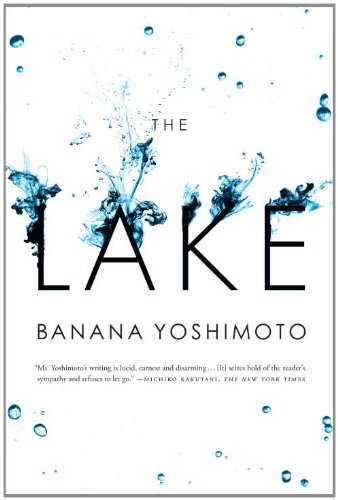
I wrote:
It's been some time since I finished a whole book in one day (and just two sittings).
One of the big mysteries of the book is revealed on the back cover (like the first sentence) so avoid reading the description. Seriously you're not supposed to know til almost the very end.
I can see why they did it - it's not quite the most central aspect of the book, though I'd argue it is somewhat important and would've been fascinating to have the reveal unspoiled.
Still, a very sweet, powerful story about being on the cusp of growing up and loving someone in spite of their (sometimes very heavy) baggage. Yoshimoto has a great, uncomplicated, direct style that is anything but "simple."
I still feel generally positive about this book, though I get the sense, after reading around a bit, that this is BY's sort of go-to plot template - people in transition and/or tragedy, so maybe I'd feel differently if I had a better understanding of the rest of her work. Still, it really is a very pleasant read, and I should be having an official review for it on the Three Percent blog in the next few weeks (I submitted it, but I got to wait my turn in the queue.)
An Empty Room: Stories, Mu Xin
Translated by Toming Jun Liu
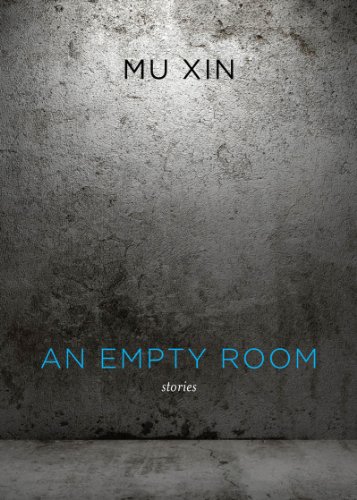
I wrote:
Wish there were half stars - I'd be tempted to give it 4.5 out of 5. Some really mesmerizing stuff here! Beautiful - particularly at it's best when dealing with melancholy memories etc. It's a collection of stories that don't always feel like stories - some are hard to think of as anything but a straight up retelling of a personal anecdote, and some that feel like an essay that doesn't really have a structure - a topic that meanders and digresses in a more or less agreeable way. I guess this comes from the Chinese literary form sanwen, which is deliberately a mix of fiction, memory, essay, prose, and poetry, according to the translator's afterword. Similar to the Japanese "I"-novel, perhaps, but in a much more abridged form.
In general skillfully translated, though the tone occasionally verges on the pompous (which might not be the fault of the translator, really). The one exception is "Quiet Afternoon Tea", which does not read well at all and is especially awkward in the characters' speech - all of which is (kind of) ironic, since it's one of the only story that ostensibly takes place in England with only British characters speaking in English. Maybe it was translated separately, first, a long time ago with little editing?
More to say in the future in a proper book review on Three Percent.
Like I wrote, another official review coming soon. These stories really are excellent, but I have some (read: a lot of complicated) things to say about the translation that is going to warrant it's own post when the review comes up.
The Jokers, Albert Cossery
Translated by Anna Moschovakis

I wrote:
Amusing, breezy, almost absurdist tale. Charming and humorous, political in its anti-political way, it felt like a sort of mix between Martin Amis "How I Became Stupid" and Ilf and Petrov's "The Golden Calf". Particularly great ending.
This book was written in the Sixties by a French born, Egypt living writer, but it is still surprisingly resonant in today's American political climate - especially when thinking about the Bush era. Thought-provoking but not dense, and not a shrill screed - a perfect (and fun) combo.
It is a little thin, admittedly; I think that is it's one flaw. But it's about guys pranking a public figure. It's pretty great.
I Have the Right to Destroy Myself, Young-ha Kim
Translated by Chi-Young Kim

I wrote:
Maybe 2.5 stars. I realized that the only part of the story I really didn't like was part 2 - I found C and K and Judith to be such annoying characters. The narrator was fascinating- I wish the story was more about him. C at least got a little more interesting when we find about his art, but K never gets developed. I just didn't care about their love triangle at all. It's not that I don't like dark books, but books like this or Hotel Iris don't move me when the characters are so underdeveloped- I don't feel their pain, and their depressions and nihilistic attitudes just seem weak and like "Oh woe is me" narcissism. Just seems like a cheap way to pile on tragedy. Not willing to write off Kim yet though- his other book seems interesting and I might yet check it out.
A lot of this book felt like a bad version of Murakami. Like taking some of Murakami's distinctive elements, ramping them up, and then messing up all the proportions into something inferior. The aloof protagonists become cooler-than-thou pricks, the Western culture name-dropping becomes snobby, the sex becomes dirty and overly gritty... I don't know, this just wasn't for me.
The Universal Baseball Association, Inc., J. Henry Waugh, Prop., Robert Coover

I wrote:
Some interesting stuff here, but your enjoyment does depend how much you enjoy reading about baseball games. Henry's an interesting character, and the last chapter adds a surprising layer to the rest of the work. But although I liked in general I was not inspired to pick it up and read it, so it took me a while to finish it.
Honestly, I read this because I read somewhere that Genichiro Takahashi's 優雅で感傷的な日本野球 was similar to this book. From what I read, it's not, really, except that it is kind of post-modern and has to do with baseball. It's about a guy who develops this table-top dice baseball game, that gets more and more complicated and takes over more and more of this guy Henry's life. It's very interesting, but if you don't at least enjoy baseball on some level, it'll be hard to read, since it gets very detailed in the goings on of each game.
Oblivion: Stories, David Foster Wallace

Goodreads score: 5 out of 5 stars
I wrote:
I think I loved every story but one, although that one story I was rather lukewarm to. But there's so much craft and intelligence and wit and raw emotion...Reading Wallace can occasionally be taxing, but worth it. He was truly a genius, in my opinion. Running out of short stories though...going to have to plunge into the almost bottomless pit that is that behemoth Infinite Jest soon.
Seriously you guys, David Foster Wallace is a genius. You have to give him a try if you haven't yet—at the very least a short story collection (even those can get long, but certainly less of a commitment than Infinite Jest). After Murakami, DFW is probably my favorite author.
Monday, March 28, 2011
New Review: Rieko Matsuura's "The Apprenticeship of Big Toe P"
Good evening once again my friends. I come to you once more to redirect you to another review I wrote, since I'm just everywhere on the internet these days; this time it's the cult '90s bestseller The Apprenticeship of Big Toe P by Rieko Matsuura, and translated by Michael Emmerich, which I wrote for the newly revamped Chin Music Press blog.
Matsuura is an interesting figure in the Japanese literature community. I have the Japanese edition of her latest novel Kenshin, another "transformation" type book, only this time someone turns into a dog. I haven't read it yet, or even looked at it really, but it did win the Yomiuri Prize, which is a pretty big deal. She is also (according to her Japanese Wikipedia page) an avid (female) pro-wrestler fan.
As for other bitlits, I don't know if anyone looks at my Twitter feed (I'm totally on Twitter, you guys! Follow me!), but you may or may not have noticed that the cover for the US edition of Haruki Murakami's 1Q84 has been revealed and it's pretty awesome. Chip Kidd (who designs a lot of awesome book covers) talks about the design of it here.
Matsuura is an interesting figure in the Japanese literature community. I have the Japanese edition of her latest novel Kenshin, another "transformation" type book, only this time someone turns into a dog. I haven't read it yet, or even looked at it really, but it did win the Yomiuri Prize, which is a pretty big deal. She is also (according to her Japanese Wikipedia page) an avid (female) pro-wrestler fan.
As for other bitlits, I don't know if anyone looks at my Twitter feed (I'm totally on Twitter, you guys! Follow me!), but you may or may not have noticed that the cover for the US edition of Haruki Murakami's 1Q84 has been revealed and it's pretty awesome. Chip Kidd (who designs a lot of awesome book covers) talks about the design of it here.
Friday, March 25, 2011
New Review: Kotaro Isaka's "Remote Control"
Hello internauts. Just a quick announcement that I have a new book review at the Three Percent website. It's Kotaro Isaka's Remote Control, which was originally called "Golden Slumber" in the Japanese, based on the Beatles' song of the same name.
I've talked about Kotaro Isaka here before a little bit ("Golden Slumber"/Remote Control was actually one of the books my Japanese teacher recommended to me to read), and I've even translated him a little bit for fun (Accuracy of Death seems like a much easier sell for foreign audiences, what with this goth/death renaissance we're having in pop lit. right now). He seems like he has some interesting books and is a promising young writer; though Remote Control wouldn't normally be my cup of tea I found myself caught up in it nonetheless. Nothing groundbreaking, but a very enjoyable read.
A sad bit of coincidence though: The novel takes place in Sendai, and I finished writing the review for it just two days before the earthquake and tsunami hit Sendai in real life. So if you haven't yet, be sure to donate to your organization of choice - just be careful of scams. I went with the Red Cross, myself.
I've talked about Kotaro Isaka here before a little bit ("Golden Slumber"/Remote Control was actually one of the books my Japanese teacher recommended to me to read), and I've even translated him a little bit for fun (Accuracy of Death seems like a much easier sell for foreign audiences, what with this goth/death renaissance we're having in pop lit. right now). He seems like he has some interesting books and is a promising young writer; though Remote Control wouldn't normally be my cup of tea I found myself caught up in it nonetheless. Nothing groundbreaking, but a very enjoyable read.
A sad bit of coincidence though: The novel takes place in Sendai, and I finished writing the review for it just two days before the earthquake and tsunami hit Sendai in real life. So if you haven't yet, be sure to donate to your organization of choice - just be careful of scams. I went with the Red Cross, myself.
Saturday, October 23, 2010
Review: Ryu Murakami's Popular Hits of the Showa Era (and bonus!)
I redirect you once again to the wonderful Three Percent blog for my latest review on Ryu Murakami's forthcoming in English Popular Hits of the Showa Era.
Every book I read by Ryu has to live up to Coin Locker Babies, which is one of my favorite books of all time, which means Popular Hits has a lot to live up to. I liked the book enough as I read it (most of it not under ideal conditions either - waiting around in the ER), but now that some time has past I realize it's grown on me quite a bit. It's just so absurd. Even though all the characters are pretty much inherently unlikable, what happens is just so whacked out it's hard to not read it with a smile (of course be prepared for grimaces too, I think).
One of the fun things about the book that didn't make it into my review is how all the chapter titles are actual popular songs from the Showa Era, aka, 1940s through 70s, which are now considered enka, I guess. Although these songs were originally all sorts of kinds of pop, rock, and jazz, performances of them now are actually kind of enka-ized - compare this original performance to this more modern one as performed by the same group - guitars become strings and horns. Admittedly, some of them were basically enka to begin with.
As a bonus to my handful of readers who I assume exist somewhere out there, here's a complete list of the songs used as chapter titles:
Chapter 1: Season of Love - Pinky and Killers: Koi no Kisetsu
Chapter 2: Stardust Trails - Akiko Kikuchi - Hoshi no Nagare ni
Chapter 3: Chanchiki Okesa - Minami Haruo - Chanchiki Okesa
Chapter 4: Meet me in Yurakucho - Frank Nagai - Yuurakuchou de Aimashou
Chapter 5: A Hill Overlooking the Harbor - Hirano Aiko - Minato ga Mieru Oka
Chapter 6: Rusty Knife - Yujiro Ishihara - Sabita Knife
Chapter 7: After the Acacia Rain - Sachiko Nishida - Acacia no Ame ga Yamu Toki
Chapter 8: Love Me to the Bone - Takaya Jou - Hone made Aishite
Chapter 9: Dreams Anytime - Sayuri Yoshinaga & Yukio Hoshi - Itsudemo Yume wo
Chapter 10: Until We Meet Again - Kiyohiko Ozaki - Mata Au Hi Made
Feel free to use this guide as your reading soundtrack when you pick up your own copy January 2011.
Every book I read by Ryu has to live up to Coin Locker Babies, which is one of my favorite books of all time, which means Popular Hits has a lot to live up to. I liked the book enough as I read it (most of it not under ideal conditions either - waiting around in the ER), but now that some time has past I realize it's grown on me quite a bit. It's just so absurd. Even though all the characters are pretty much inherently unlikable, what happens is just so whacked out it's hard to not read it with a smile (of course be prepared for grimaces too, I think).
One of the fun things about the book that didn't make it into my review is how all the chapter titles are actual popular songs from the Showa Era, aka, 1940s through 70s, which are now considered enka, I guess. Although these songs were originally all sorts of kinds of pop, rock, and jazz, performances of them now are actually kind of enka-ized - compare this original performance to this more modern one as performed by the same group - guitars become strings and horns. Admittedly, some of them were basically enka to begin with.
As a bonus to my handful of readers who I assume exist somewhere out there, here's a complete list of the songs used as chapter titles:
Chapter 1: Season of Love - Pinky and Killers: Koi no Kisetsu
Chapter 2: Stardust Trails - Akiko Kikuchi - Hoshi no Nagare ni
Chapter 3: Chanchiki Okesa - Minami Haruo - Chanchiki Okesa
Chapter 4: Meet me in Yurakucho - Frank Nagai - Yuurakuchou de Aimashou
Chapter 5: A Hill Overlooking the Harbor - Hirano Aiko - Minato ga Mieru Oka
Chapter 6: Rusty Knife - Yujiro Ishihara - Sabita Knife
Chapter 7: After the Acacia Rain - Sachiko Nishida - Acacia no Ame ga Yamu Toki
Chapter 8: Love Me to the Bone - Takaya Jou - Hone made Aishite
Chapter 9: Dreams Anytime - Sayuri Yoshinaga & Yukio Hoshi - Itsudemo Yume wo
Chapter 10: Until We Meet Again - Kiyohiko Ozaki - Mata Au Hi Made
Feel free to use this guide as your reading soundtrack when you pick up your own copy January 2011.
Tuesday, July 27, 2010
Summer of the Re-Read #2: The Catcher in the Rye

The Catcher in the Rye
by J.D. Salinger
You may be wondering (and I say this because I'm sort of wondering the same thing myself) why I would bother writing about a novel that most likely you have read. And honestly, I don't know. You think I plan these things as I go along?
Enter Holden Caufield, our hapless, teenage narrator who does everything as he goes along ("What I thought I'd do was..."). Never thinking anything through, always shooting off his mouth: you know, your average, self-centered yet self-clueless teenager.
Maybe reading The Catcher in the Rye at the same age as the narrator is necessary to fully appreciate the book. At the time, although I loved the book and thought that Salinger "got it" (to my memory, at least) I didn't fully embrace Holden as an extension of me, nor did I fully relate: even I didn't want to associate myself with someone so annoying (of course, I probably was just as annoying too, and didn't realize). But still, I would be hard pressed to find anyone who read it as a teenager, like actually read it, and not skimmed through the important parts in class for major plot points (hey, I was a high school student too), and couldn't relate.
The most obvious example of Salinger's perfect distillation of teenage-ism is Caufield's inherently contradictory nature. Everything he says is taken back, or qualified, or qualified in a way that basically is a negation. The only exception, of course, being his dead brother Allie.
Granted, death in the immediate family will fuck anyone up. So it's easy to see why Holden's behavior is a sort of worse-case scenario of a moody teenager, which I think is why even at the time I thought Holden really acted more like a little kid than a theoretical peer of mine. But looking back on him now, I can see maybe with clearer eyes that in essence, I really was a Holden, because I was a teenager too.
So why did I want to read The Catcher in the Rye now? Well, for one, I saw an English copy at a Book Off while in Japan and I think it made me nostalgic and a little homesick. I also think it's interesting that it's one of the books Haruki Murakami (boy, it always comes back to him, doesn't it? I gotta institute a No-Murakami month or something) decided to re-translate it into the Japanese. But I've known that for a long time, and it wasn't until about a month ago that I knew I wanted to re-read it. Maybe I had a conversation with a friend about it. Hah, hope you enjoy my non-answer, hapless reader. I really should just delete this whole paragraph.
Things that surprised me about the novel: The similarities between now and 1950s-America. Somewhere in our American tapestry of culture or education is this brainwashed notion that 1950s-era America was somehow more wholesome than any other era. Something about that post-war era (and the now-we-Americans-try to-ignore-it start of the Cold War) keeps propagating this notion and manifests itself in our movies and TV shows (whether as pastiche or cliche) as the squeaky-clean America. I don't know why we Americans see the 1950s as the purest slice of Americana in our history, but there it is.
And obviously this is not the case, but it was still surprising to see that even kids in the 1950s were scratching "Fuck You" in the walls of their schools or to read about the high school kids having sex (or lying about doing it) or that a 1950s 16-year old would be trying to get away with underage drinking at bars and paying for a prostitute. Obviously it's all the same and always will be, but it was weird how I too unconsciously bought this weird stereotype that pervades our national conscious.
My question to you, readers, especially the non-Americans, is your relationship to The Catcher in the Rye, if you've read it, and how relatable it is to your own teenage experience. We consider it now (despite the protests that continue even today by weirdo parents who can't honestly communicate to their kids about sex and swear words) to be a paragon of American literature, a solid member of the literary canon, so I'm curious to see what non-Americans think.
Anyway, that's about all I have to say on the matter. It was definitely worth the re-read, and I think in another 10 or 20 years it'll be worth another re-read. And then forcing my teenage kids to read it, if the novel has somehow fallen out of favor when my kids are in high school. I wonder how relatable it will be to my kids then, considering how different we can assume our culture will be in another 25 years.
[Next up on Summer of the Re-Read: F. Scott Fitzgerald's The Great Gatsby. Another indisputable (and deservedly so) member of the American literary canon.]
Wednesday, July 21, 2010
Summer of the Re-Read #1: Sayonara, Gangsters

by Genichiro Takahashi
Translated by Michael Emmerich
I wish I could remember how I discovered that this book existed. I know I first read it in the spring of my first year of college. I was so into it that I read it during my physics class in the very, very back of the lecture hall (although to be fair, I either slept or did other work during most of those physics lectures). I know I took it out of the school library. But did I discover it through aimless browsing? Or was it a title I was interested in after looking through Vertical Inc (the publisher)'s back catalog, who describes it as a "postmodern novel...from Haruki Murakami's way-more-out-there cousin"?
If the Murakami comparison really was the reason I picked up the novel, at least the description was somewhat apt. In many ways, Sayonara, Gangsters does seem like Murakami with the post-modern bizarreness cranked up to 11. But after re-reading Sayonara Gangsters and exploring more of Takahashi's work in the Japanese, the comparison (like all authorial comparisons, honestly) is somewhat diminishing.
First of all, there's no good way to even summarize Sayonara, Gangsters, which at least can be done for Murakami's work. To grossly simplify matters, Sayonara, Gangsters follows a poet who teaches at a poetry school in some sort of bizarro-world where people choose their own names, which in turn can take a life of their own, and where on the sixth floor of the building that the narrator works is a river of some unknowable length. Even "dream logic" doesn't quite convey the sense of un-reality that pervades the novel:
I think about many different kinds of death.
I'd seen something horribly sad at the amusement park. "The Giant Ferris Wheel" had on a big black ribbon, and it was folding itself up.
The owner of the amusement park must have decided it would cost too much to call in the workers whose job it was to dismantle the rides, and hit on the idea of ordering "the Giant Ferris Wheel" to dispose of itself.
I sat on a swing and watched "The Giant Ferris Wheel" commit suicide.
"The Giant Ferris Wheel" kept rotating its circular frame, yanking off the little carriages where its riders used to sit. It removed one, then another, then another. Every time it pulled off a carriage it bled and cried out in pain. "Oh, it hurts!" it yelled, "It hurts!" Once the circular frame had removed the last carriage, it set about cutting away the circular frames at the center; after that the concrete supports struggled to sever the axle.
Splattered with blood, "The Giant Ferris Wheel' continued to dismantle itself, and at every step along the way it screamed so awfully that the entire amusement park trembled.
"The Merry-Go-Round," which was just next door, sat there shaking with its eyes squeezed shut, covering its ears with its hands.
Finally only the concrete base remained. Its breath came in gasps. Nothing but this block of concrete indicated that "The Giant Ferris Wheel" had ever existed: the block was "The Giant Ferris Wheel"'s ego, its self.
I wondered how the base would finish the job.
There wasn't anything left to do.
"Eat shit and die!"
Leaving these bitter last words, the concrete base put an end to it all.
It did this in a way no human would ever think up.
The novel is divided up into three parts, and each part has its own major plot and focus. Part 1 establishes the setting and the narrator's life. Part 2 describes the Poetry School and his work with the students. Part 3 is about the narrator's experience with the dangerous gangsters of the novel's world.
Reviews of Sayonara, Gangsters tend to praise Part 1 as the most compelling and well-written part of the novel (speaking of, our friend Nihon Distractions has a review here), but I find myself more drawn to Part 2. After reading more of Takahashi's other work, it is clear that Takahashi is a writer concerned about writing, and despite this bizarre, post-modernist world that Takahashi created, the novel itself, at its core, is really all about writing:
My teaching here isn't focused on knowledge.
If you want to know about poetry, read books. You'll find all that in books.
My knowledge of poetry is both fragmented and fuzzy. It can't be trusted.
I don't teach people how to interpret poetry or any of that stuff either.
I'm not so good at interpreting poetry.
When I read a poem, I respond to it in one of two ways: "Wow, this is great!" or "God, this is awful!" I have no other responses.
Having eliminated those possibilities, we are left with "How to create poetry." Surely that must be what the man teaches! That's what you're all thinking, right? Hell, that's what I'm thinking myself.
But the truth is that if there really were some technique that permitted everybody who knew it to write wonderful poems, I'd want to be the first to know.
If I had a a technique like that, I'd keep it all to myself and produce one masterpiece after another, setting my sights on the Nobel Prize for Poets.
I'm a poet, but even now I have no idea how to write my poems.
I really doubt there is a technique to writing poetry.
We poets spend the eyeblink of time granted us until we slip away forever into the eternal dark composing poems, never having the faintest idea how we out to go about writing them, or what we ought to be writing.
I do almost nothing at all here.
Pressed to explain, I might say that my job is CONDUCTING TRAFFIC.
The students who come here all want to write poems. But none of them have any idea what kind of poems they should be writing.
You mustn't tell them to "Write what you like."
I may be incompetent as a poet, but I don't shirk my responsibilities.
I talk with my students. Or, to make it sound hard, I counsel them.
Actually, for the most part all I do is listen.
Writing poetry is a fairly morbid thing to do. Of course, that doesn't mean all morbid people are poets. It is here, you see, that the difficulty lies.
All irony aside, and despite the fact that this really is more or less exactly how I feel about poetry (being absolutely terrible at it), in a true post-modernist fashion, Takahashi explores almost all aspects of the experience of the written word, including but not limited to the relationship between literature and the author, the relationship between literature and the reader, the act of reading/writing itself, literary criticism, and the power of words.
The first time I read Sayonara, Gangsters, I loved the bizarre world and imagery that Takahashi created. But the second time around, I found myself more drawn to the ideas about literature and the power of the written word that Takahashi has built the world around, a theme that Takahashi will continue to explore throughout his career.
As Takahashi's debut work, it really is amazing that he was able to produce something so original and compelling. Sayonara, Gangsters is still one of my favorite books, but the second time around, I can see some of its flaws. The prose is jarringly fragmented and vignette-y, similar to Murakami's Hear the Wind Sing. (I guess this is a problem that plagues many an author's debut/early works.) Translator Michael Emmerich had his work cut out for him, and though I'm so grateful that he was able to get a publisher to take a chance on this work, I occasionally find the translation a little awkward.
To which I mean no disrespect; I went to a translator's round-table about a year ago that Emmerich was a part of (as in, when I saw that he was a part of it, I immediately knew I was going), and he's pretty young, early 30s, if not late 20s, I'd say. This book was published in 2004, which means he was probably working on it around seven or eight years ago, when he was in his mid-twenties. So nothing but respect for him. I sincerely hope that I can achieve the same thing at that age. Also, he's got great taste in J-lit and was just a really interesting and funny guy to listen and talk to. So whenever I see he has a new translation out, I always pay attention.
At this translator's round-table I went to, I asked Emmerich if he would ever translate something by Takahashi again. He said he definitely would like to, but it's all about finding a publisher, and apparently this novel didn't make a real splash, which makes it a hard sell. But now that I've been able to explore more of his works, I really feel that Takahashi is a great author that deserves to be translated. And I hope to be the man to do it.
Expect many Takahashi-related posts in the future, including a forthcoming short story translation and a look at his (well, to me) fascinating Twitter account.
[Next on "Summer of the Re-Read": The Catcher in the Rye by J.D. Salinger. Let's see how a novel about a teenager that one reads as a teenager holds up when one is no longer (quite) a teenager.]
Friday, July 16, 2010
Introducing: Summer of the Re-Read
Now that I'm back in the States again, I have a lot of free time until school starts back up. A LOT of free time. And besides the time I've wasted since discovering my family started using Netflix (instant streaming...fuck and yes), I've started really reading again.
This summer I have a massive reading list I want to but ultimately will fail miserably at completing, which can be divided up into three sections: (1) new, unread books, (2) unread "classics", and (3) stuff I want to read again.
The thing is, I don't often re-read books, besides Murakami (surprise, surprise). Some fun facts: Sputnik Sweetheart is probably the most read at 3, possibly 4 times, and Hardboiled Wonderland... is the one that I've started and put down the most times, though I have finished it once and thoroughly enjoyed it; for some reason, it's just the unluckiest book in that I just start it at bad times or get distracted by something newer and shinier. I have a pretty good memory, so I more or less remember what happened and how I particularly felt about any particular book, and there's just so much out there to read I usually give preference to something unknown (except in the cases where I find myself in an irrepressible Murakami mood). Contrast this to my TV habits, in which my favorite shows are constantly being cycled through and re-marathoned, though this is usually done in conjunction with something else, since I don't have to be focusing on it 100% to enjoy it. In fact, the only book in semi-recent memory that I recall re-reading is Koushun Takami's Battle Royale. (Oops, wait, that's a lie; the last Harry Potter was also re-read, though only just a month or two after I had initially read it in the first place.) And books have to be particularly crappy for me to give up on them before the end (i.e. Higashino Keigo's "Naoko". For such a fucked up concept, boooooooooring.)
But this summer, I really want to re-read a bunch of books. Maybe it was because I was in Japan and didn't have access to my collection, or maybe because I didn't have easy access to English-language books. Not really sure. And since I like doing book reviews on this blog anyway, I thought I'd chronicle my exploits.
Here's the list so far:
1) Genichiro Takahashi - Sayonara, Gangsters
2) J.D. Salinger - The Catcher in the Rye
3) F. Scott Fitzgerald - The Great Gatsby
4) (tentative) Ryu Murakami - Coin Locker Babies
5) (tentative) George Orwell - 1984
6) (tentative) Haruki Murakami - South of the Border, West of the Sun
7) (tentative) Albert Camus - The Fall
I guess in general, I want to see if each of these books still "hold up" since the last time I read them, though the reasons for why I want to see depend on each book. For example, South of the Border, West of the Sun was by far and away my absolute least favorite Murakami book when I read it, but paradoxically, it also has one of my favorite quotes by any author ever. So on and so forth.
I'll talk about all this stuff more specifically for each book when I get to it. Anyway, that's something that you can look forward to (I originally wrote "one more thing" you can look forward to, but I haven't written anything in months, so you haven't been looking forward to anything for a while) very soon, since I've already finished reading Sayonara, Gangsters and am halfway through The Catcher in the Rye.
(P.S. New books will be reviewed either separately or, more likely, in a "Recently Read Round-up" column.)
(P.P.S. That translation I'm working on that's non-Murakami? Totally starting to work on that again. I spent most of my time in Japan just trying to read as much Japanese as possible, and practicing the art of getting as much out of a text as I can without checking the dictionary every10 5 seconds, which was actually really awesome. Newest record: 40 consecutive pages that I can thoroughly summarize to you, that I did with little dictionary-consultation. Very proud of this.)
(P.P.S. I'm now on The Twitter. There should now be a doohicky on the side of this here thing-ama-blog.)
This summer I have a massive reading list I want to but ultimately will fail miserably at completing, which can be divided up into three sections: (1) new, unread books, (2) unread "classics", and (3) stuff I want to read again.
The thing is, I don't often re-read books, besides Murakami (surprise, surprise). Some fun facts: Sputnik Sweetheart is probably the most read at 3, possibly 4 times, and Hardboiled Wonderland... is the one that I've started and put down the most times, though I have finished it once and thoroughly enjoyed it; for some reason, it's just the unluckiest book in that I just start it at bad times or get distracted by something newer and shinier. I have a pretty good memory, so I more or less remember what happened and how I particularly felt about any particular book, and there's just so much out there to read I usually give preference to something unknown (except in the cases where I find myself in an irrepressible Murakami mood). Contrast this to my TV habits, in which my favorite shows are constantly being cycled through and re-marathoned, though this is usually done in conjunction with something else, since I don't have to be focusing on it 100% to enjoy it. In fact, the only book in semi-recent memory that I recall re-reading is Koushun Takami's Battle Royale. (Oops, wait, that's a lie; the last Harry Potter was also re-read, though only just a month or two after I had initially read it in the first place.) And books have to be particularly crappy for me to give up on them before the end (i.e. Higashino Keigo's "Naoko". For such a fucked up concept, boooooooooring.)
But this summer, I really want to re-read a bunch of books. Maybe it was because I was in Japan and didn't have access to my collection, or maybe because I didn't have easy access to English-language books. Not really sure. And since I like doing book reviews on this blog anyway, I thought I'd chronicle my exploits.
Here's the list so far:
1) Genichiro Takahashi - Sayonara, Gangsters
2) J.D. Salinger - The Catcher in the Rye
3) F. Scott Fitzgerald - The Great Gatsby
4) (tentative) Ryu Murakami - Coin Locker Babies
5) (tentative) George Orwell - 1984
6) (tentative) Haruki Murakami - South of the Border, West of the Sun
7) (tentative) Albert Camus - The Fall
I guess in general, I want to see if each of these books still "hold up" since the last time I read them, though the reasons for why I want to see depend on each book. For example, South of the Border, West of the Sun was by far and away my absolute least favorite Murakami book when I read it, but paradoxically, it also has one of my favorite quotes by any author ever. So on and so forth.
I'll talk about all this stuff more specifically for each book when I get to it. Anyway, that's something that you can look forward to (I originally wrote "one more thing" you can look forward to, but I haven't written anything in months, so you haven't been looking forward to anything for a while) very soon, since I've already finished reading Sayonara, Gangsters and am halfway through The Catcher in the Rye.
(P.S. New books will be reviewed either separately or, more likely, in a "Recently Read Round-up" column.)
(P.P.S. That translation I'm working on that's non-Murakami? Totally starting to work on that again. I spent most of my time in Japan just trying to read as much Japanese as possible, and practicing the art of getting as much out of a text as I can without checking the dictionary every
(P.P.S. I'm now on The Twitter. There should now be a doohicky on the side of this here thing-ama-blog.)
Wednesday, April 7, 2010
Review: Yoko Ogawa's Hotel Iris
I redirect you to Three Percent, which is hosting my formal review of Hotel Iris, the latest novel by Yoko Ogawa to be published by Picador and translated by Stephen Snyder, which I promised a while ago in my Recently Read Round-up post.
I didn't like the book all that much, but I will definitely continue to be on the look-out for anything Yoko Ogawa can get published state-side.
For those of you who just can't get enough of my stylish wit and elegant prose, you can see all my other contributions to Three Percent (various book reviews mostly) here and here (one of my reviews is tagged under a slightly different version of my name).
I didn't like the book all that much, but I will definitely continue to be on the look-out for anything Yoko Ogawa can get published state-side.
For those of you who just can't get enough of my stylish wit and elegant prose, you can see all my other contributions to Three Percent (various book reviews mostly) here and here (one of my reviews is tagged under a slightly different version of my name).
Monday, February 22, 2010
Japanese Movie Round-up
I love the library. I love the library because you can get a hold of just about anything, if you know where and how to look. Lately, I love the local public library for their DVD collection (it doesn't hurt that I'm going to the main branch of a pretty large city). These are some of the Japan-related movies I've had the enjoyment of viewing in the last week or two.

(Incidentally, I waited months to see this movie. I reserved it at the local library last summer as soon as it was released and available. I was number 3 in the queue, and didn't get a hold of it until about three weeks ago. I think someone lost it somewhere down the line.)

This may be sort of cheating, because I was actually watching the Mystery Science Theater 3000 version. But, here we go.
Prince of Space is the Americanized splicing of two separate movies, 遊星王子 (Wikipedia says its translated "Planet Prince") and 星王子 - 恐怖の宇宙船 (Planet Prince - The Terrifying Spaceship), which were both released in 1959 within a week of each other. Originally it was a TV show that got popular and made into a movie (a reboot, essentially). Basically, a Japanese scientist develops an amazing new rocket fuel that would allow for long-term space travel, and then somehow evil aliens with beaks made of silly putty learn about it and show up to steal the formula (because they need it so they can travel in space? How did they get to Earth in the first place??) Luckily, Prince of Space shows up to protect the scientist and his colleagues, as well as two nosy, annoying kids who get in everyone's way.
This movie was pretty terrible. Horribly dubbed, badly acted, really cheesy effects (Ok, those made it kind of awesome). Luckily, the MST3K team makes it all better, pointing out all the glaring plot holes, cheap-ass dubbing and bizarre translation/localizations. It's on the Vol. 7 DVD.

Again, maybe this is cheating a little; this is an American indie film, but the film was actually mostly in Japanese. So deal with it, haters.
Made in 2006 but not relased on DVD 'til 2008, Big Dreams, Little Tokyo was written, directed, and starred David Boyle. It's about an American "businessman" who lives in the "Japantown" district of an unknown city, where he goes around trying to sell his learn English book to the various Japanese citizens. He lives with a half-Japanese half-American who's training to become a Sumo, even though he can't gain enough weight to be accepted to the sumo academy. The film basically follows the two trying to fit into Japanese society with their half-baked business ventures.
The film is charming, in it's low-budget indie-way, and explores with some success some various ideas about cultural identity (even ones beyond Japanese vs American). It's got some really funny moments dealing with culture shock, and the characters are quirky without being unbelievable (even the main character, whose crazy-strict devotion to Japanese culture/language/identity reminds me of someone who might be afflicted with a touch of Aspergers). Jayson Watanabe, the half Japanese friend, steals almost every scene he's in. And hey look, it's got James Kyson Lee (Ando from Heroes) as a mean bookstore owner!
I might have liked this film more than a regular film-goer would because I do see something of myself in the main character, who loves a culture he'll always be an outsider too. So it resonated with me, and I imagine it would to any other Westerner with a passion for Japanese culture, so if you fall under those circumstances, I would certainly recommend it.
- Big Man Japan (大日本人)

Released in Japan in 2007, Big Man Japan is the directorial debut of the comedian Hitoshi Matsumoto, who seems to be most famous as part of the television comedy duo Downtown. The film also stars Matsumoto as the eponymous hero.
The film is a mockumentary following Masaru Daisato, a man who inherited his job of protecting Japan from giant monsters from his father, grandfather and so on. When zapped with electricity, he can transform into the giant 大日本人 (Dainipponjin) to fight said monsters off. However, the pay sucks; his wife left him with their daughter, who he only gets to see a few times a year; his television show tanks in the ratings at 2am; and overall, he just isn't very good at his job. He's overshadowed by his grandfather, once hugely famous in the '60s, but is now senile in a nursing home.
For those who love the inherent sillyness of the giant monster genre, there's a lot to enjoy about Big Man Japan. Personally, I'm a big sucker for any sort of comedy that derives it's humor by taking something crazy and fantastic, and then presents it as if it was just part of someone's mundane, everyday existence. So the fact that Daisato is forced to do his job as part of the family legacy, and therefore hates it and doesn't try very hard at it, brings out a lot of laughs. There's also a lot of great in-jokes for those familiar with the tropes of the genre, and the movie is great at putting real-world logic on a pretty illogical premise. It's a pretty dark comedy, though it drags a bit in the middle, mostly because there aren't as many monster fight scenes (complete with pretty hilariously bad CGI) as one would have hoped. However, the whole movie needs to be watched, if only for the out of nowhere climax and then credits sequence that just has to be seen to believed. Trust me, it's worth it for that alone.
- Prince of Space (遊星王子)

This may be sort of cheating, because I was actually watching the Mystery Science Theater 3000 version. But, here we go.
Prince of Space is the Americanized splicing of two separate movies, 遊星王子 (Wikipedia says its translated "Planet Prince") and 星王子 - 恐怖の宇宙船 (Planet Prince - The Terrifying Spaceship), which were both released in 1959 within a week of each other. Originally it was a TV show that got popular and made into a movie (a reboot, essentially). Basically, a Japanese scientist develops an amazing new rocket fuel that would allow for long-term space travel, and then somehow evil aliens with beaks made of silly putty learn about it and show up to steal the formula (because they need it so they can travel in space? How did they get to Earth in the first place??) Luckily, Prince of Space shows up to protect the scientist and his colleagues, as well as two nosy, annoying kids who get in everyone's way.
This movie was pretty terrible. Horribly dubbed, badly acted, really cheesy effects (Ok, those made it kind of awesome). Luckily, the MST3K team makes it all better, pointing out all the glaring plot holes, cheap-ass dubbing and bizarre translation/localizations. It's on the Vol. 7 DVD.
- Big Dreams, Little Tokyo

Again, maybe this is cheating a little; this is an American indie film, but the film was actually mostly in Japanese. So deal with it, haters.
Made in 2006 but not relased on DVD 'til 2008, Big Dreams, Little Tokyo was written, directed, and starred David Boyle. It's about an American "businessman" who lives in the "Japantown" district of an unknown city, where he goes around trying to sell his learn English book to the various Japanese citizens. He lives with a half-Japanese half-American who's training to become a Sumo, even though he can't gain enough weight to be accepted to the sumo academy. The film basically follows the two trying to fit into Japanese society with their half-baked business ventures.
The film is charming, in it's low-budget indie-way, and explores with some success some various ideas about cultural identity (even ones beyond Japanese vs American). It's got some really funny moments dealing with culture shock, and the characters are quirky without being unbelievable (even the main character, whose crazy-strict devotion to Japanese culture/language/identity reminds me of someone who might be afflicted with a touch of Aspergers). Jayson Watanabe, the half Japanese friend, steals almost every scene he's in. And hey look, it's got James Kyson Lee (Ando from Heroes) as a mean bookstore owner!
I might have liked this film more than a regular film-goer would because I do see something of myself in the main character, who loves a culture he'll always be an outsider too. So it resonated with me, and I imagine it would to any other Westerner with a passion for Japanese culture, so if you fall under those circumstances, I would certainly recommend it.
Subscribe to:
Posts (Atom)